


The complete guide
How to Choose a Kids Teepee Tent That Lasts Longer Than the Novelty
The problem with "just a play tent"
Most children's tents get bought in a hurry and regretted within a month. The pop-up kind arrives light and bright, goes up in two seconds, and then starts to lean. The poles bend. The fabric goes thin at the corners. Somebody steps on it in the dark and that is the end of it. The tent ends up folded badly in a cupboard, and nobody misses it.
The strange part is that children do not lose interest in dens. They lose interest in bad dens. Watch any child with a blanket and two dining chairs and you will see the appetite is still there. What they want is a small enclosed space with walls that hold still, a doorway they control, and room to bring in the things they care about.
That is the actual job a teepee is doing. Not decoration, though it does that too. The job is giving a child somewhere in the house that is theirs, at their scale, with a door they can close.
How a canvas teepee works
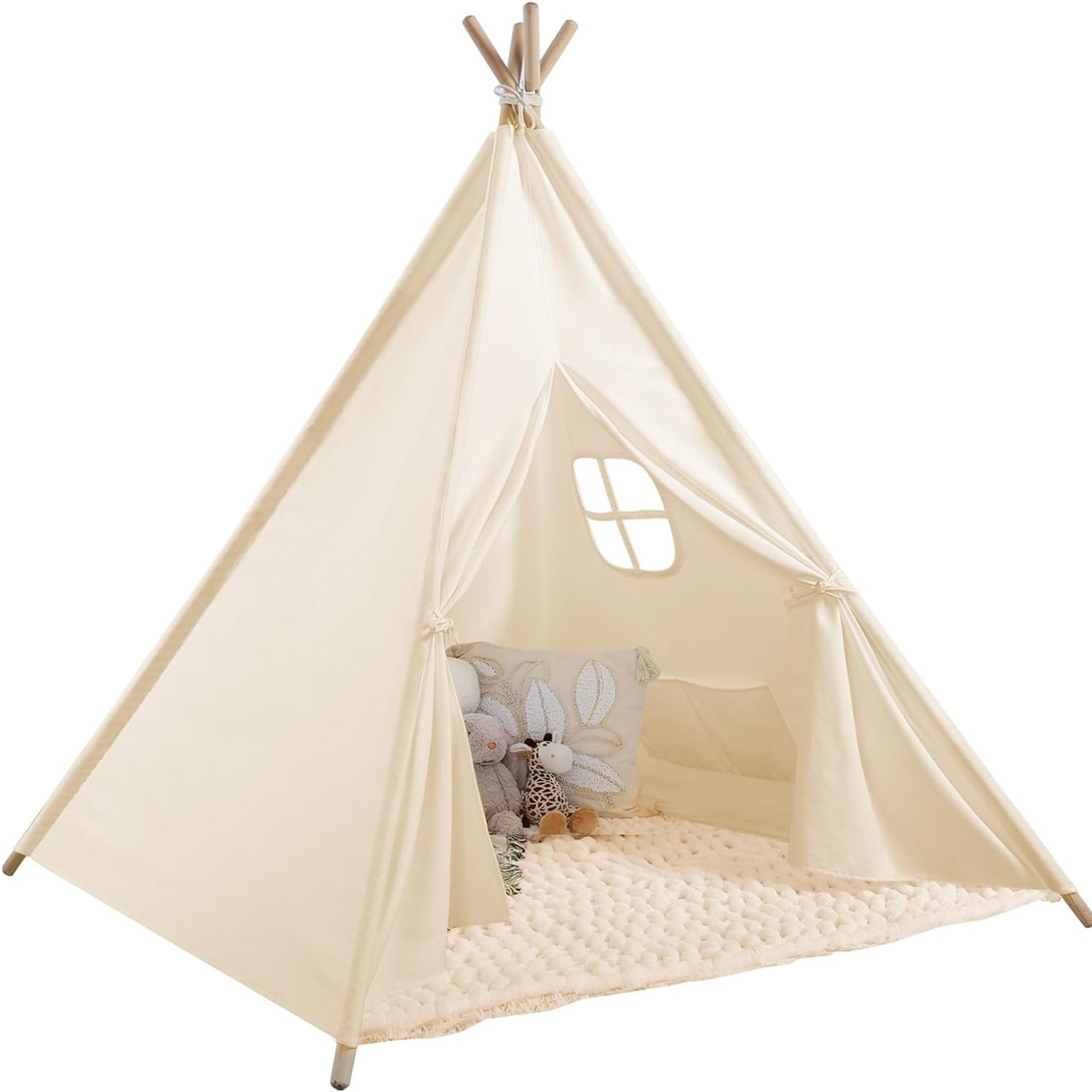
The construction is simple and old. Several poles cross near the top and splay out at the bottom to form a cone. A fabric cover wraps around the frame, usually with openings at the front that act as curtains. The weight of the fabric and the angle of the poles do the work. There is no tension system to fail and nothing to inflate.
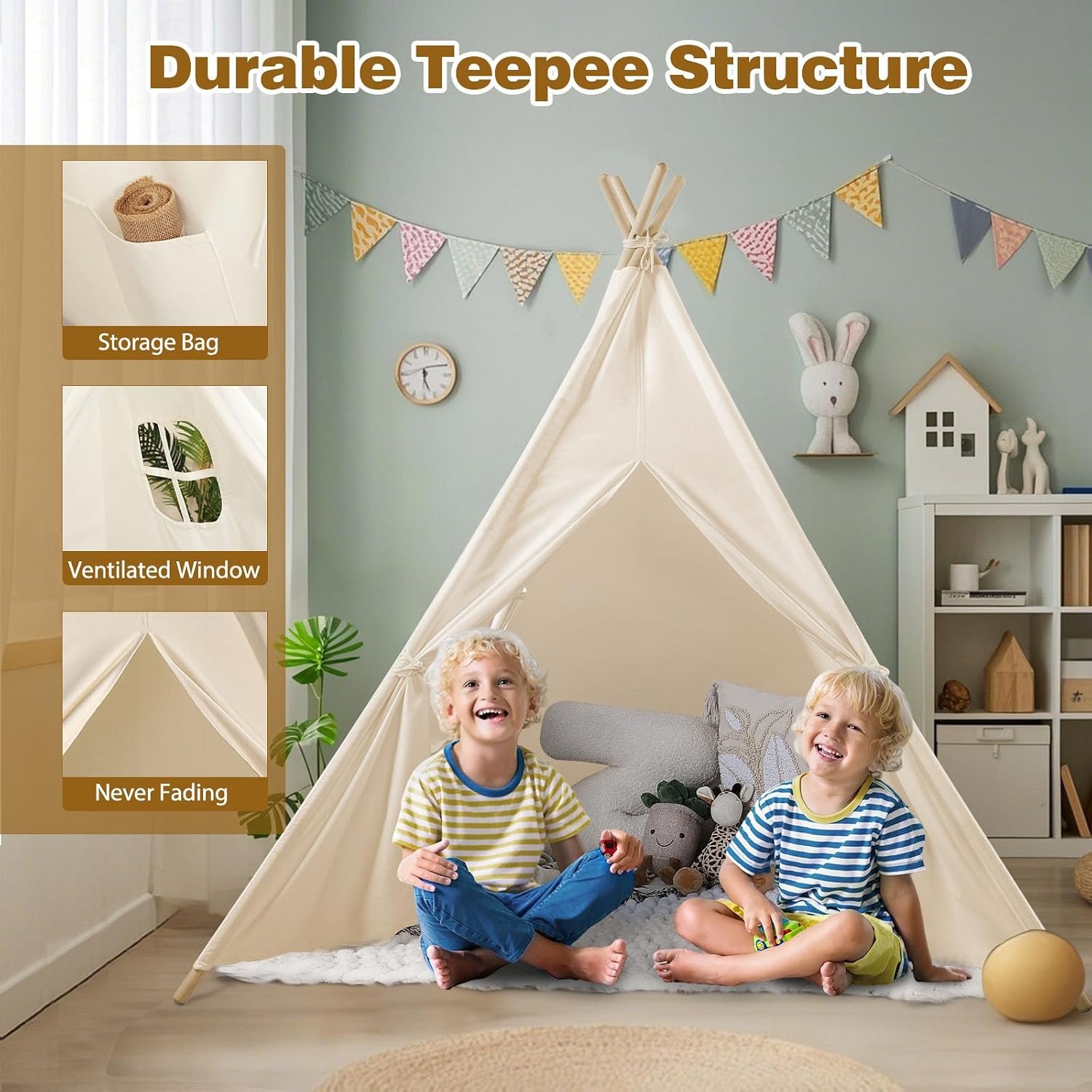
What changes the experience is what the two parts are made from. This one uses canvas for the body and pine wood for the frame. Canvas has real weight, so the walls hang straight instead of flapping at every passing draught, and it blocks sight properly. A child inside feels enclosed rather than vaguely covered. Pine poles are rigid, so the cone keeps its shape under daily use, and they look like furniture rather than camping gear.
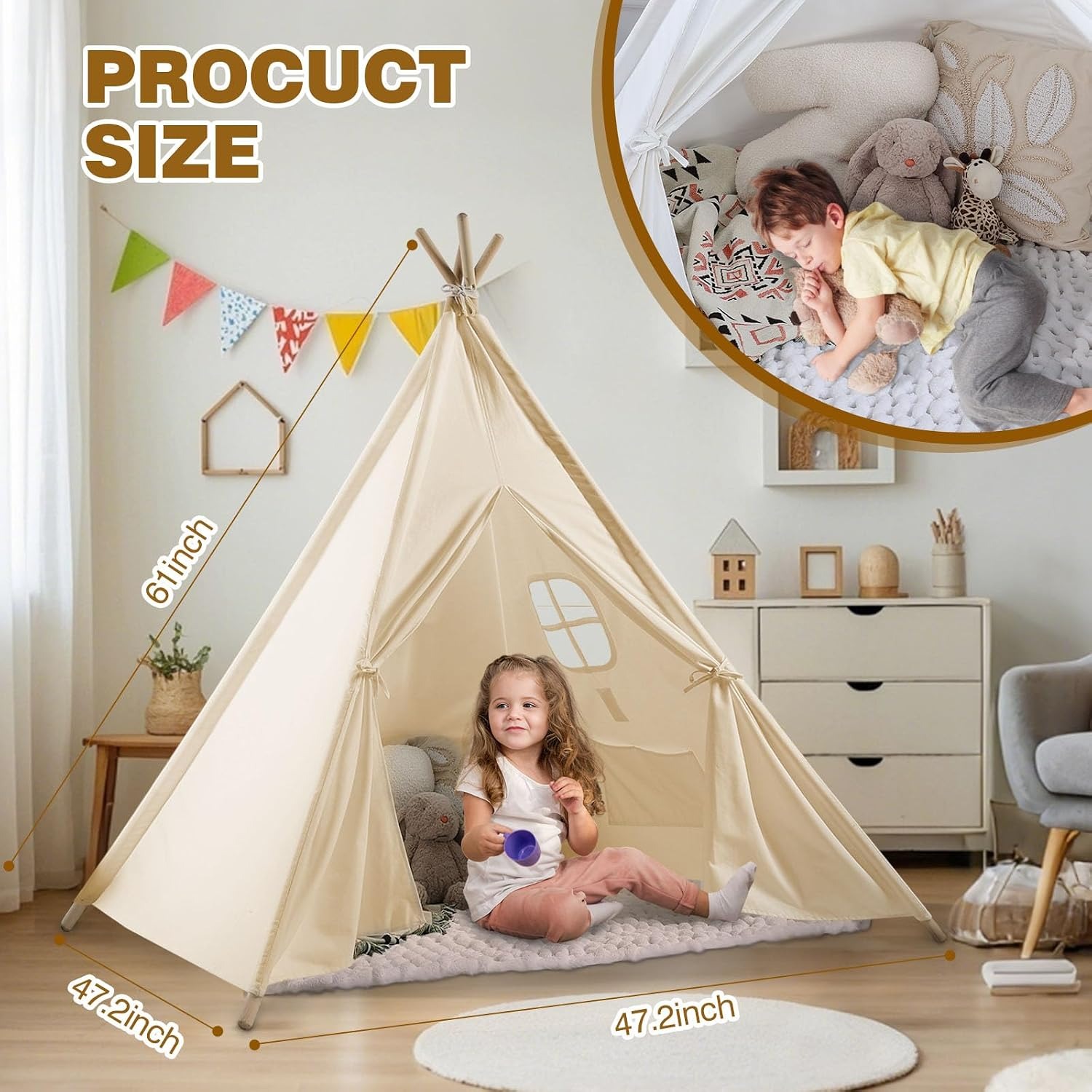
The assembled size here is 119.9 x 119.9 x 156 cm, which is about 47 inches square and 61 inches tall. In practical terms that is a footprint roughly the size of a small rug and enough headroom for a child to sit upright with space above them. Total weight is 2.05 kg, light enough to carry from the bedroom to the living room without taking it apart.
Who it suits
The maker gives a recommended age of 36 months to 8 years, and that matches how these tents actually get used. Around three, a child is old enough to climb in and out safely and old enough to care about having their own space. By eight, most children are getting tall enough that sitting up becomes a stoop, though plenty still use them as a reading corner well past that.
It fits a few household situations particularly well. In a shared bedroom, it gives each child somewhere to retreat without needing another room. In an open-plan living space, it carves out a low-stimulation corner that is not the sofa. In a nursery, it works as a floor play zone that looks calm instead of plastic. And for families who go through a lot of sensory overload at the end of the day, a tent with closing flaps is often more useful than another toy.
It is also a reasonable choice if the room has no spare furniture budget. A best playroom tent in neutral canvas does something a beanbag cannot, which is define a space rather than just fill one.
What to actually check before you buy
Start with the floor, not the tent. Mark out 120 x 120 cm with masking tape in the corner you have in mind and live with it for a day. You will learn quickly whether the door still opens and whether anyone trips over it. A lot of returns happen because the footprint was imagined rather than measured.
Then check the height. At 156 cm the top of the poles sits higher than most people expect. Sloping ceilings, low shelves and overhead light fittings are the usual culprits. If you have a loft bedroom, measure at the exact spot where the tent will stand.
Think about materials next. Canvas and wood cost more than nylon and plastic, and they behave differently. Canvas needs to be kept dry and spot cleaned rather than thrown in a machine. Wood needs to stay out of damp storage. In exchange you get something that looks like it belongs in a decorated room and survives being climbed into several hundred times. If you want the best cotton canvas tent for kids rather than a disposable one, that trade is the whole point.
Finally, think about colour honestly. White photographs beautifully and matches everything, and it also shows marks. If your household involves a lot of felt pens and muddy socks, plan for the occasional spot clean and set a no-shoes rule for the tent. Most families find the rule sticks because children like keeping their own space nice.
Setting it up well
Build it on the floor rather than standing up. Lay the poles out, join them at the crossing point, then raise the cone and settle the fabric over it. Adjust the splay of the poles until the base is even and the fabric hangs without pulling. Rushing this is the main reason tents lean.
Put something soft underneath. A rug, a folded quilt or a playmat makes the inside far more inviting and gives the pole ends something to grip. Bare timber floors are slippery and the frame can skate under enthusiastic play.
Keep it away from heat sources, windows that get slammed, and the path between the bed and the door. If you are adding lights, use battery-powered string lights and keep any cables outside the sitting area.
Looking after it
Care is low effort but not zero. Wipe marks with a damp cloth and a little mild soap, working on the spot rather than wetting the whole panel, and let it air dry before folding. Never pack it away damp, especially after it has been used in the backyard.
Give the wooden poles a dry wipe now and then and check the ties and joints every couple of months. Loose ties are the most common cause of a tent that suddenly looks saggy, and they take a minute to fix.
When you store it, take the poles apart and keep them bundled with the canvas so nothing gets separated. Fold the fabric loosely. Tight folds set creases that take a while to drop out, which matters if you ever want to use it as a backdrop.
Indoors, outdoors and in between
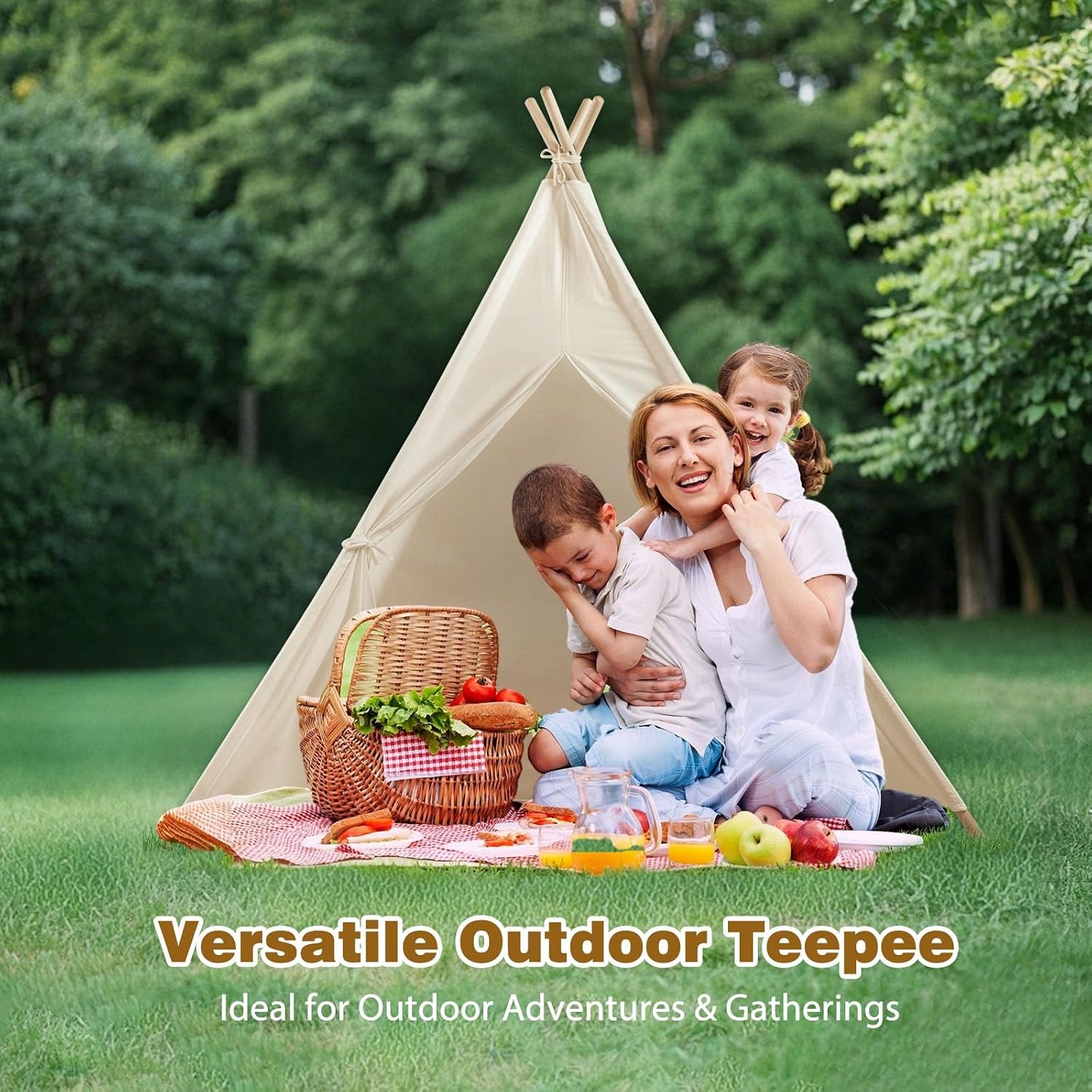
This is an indoor tent that handles the backyard on a dry day. Take it out for a picnic or shade during a summer afternoon and it works nicely. Leave it out in rain or overnight and you will shorten its life considerably. Canvas holds water, pine absorbs it, and the combination does not recover well.
That is worth saying plainly because the best outdoor play tent for the backyard is usually a different product entirely, built with waterproofing and pegs. Think of this one as furniture that occasionally goes on vacation.
The short version
A teepee earns its place when it is solid enough to use every day and plain enough to leave up. Canvas walls and pine poles give you both. The footprint here is about 120 cm square with 156 cm of height, the whole thing weighs 2.05 kg, and the front flaps close for proper privacy.
Measure your corner first. Put something soft on the floor. Keep it dry, spot clean the marks, and check the ties occasionally. Do that and a child gets a small, quiet place of their own that is still standing years after the plastic alternatives went in the bin.