
The complete guide
How to Choose a Kids Play Tent That Actually Gets Used
The problem with most play tents
Plenty of families buy a play tent, put it up, watch it get used hard for a fortnight, then quietly fold it away. The tent was not faulty. It just had a few small design problems that added up.
The usual culprits are predictable. One narrow doorway, so two children cannot use it at once without an argument. No floor covering, so it is cold and hard inside and nobody wants to sit down. Poor airflow, so it gets warm and stale within ten minutes. A frame that wobbles the moment a young child leans on it. None of these show up in a product photo, which is why so many people end up buying twice.
A play tent that holds a child's attention for years tends to solve all of those at once. It gives more than one way in. It has something soft underfoot. It breathes. And it feels solid enough that a child trusts it.
How a two door tent changes the play
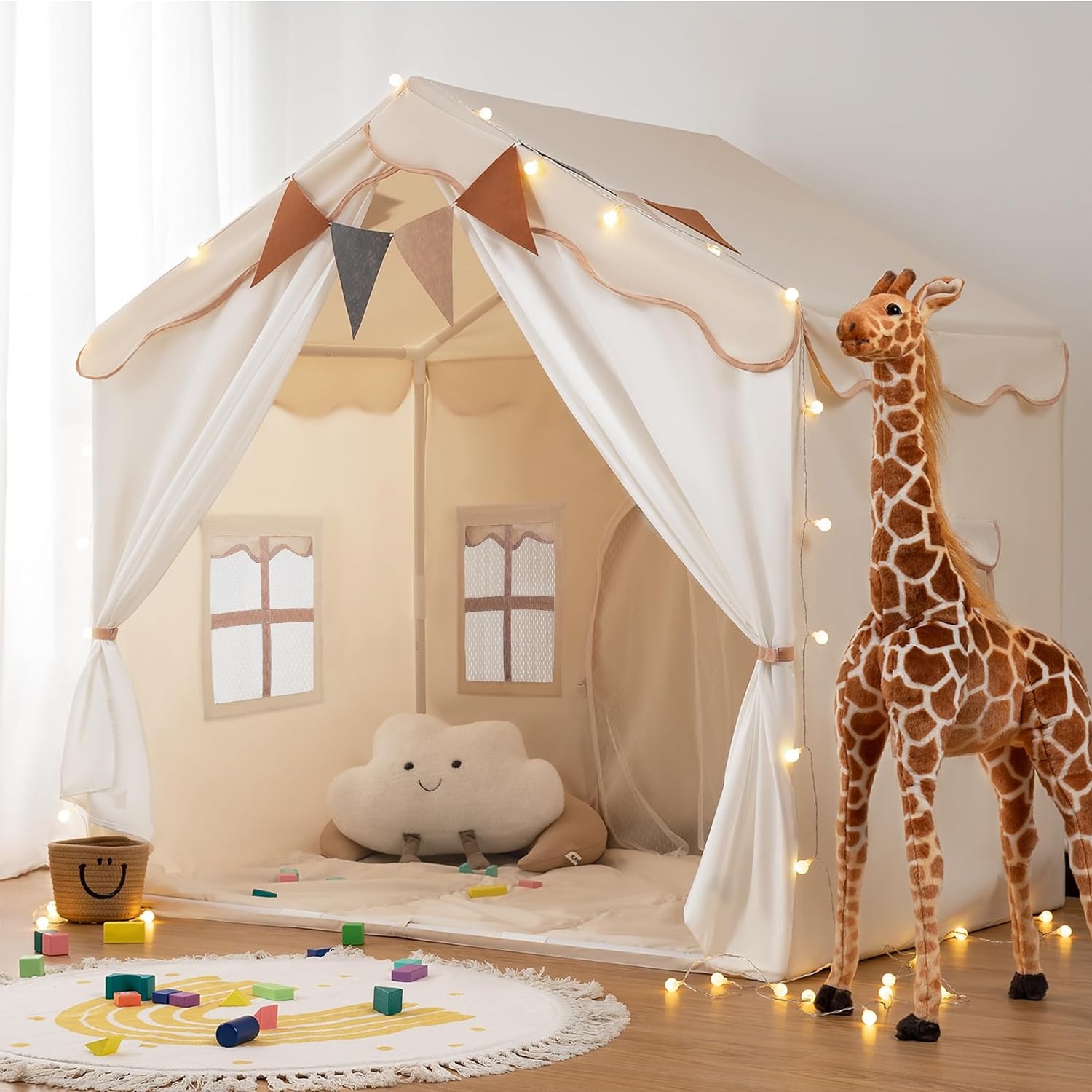
The two in one play tent with double doors is built around one idea, that children do not want to sit in a box. They want to move.
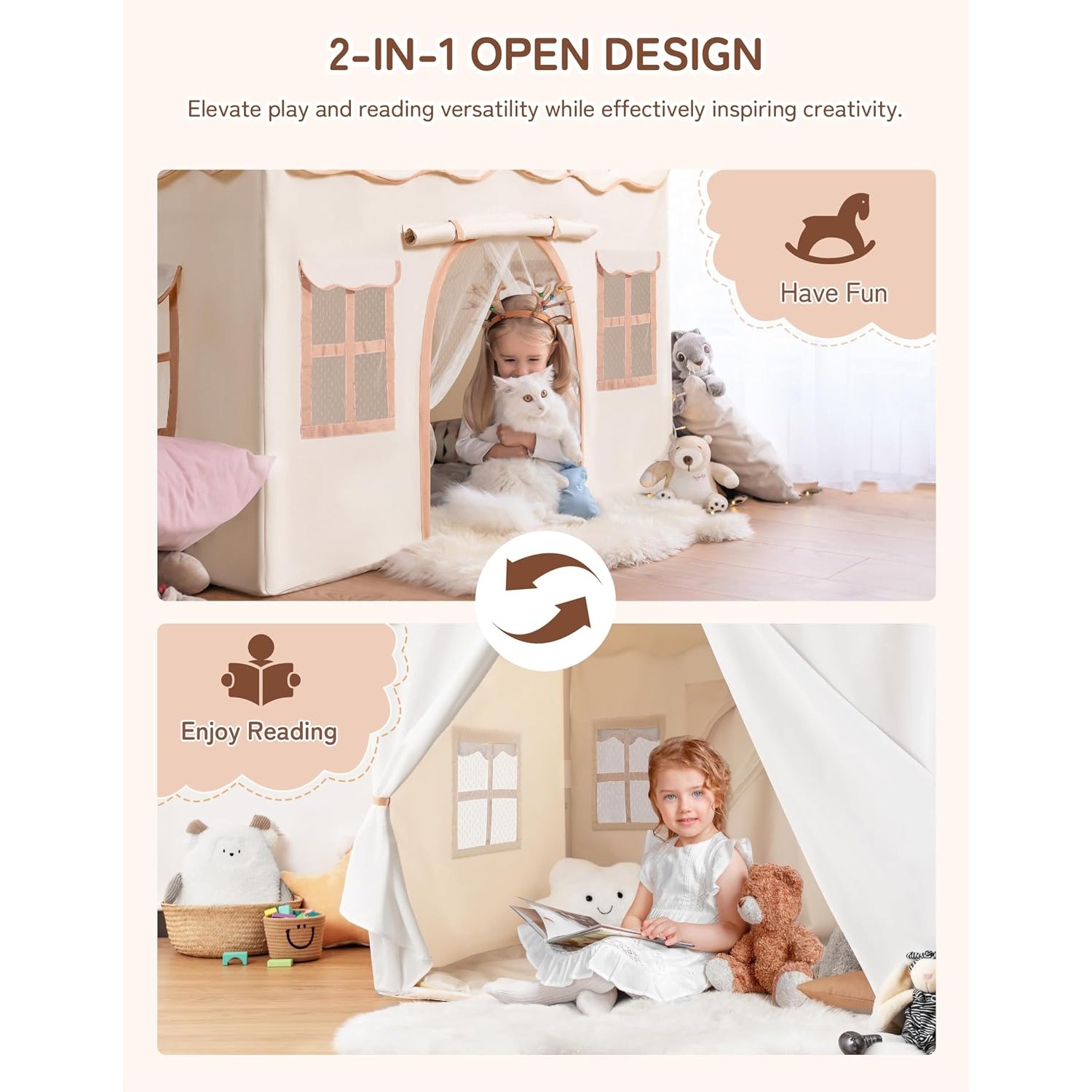
With an opening at the front and another at the back, the tent becomes a route rather than a dead end. Children run through it, hide at one end and pop out the other, pass things between doorways, and set up games where one person is inside and one is outside. Watch a group of kids with a single-door tent and then with a double-door one and the difference in how long they stay interested is obvious.
The practical side matters too. When three children are in there and one wants out, nobody has to climb over anyone. On a warm day you can tie back both doors and get a genuine breeze through, which no single-opening teepee manages.
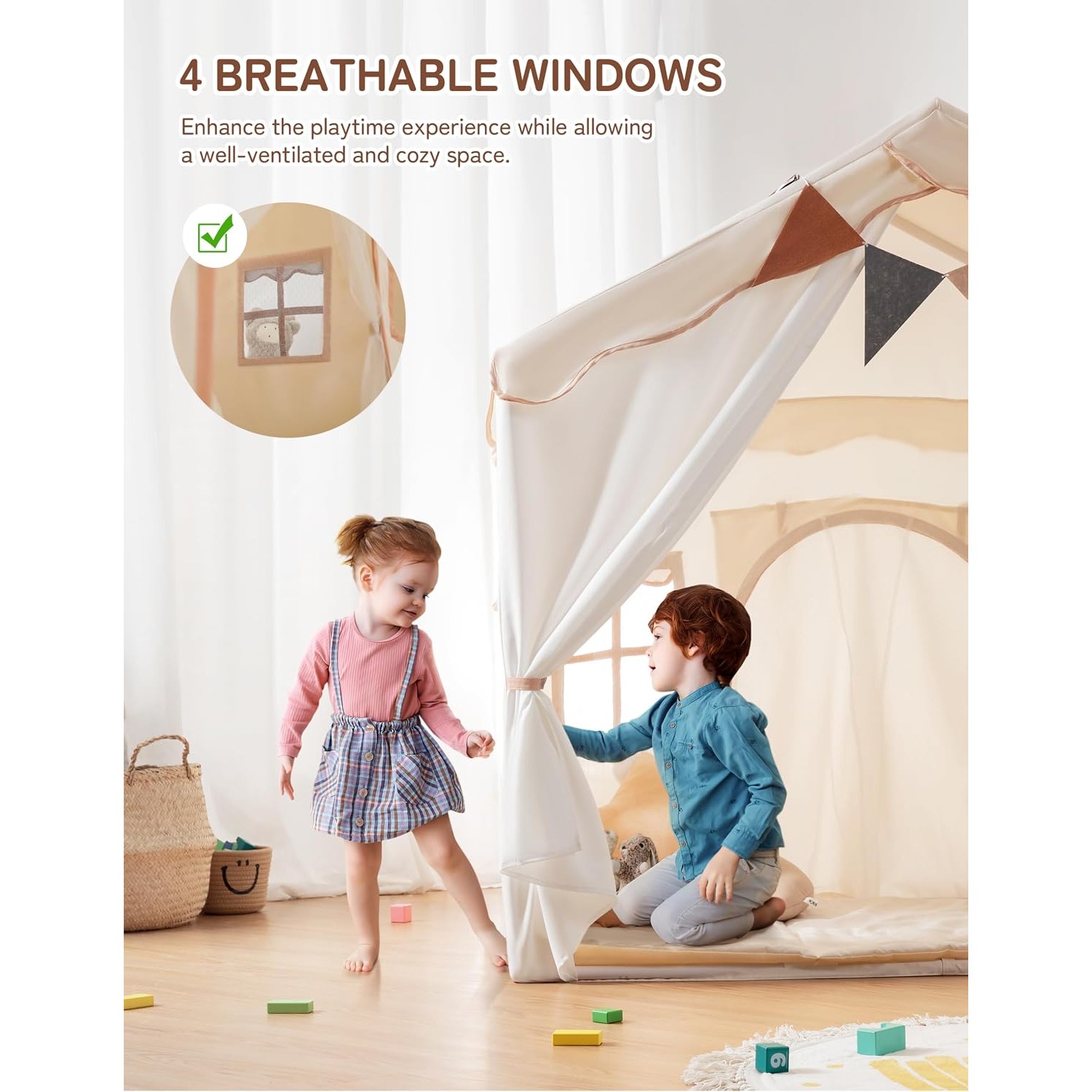
Four windows sit around the sides, each with a roll-up curtain. Those do double duty. They keep the air moving and they let you see in from the sofa without crouching at a doorway. Some families leave the room-facing curtains permanently open and let the children decide about the rest.
Size, and whether it will fit your room
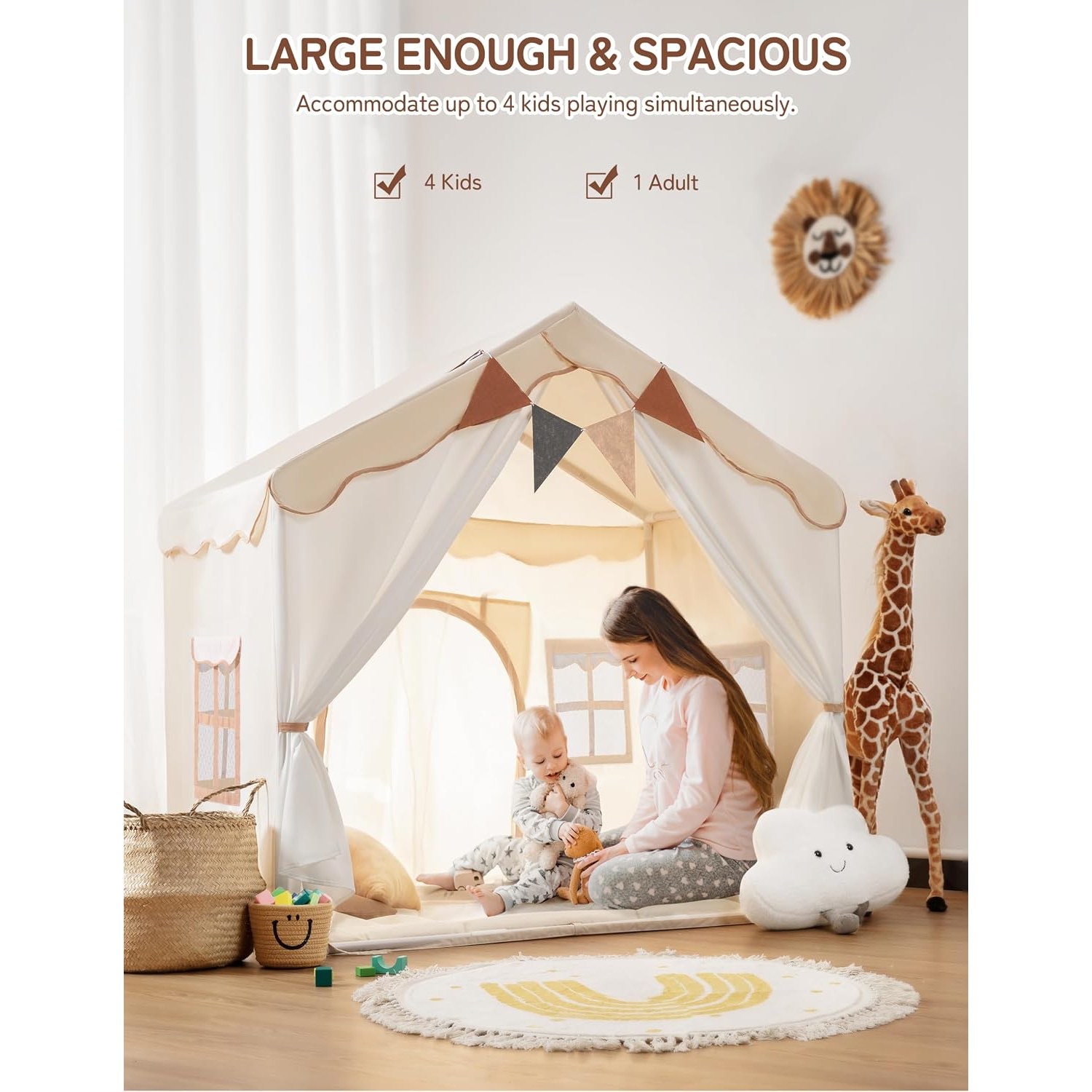
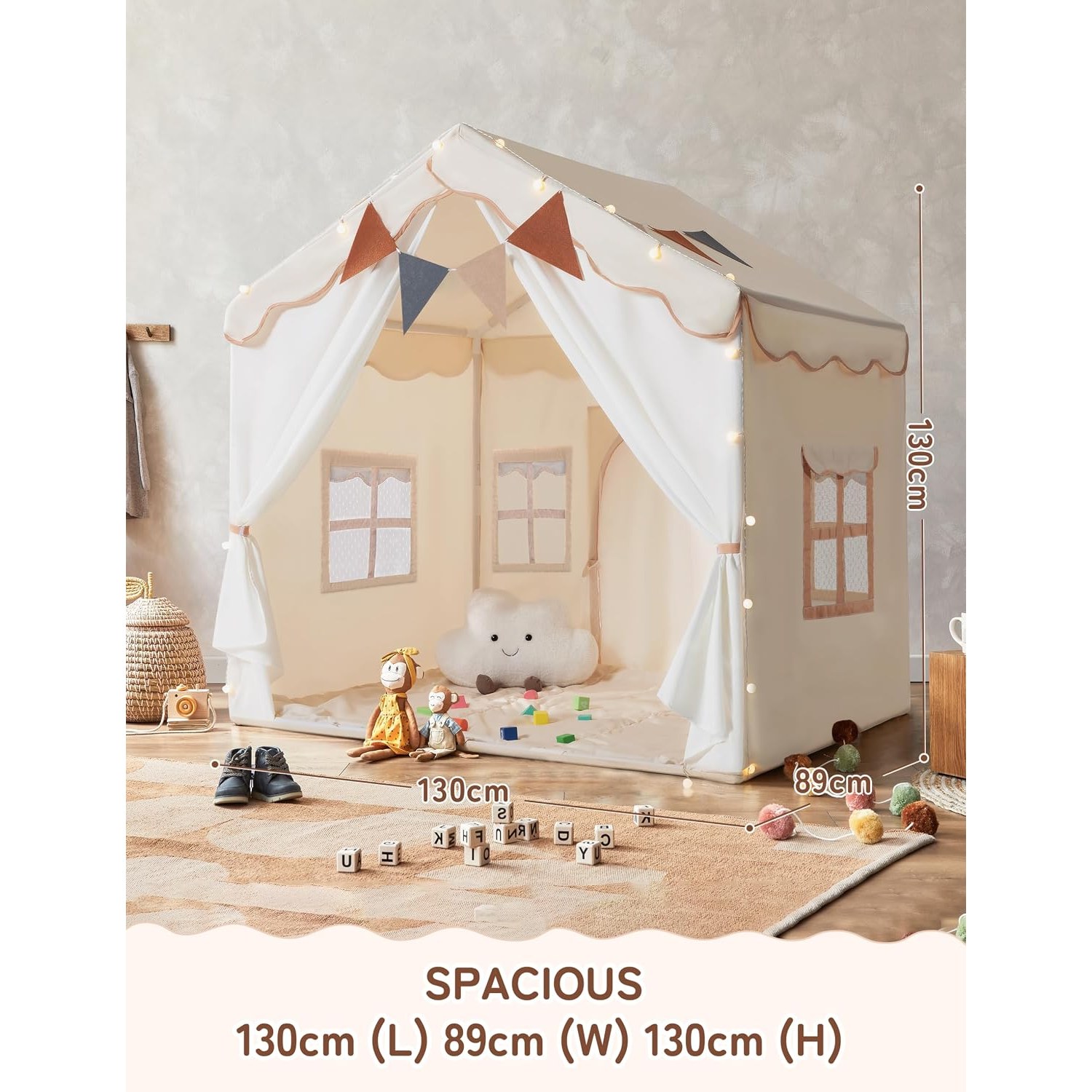
This one measures 130 cm long, 90 cm wide and 130 cm tall. In practical terms that is a footprint about the size of a single bed cut short, and a height that lets a small child stand up inside.
Three or four children fit comfortably. An adult can get in to read a book, which is worth more than it sounds, because a tent an adult cannot enter stops being a shared space and becomes a place children go to be alone. Both have their uses, but the first one gets more hours.
Before you order, measure the corner you have in mind. Leave the full footprint plus a bit of clearance at both doorways, otherwise you lose the main advantage of two doors. A tent pushed into a corner with its back door against a wall is just a one-door tent with extra fabric.
Weight is 3.65 kg assembled, which means one adult can shift it to another room without taking it apart. That flexibility is underrated. Plenty of families move a tent into the living room for a rainy weekend and back to the bedroom afterwards.
The things that come in the box
What separates the best indoor playhouse for young children from an average one is usually the extras, because they decide whether the tent is comfortable or just present.
This set includes a padded non-slip mat cut to the shape of the base. On carpet that is a nice addition. On timber, tile or laminate it is the difference between a tent children use and a tent they peer into and walk away from. Hard floors are cold and unforgiving and small children notice immediately.
LED lights are included too. They are the reason a tent like this can work as a quiet corner in the evening rather than only a daytime toy. A string of soft light inside a fabric space reads as cosy to a child in a way an overhead bulb never does. Remove them before you wash anything.
There is also a decorative banner, which sounds like a small thing but gives the finished tent a sense of occasion, particularly if it is a birthday present.
Putting it together
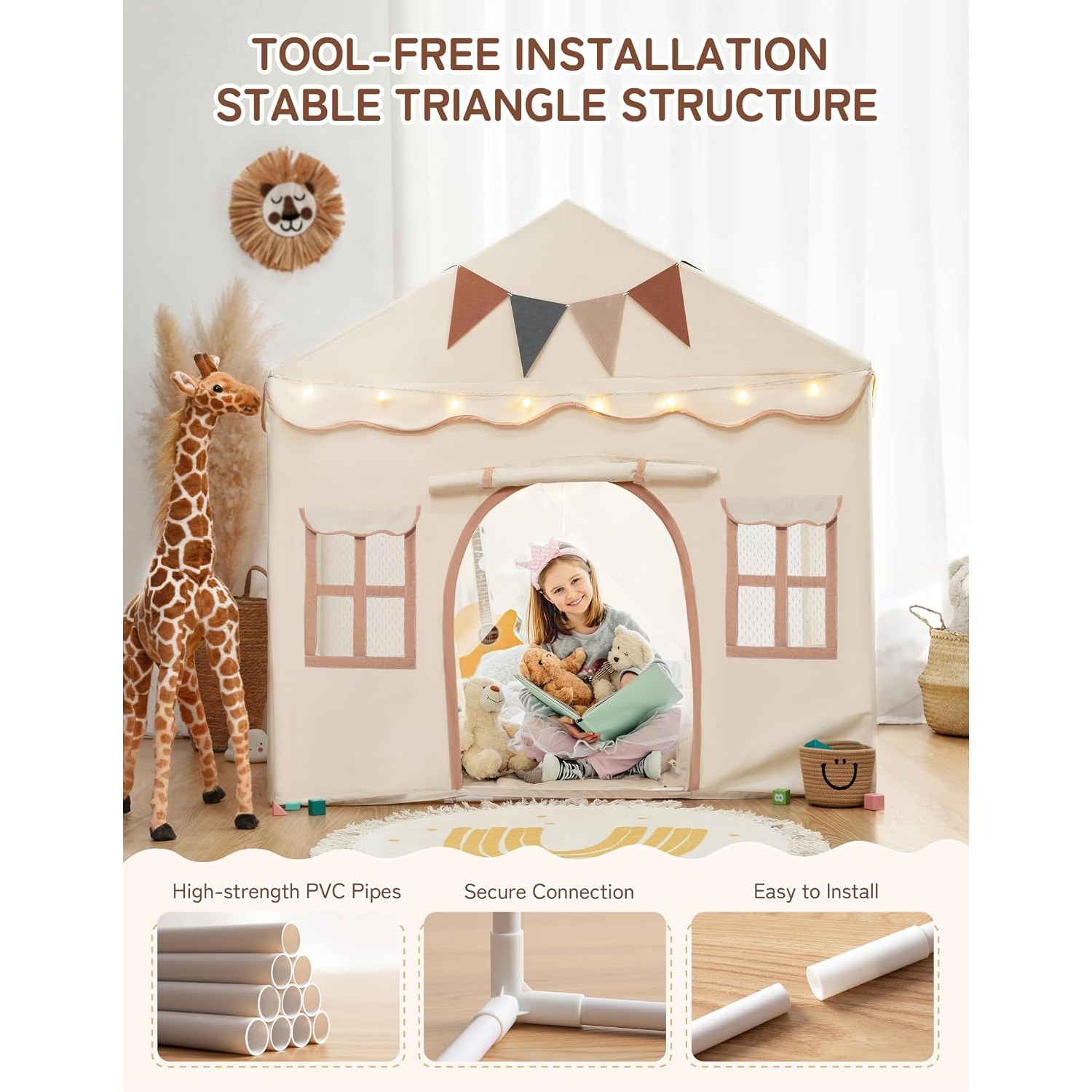
No tools are required. The poles push together by hand and the cover goes over the assembled frame. A printed manual walks through the order step by step.
One warning is worth repeating, because it is the single most common complaint with pole-frame tents. Every joint needs to be pushed fully home before you fit the cover. If each of several joints is a centimetre short, the frame ends up noticeably smaller than the cover expects, and you will be standing there convinced you received the wrong size. Go around the whole frame and press each connection firmly, then try the cover again.
Children can help with this part and usually want to. It is a reasonable first lesson in following instructions, and it means the tent feels like theirs from the start.
Who it suits
The recommended age range is 36 months to 15 years, which is wide, but the tent gets used differently at each end of it.
Younger children treat it as a den, a shop, a cave, a spaceship, whatever the week's obsession happens to be. They need supervision, mostly so the tent does not get climbed on. Around school age the games get more structured and the two doors start earning their keep in chase and hide games.
Older children shift towards using it as a retreat. Curtains down, lights on, book in hand. If you have been looking at options for the best kids hideaway tent for a child who wants somewhere to decompress, that is where this one ends up.
It also works well in shared bedrooms, where one child having a defined space of their own reduces a surprising number of arguments.
Keeping it in good shape
Fabric play tents live hard lives. A bit of routine care keeps this one looking decent.
Spot clean marks as they happen with mild soap and cool water. For anything more serious, the material is machine washable, so wash it gently and let it air dry completely before putting it back on the frame. Damp fabric on a frame will smell within a day.
Take the LED lights off before any washing and keep them dry. Wipe the poles with a damp cloth occasionally and dry them off. Shake out or vacuum the floor mat regularly, since crumbs and grit collect fast in an enclosed space.
If you take it down for storage, keep the poles bundled together with the manual and fold the cover loosely rather than cramming it into a small bag. Hard creases in polycotton take a long time to drop out.
For outdoor use, treat it as a fair weather product. A backyard afternoon is fine. Rain, dew or an overnight stay outside is not.
The short version
If you want a play tent that keeps getting used rather than one that quietly disappears into a cupboard, look for two things beyond the picture, how children get in and out, and what is underfoot.
This tent handles both. Two doors instead of one, four curtained windows for air and visibility, a padded mat sized to the base, and lights that make it work after dark. It is big enough for a few children at once, light enough to move, and goes together without tools.
Measure your corner, give both doorways some clear floor, and push every pole joint fully home on build day. Do that and you have a space your child will keep coming back to.