

The complete guide
How To Choose A Princess Castle Play Tent That Actually Gets Used
The problem with most play spaces
Children collect toys faster than homes can absorb them. What they rarely get is a space, a defined spot that is theirs, with a door and walls and the right to say who comes in. Watch any child at a family gathering and they will eventually build one out of sofa cushions, a dining chair and a bedsheet. The structure always collapses. The urge behind it does not.
A princess castle play tent answers that urge properly. It stands up on its own, it has a real doorway, and it stays put for as long as you want it there. For a child who is working out how to be alone without feeling lonely, that matters more than another box of plastic figures.
It also solves a practical problem for parents. A tent gives loose toys somewhere to live. Books, soft toys and dress-up clothes migrate into it, and the rest of the room looks tidier as a result. It is not storage exactly, but it works a bit like it.
What this one actually is
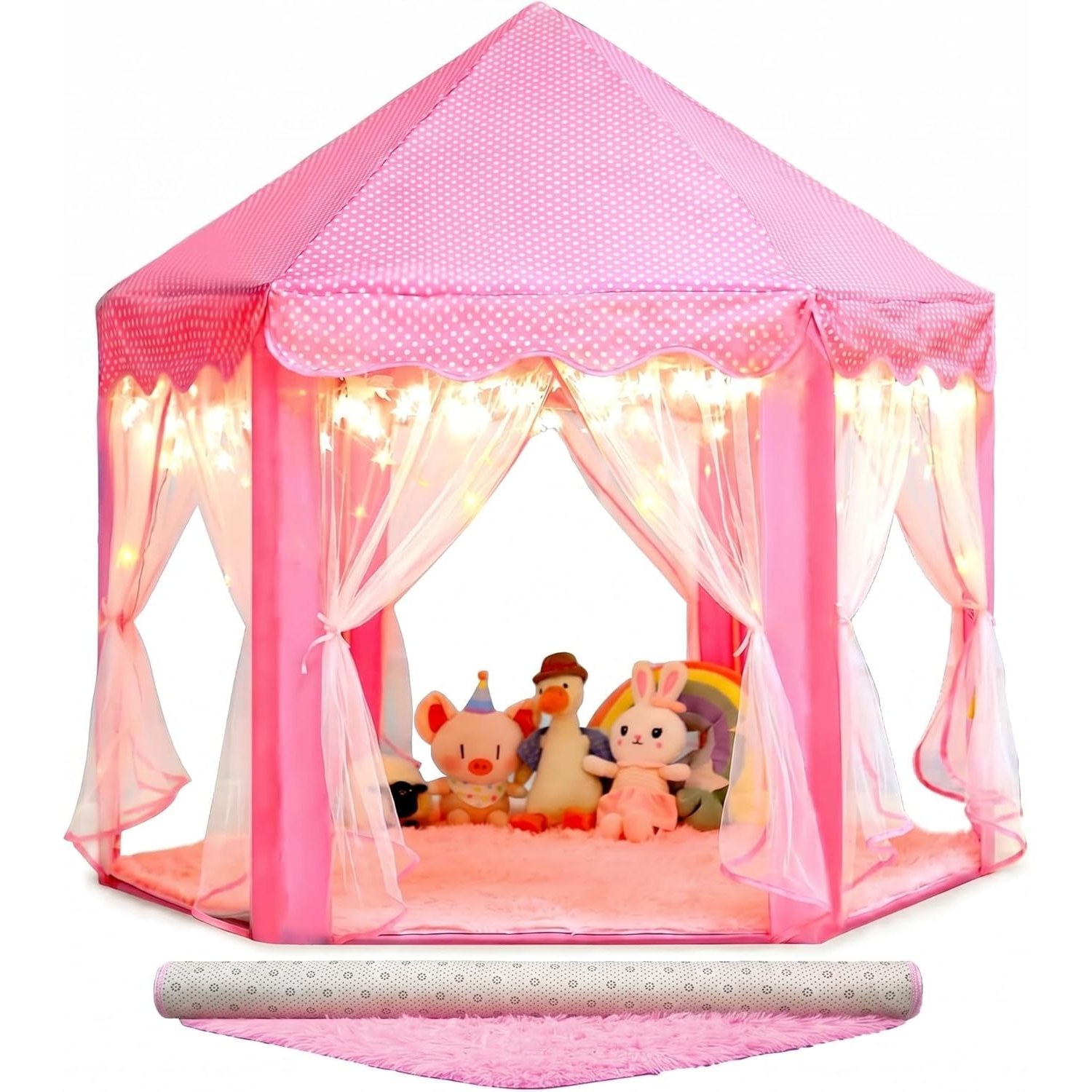
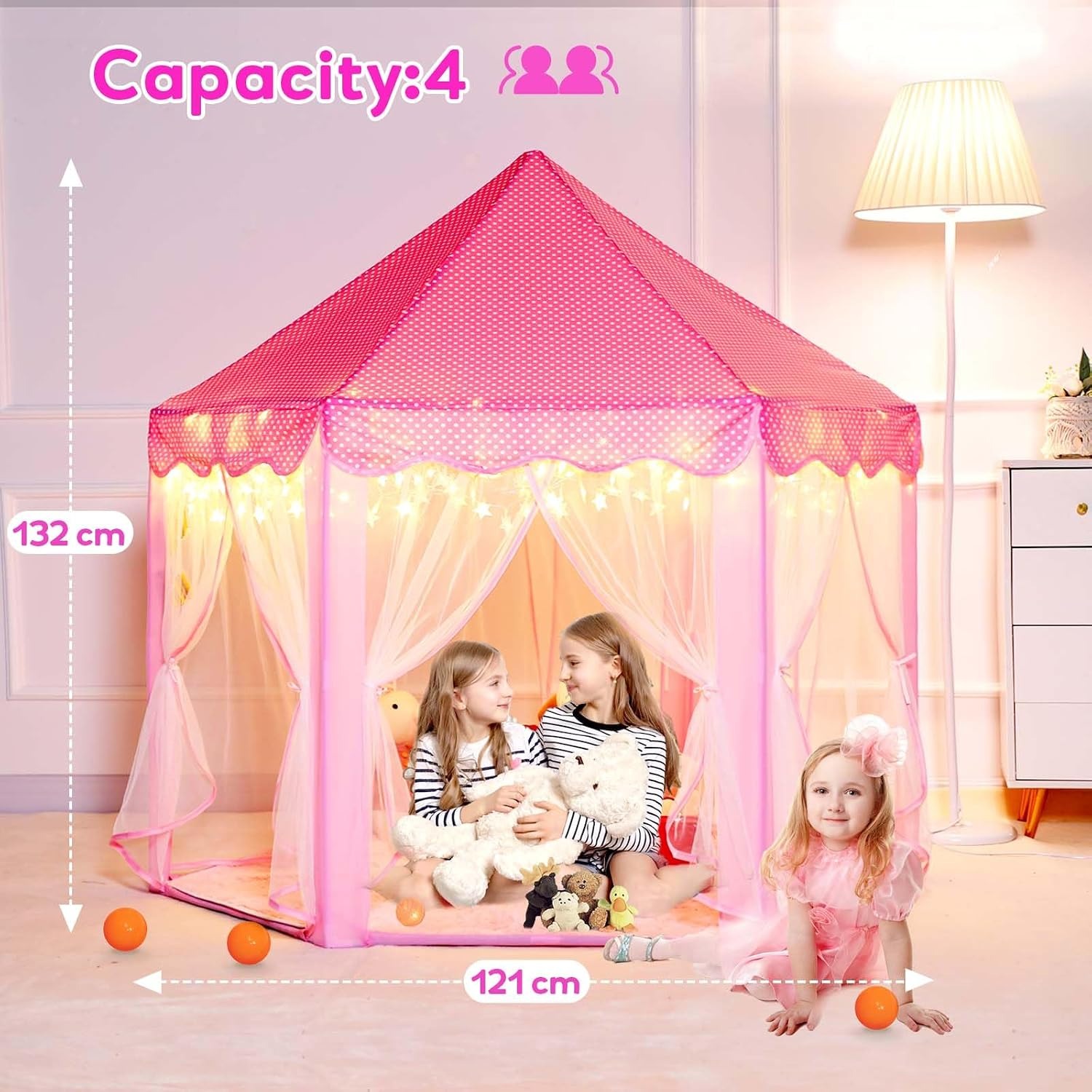
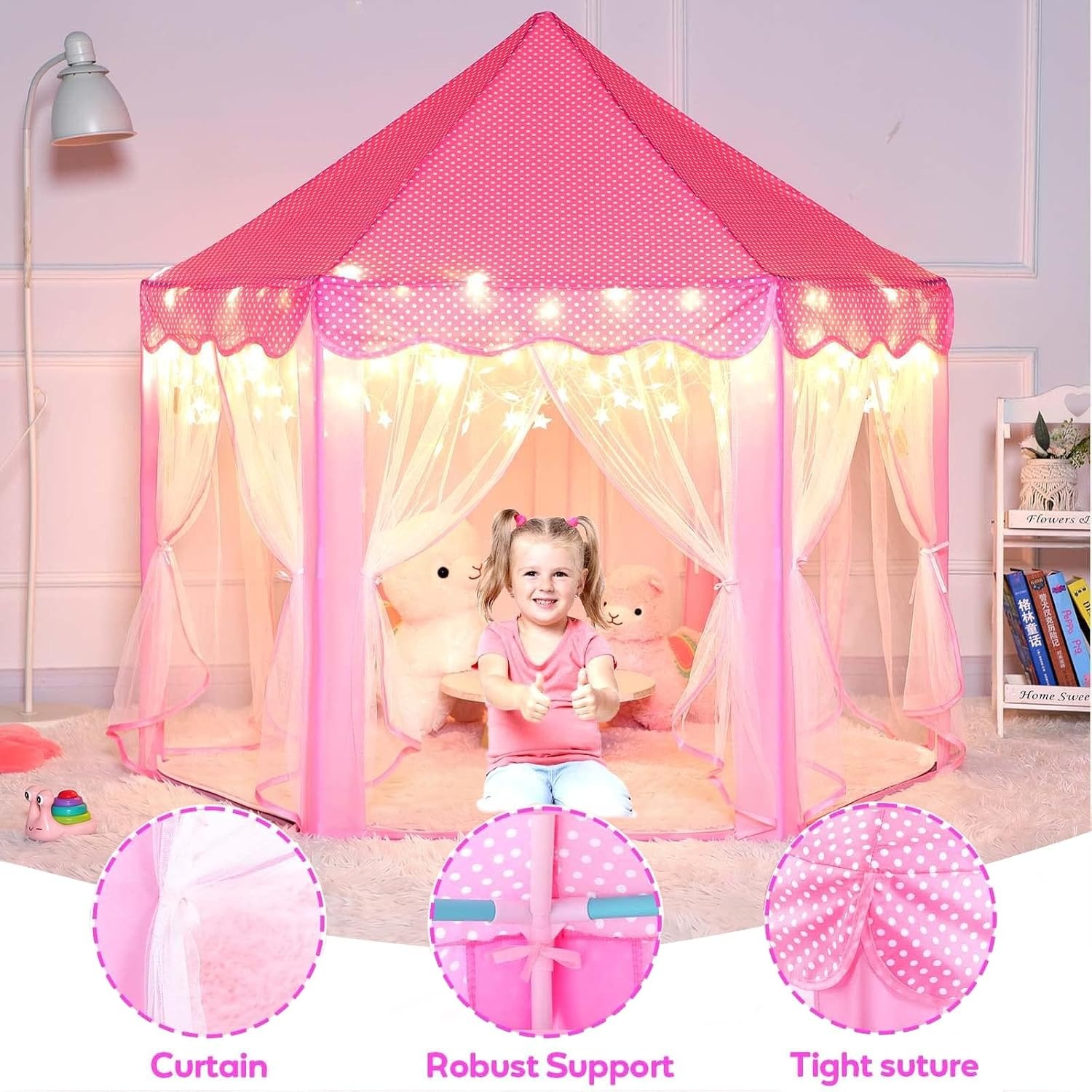
This is a pink castle-shaped playhouse measuring about 121.9 cm square and 132.1 cm tall. The shell is polyester, the frame is listed as aluminum or metal, and the listed product weight is 2.21 kg. The set is called Pink Princess Tent with Rug, and the box includes the tent, poles, connectors, a rug, a carry bag and a step by step manual.
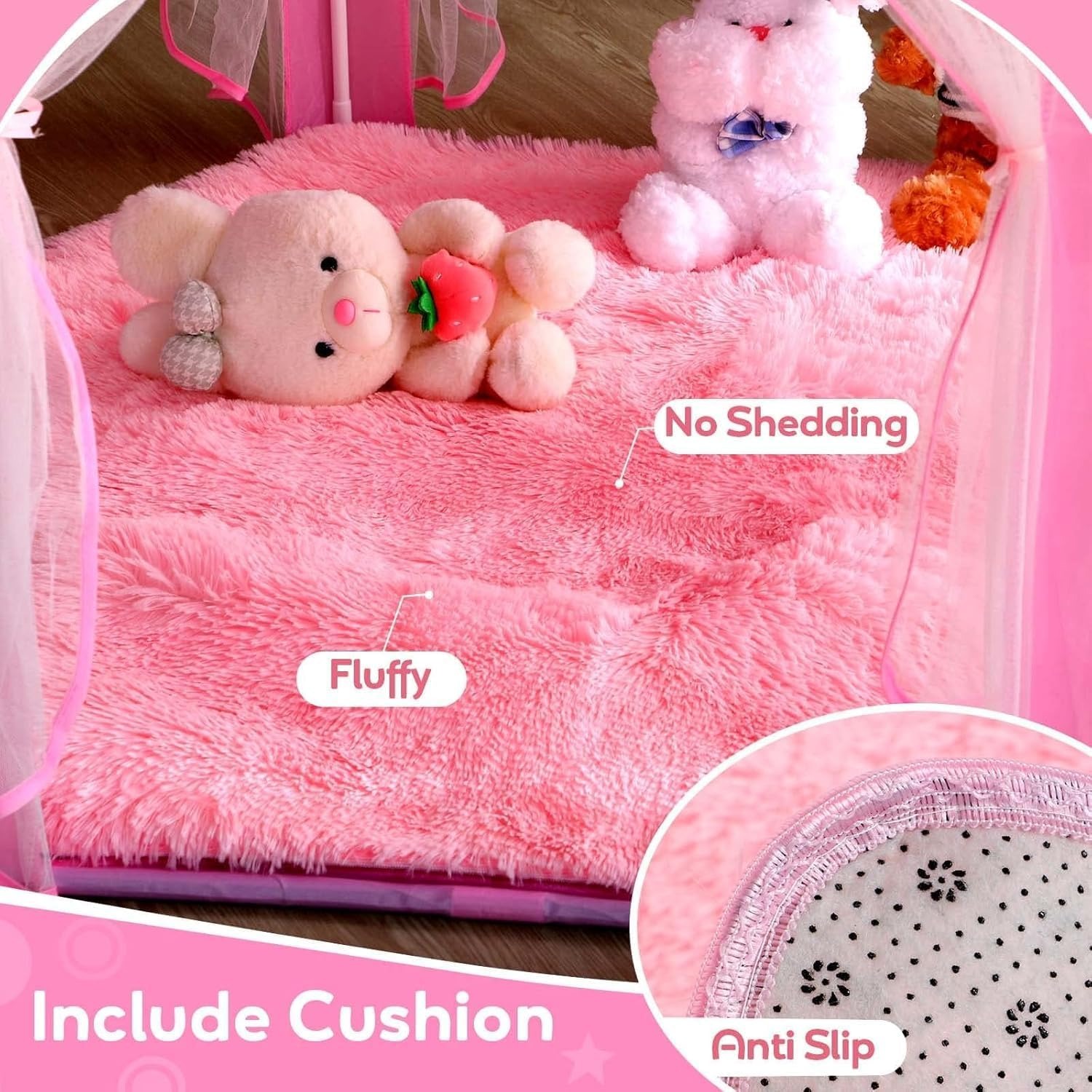
The rug deserves attention. Plenty of play tents are just fabric and poles, which leaves you with a lovely castle sitting on cold floorboards. Children notice immediately and start hauling in blankets. Here the floor is sorted on arrival, and the rug also helps the tent stay where you put it instead of sliding across a smooth surface.
Mesh sections in the walls keep air moving and let daylight in. That stops the inside feeling like a sealed box, and it means you can glance in from across the room without having to open the door flap and interrupt whatever story is happening in there.
The manufacturer lists a minimum age of 36 months, with the age range described as young child. In real homes it tends to get used well past that. A six or seven year old will still disappear into it with a book.
How the build works
Assembly is a hand job, no tools involved. Poles push into connectors to form the castle frame, then the fabric shell goes over the top. The manual walks through the order, and the first build usually takes twenty minutes or so while you work out which pole goes where. After that it is a five minute task.
Two habits make a big difference to how long it lasts. First, make sure every pole is fully seated in its connector before you slide the fabric on. A half-seated pole is what causes a wobbly wall and eventually a bent frame. Second, when you take it down, pull the poles apart gently at the joint rather than yanking the whole frame sideways.
Pack-down is the part people underestimate when buying. Any tent that is a chore to dismantle ends up living in one spot forever, which is fine if you have a playroom and annoying if you do not. This one folds into its carry bag, so it can come out for a wet Saturday and disappear again before visitors arrive on Sunday.
Who it suits
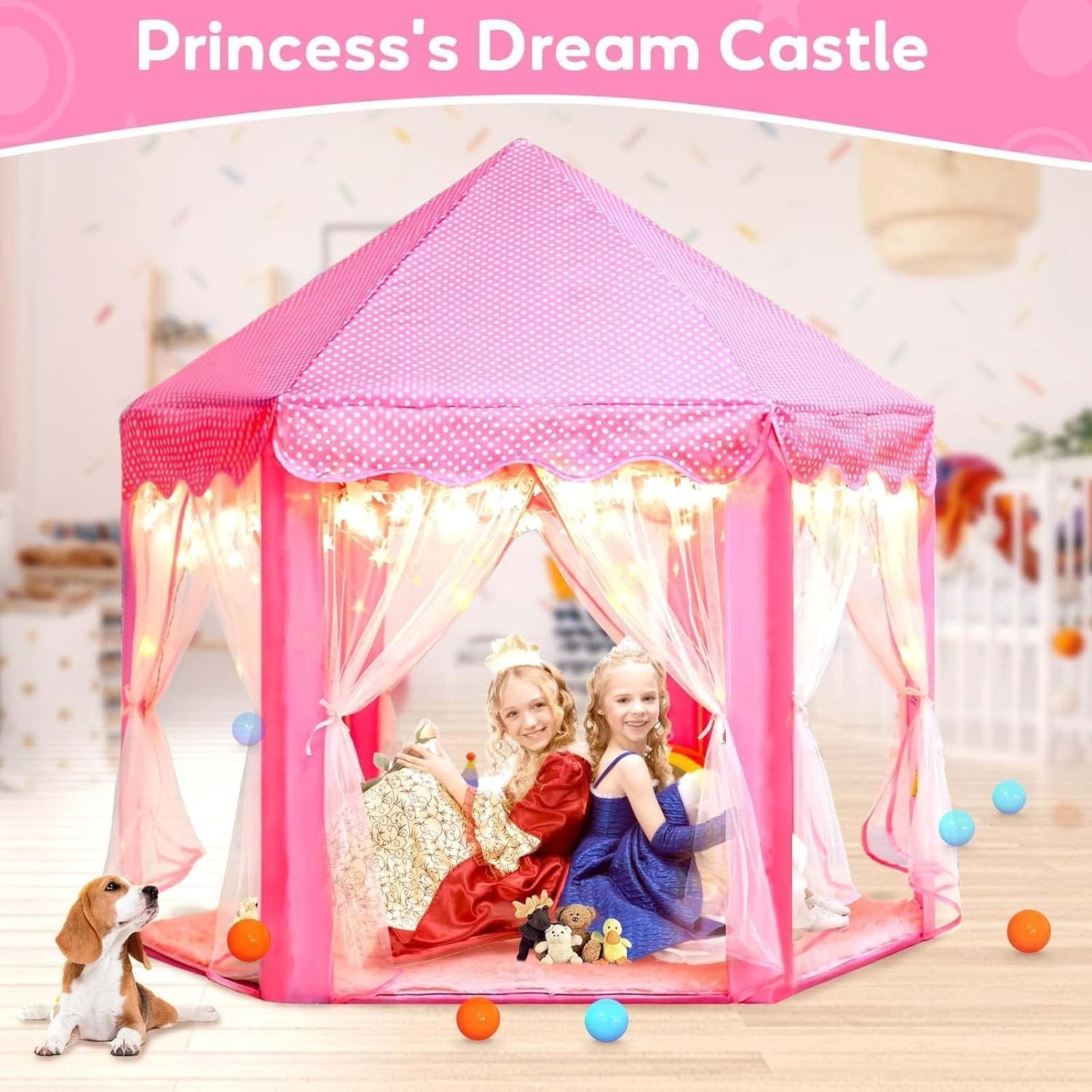
It suits homes without a dedicated play area, because it can be set up and cleared in minutes. It suits only children who want somewhere to retreat, and it suits siblings who need a bit of separation in a shared room. At over a metre square, two can share it without climbing over each other.
It is a strong gift option too. The set is complete rather than a single piece, so nobody has to go shopping for a mat or a bag afterwards. If you are gifting it, just warn the recipient that an adult should do the first build.
It is less suited to very small rooms where 1.2 metres square would block a walkway, and it is not camping gear. It will handle a calm, dry afternoon in a backyard or a park, but it should come indoors before wind or rain. Treat it as an indoor toy that visits outside occasionally.
How to choose between play tents
Start with the footprint. Measure the actual floor space you can give up, then compare it with the tent's dimensions, not the picture. A tent that looks modest online can dominate a small bedroom. Leave a bit of clearance so the walls are not pressed flat against a closet.
Then look at height. At 132 cm, a child can stand up inside, and most adults can kneel in comfortably. Shorter tents force everyone to crawl, which is fine for a young child and less fun for the parent who gets invited in for tea.
Check what is included. A tent and poles is the bare minimum. A rug and carry bag change the day to day experience, because the floor is comfortable and the storage problem is already solved. These small inclusions are often what separates a tent that gets used weekly from one that gets used twice.
Finally, think about ventilation and visibility. Mesh sections keep air moving and let you see in. Fully solid walls look dramatic but can feel close on a warm day, and they make supervision harder with younger children.
Keeping it in good shape
Cleaning is simple. Wipe the polyester with a damp cloth and a little mild soap, then let it dry in the air before you fold it. Skip bleach, washing machines and tumble dryers, since heat and harsh chemicals do more damage to a lightweight play tent than anything a child will spill on it.
The rug can be shaken out or vacuumed, and small marks spot clean with mild soap and water. Let it dry fully before it goes back inside the tent, because a damp rug sitting on a closed tent floor is how musty smells start.
For storage, the carry bag is the obvious home. Make sure the fabric is completely dry before it goes in, and keep the bag somewhere dry rather than in a damp garage corner. If the tent is staying up long term, move it occasionally so one patch of carpet is not permanently flattened, and keep it away from radiators and direct sun that can fade the colour over time.
One more thing worth saying to children directly. The frame is light, which is what makes the tent easy to move, and it also means it is not built to be climbed on, leaned against or swung from. Children who understand that get years out of a tent. Children who do not tend to bend a pole within a month.
The short version
This is a roomy pink castle tent, about 1.2 metres square and 1.3 metres tall, made from polyester over a light metal frame. It arrives with a rug, a carry bag, poles, connectors and a manual, and it builds by hand without tools. The listed minimum age is 36 months.
If you want to give a child a corner that is genuinely theirs, without committing a whole room to it, this does the job. Set it up, add a cushion and a few books, and see how long it takes before someone refuses to come out for dinner.