
The complete guide
How to Choose a Kids Teepee Tent That Gets Used Every Day
The problem with most play tents
Plenty of play tents get opened on a birthday morning, used hard for a fortnight, then quietly end up behind the sofa. The reasons are usually the same. The tent is too small to sit up in, so it stops being comfortable after ten minutes. Or it is flimsy, so it collapses the moment someone leans on a pole. Or it looks so loud and cartoon-bright that parents move it out of the lounge and into a back bedroom, where nobody plays.
A teepee avoids most of that. It is tall enough for a child to sit upright without ducking. The frame is rigid rather than sprung, so it holds its shape. And in a plain colour it sits in a family room without screaming for attention. That combination is what keeps it in daily use rather than in storage.
The other quiet benefit is screen-free play. You cannot make a child read, but you can make a corner that is more inviting than the sofa. A low glow, a soft floor and a space that belongs to them does a surprising amount of work.
How a teepee tent actually works
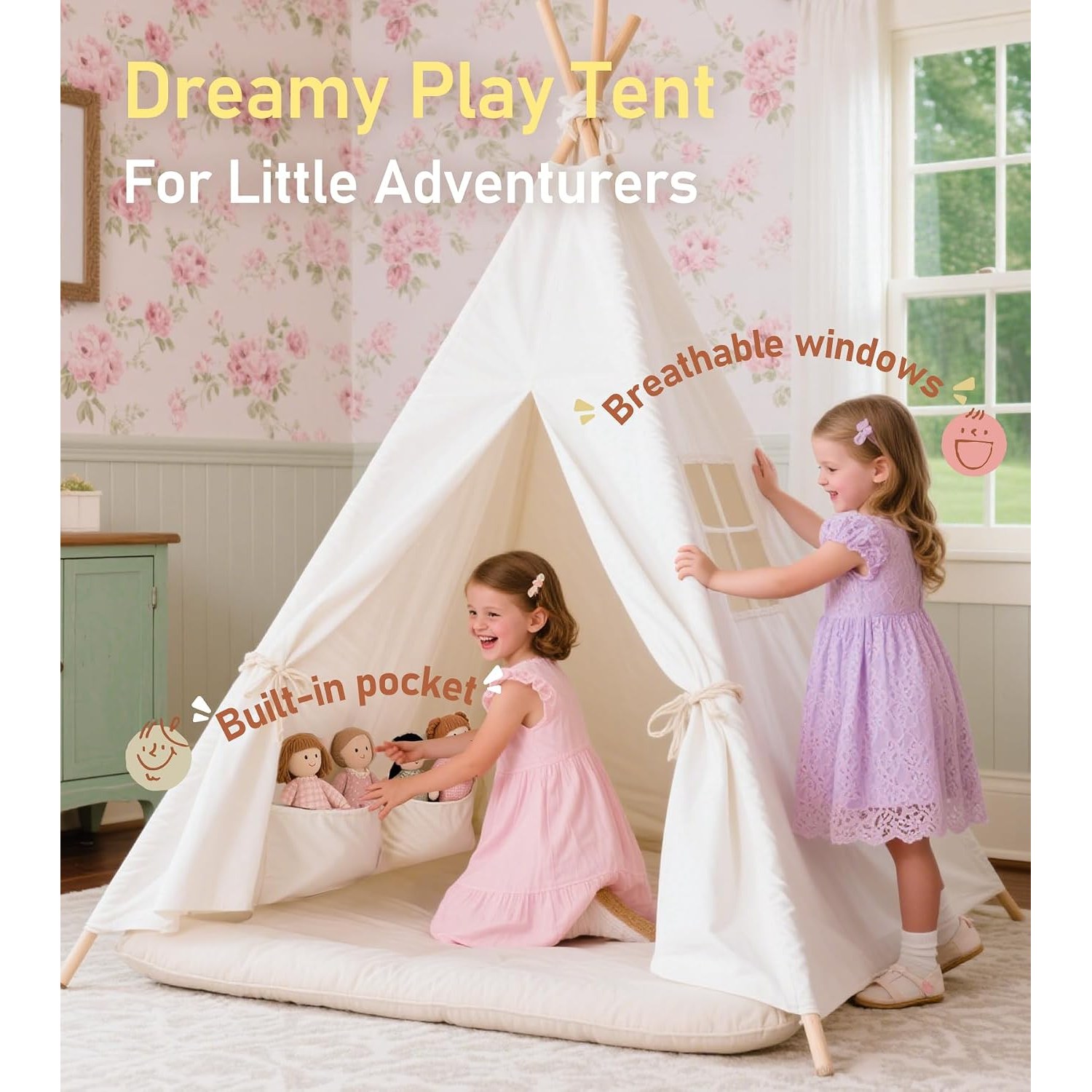
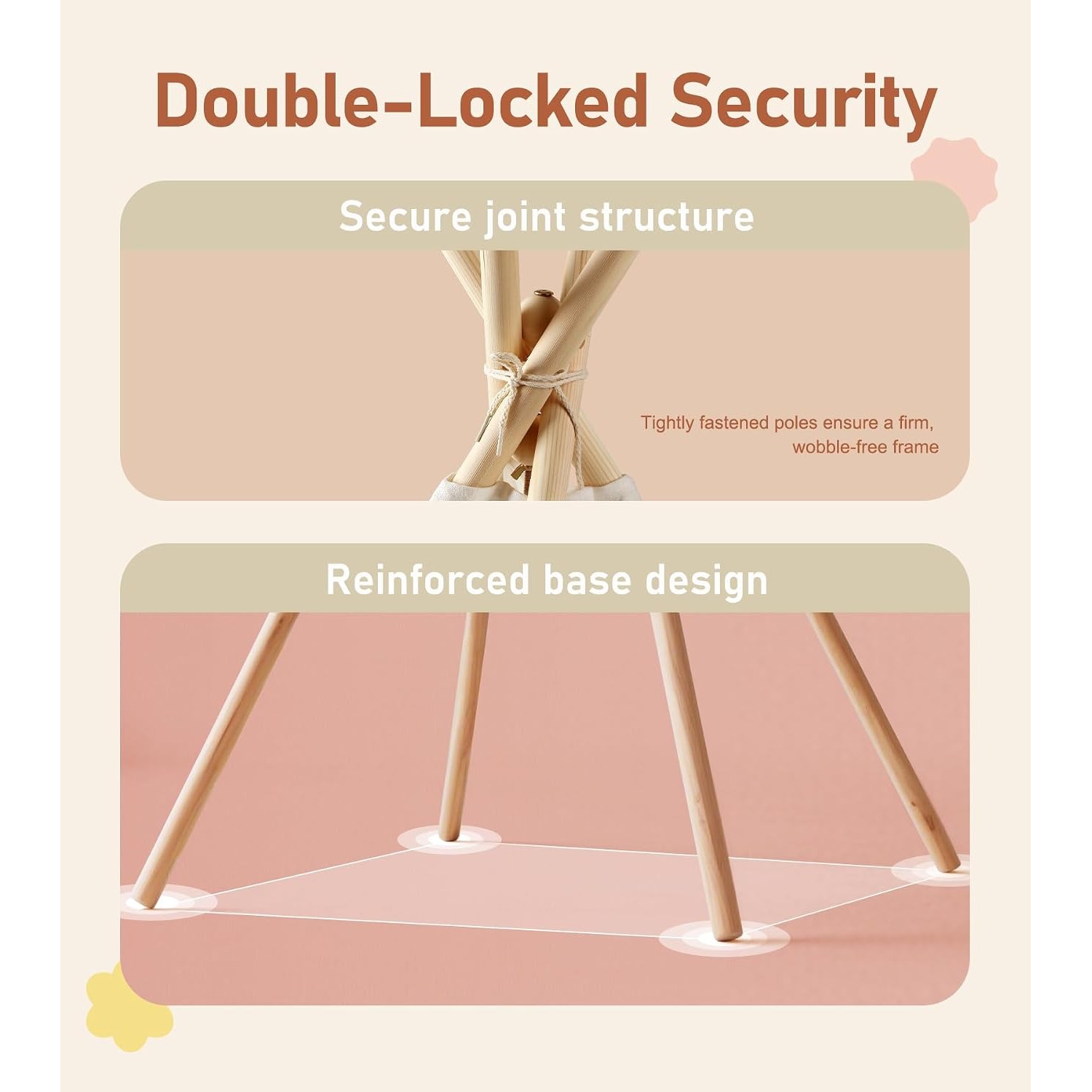
The build is simple on purpose. Four pine wood poles cross near the top and are held together by a cord. The fabric cover slips over the frame and the whole thing stands on its own by spreading the base outward. Gravity and geometry do the rest.
That means two things matter when you set it up. First, the top cord has to be tight. A loose cord lets the poles shift and the tent leans. Second, all four corners need to sit flat on level floor. If one corner rides up on a rug edge or a skirting board, the frame is pulled out of square and the tent looks wonky no matter how many times you adjust the top.
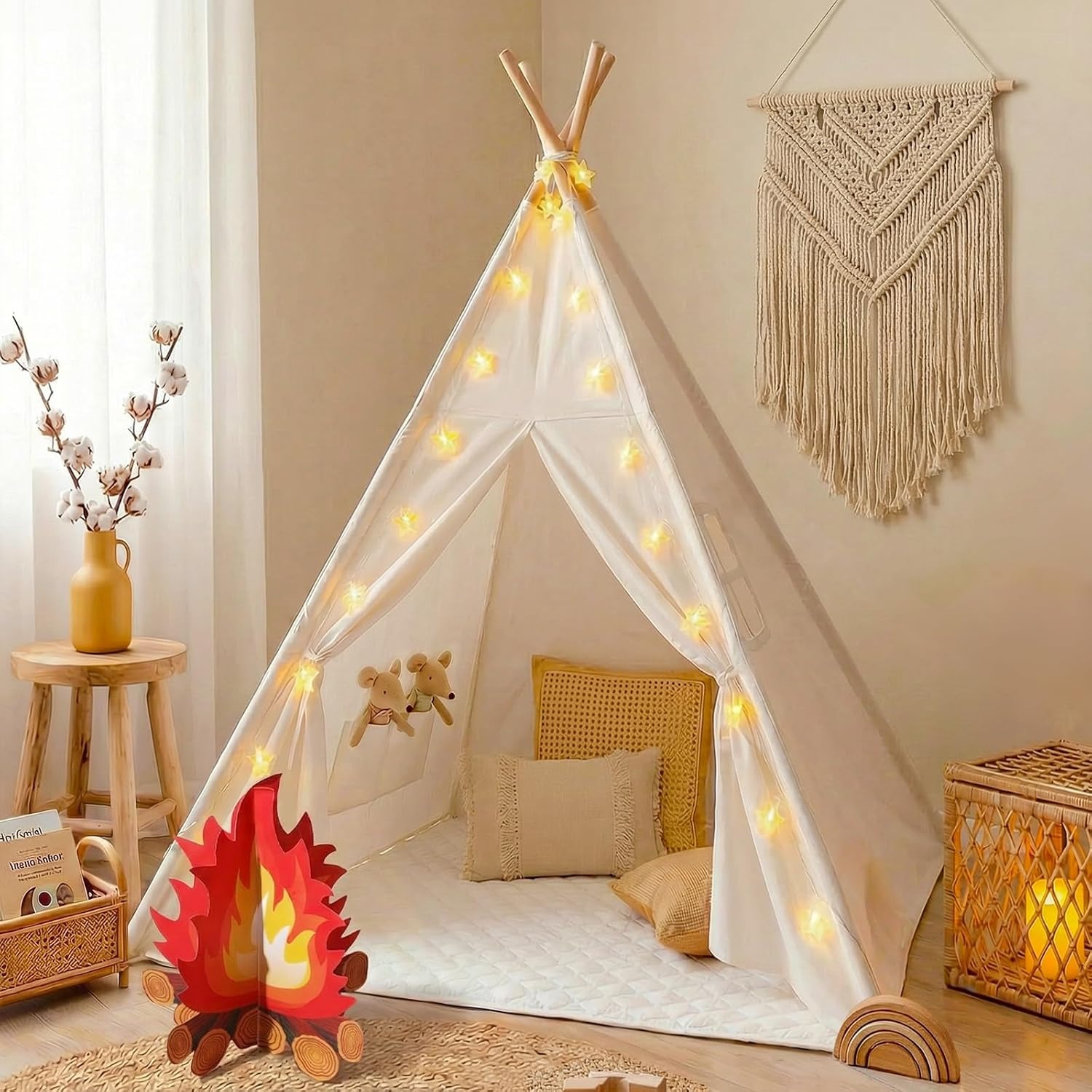
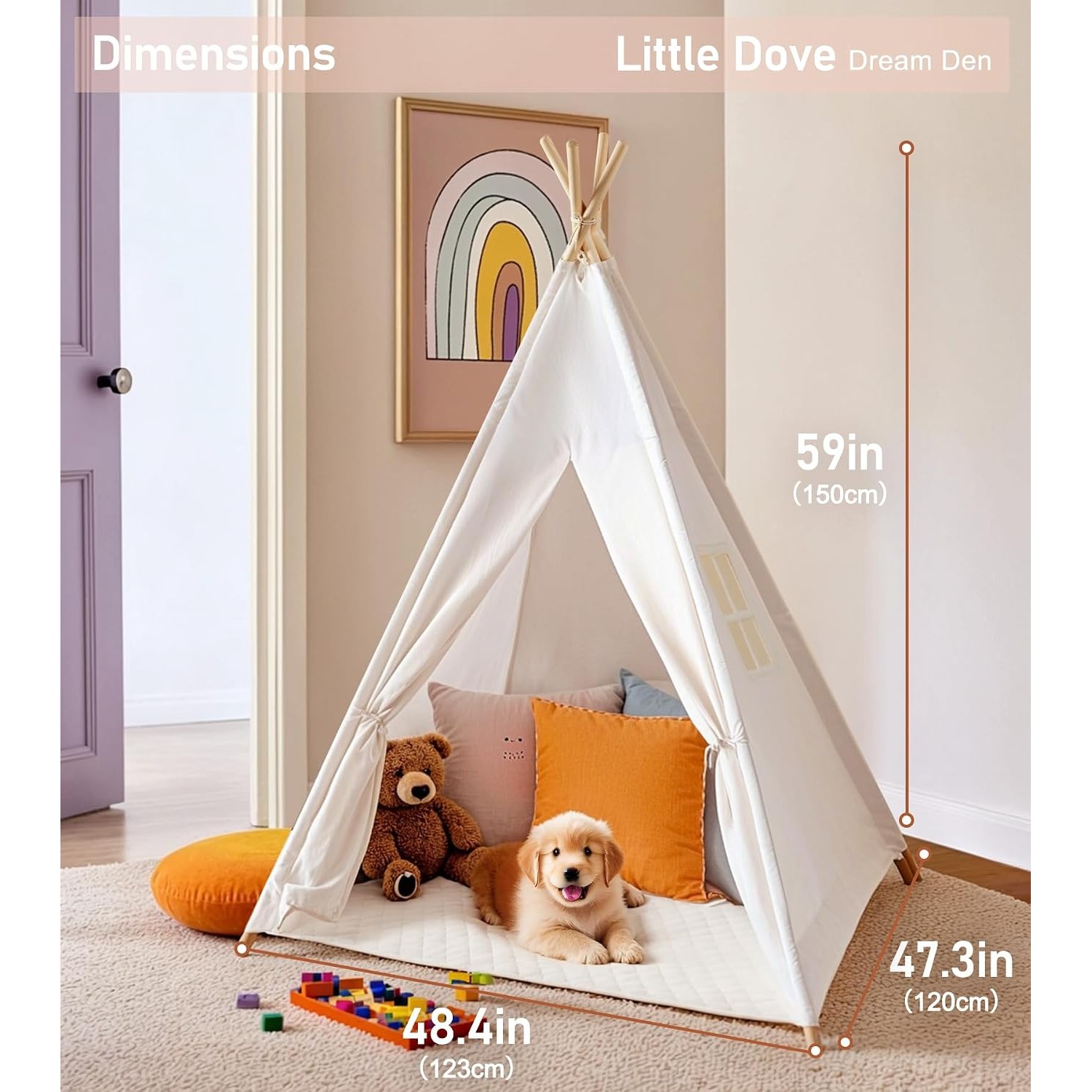
On this model the cover is polyester and the frame is pine. The footprint is 120 cm long by 123 cm wide, with a top height of 150 cm. In plain terms, that is about a metre and a quarter square on the floor and a metre and a half to the peak, which is enough for a child to stand under the middle or lie down diagonally with a cushion.
What the extras add
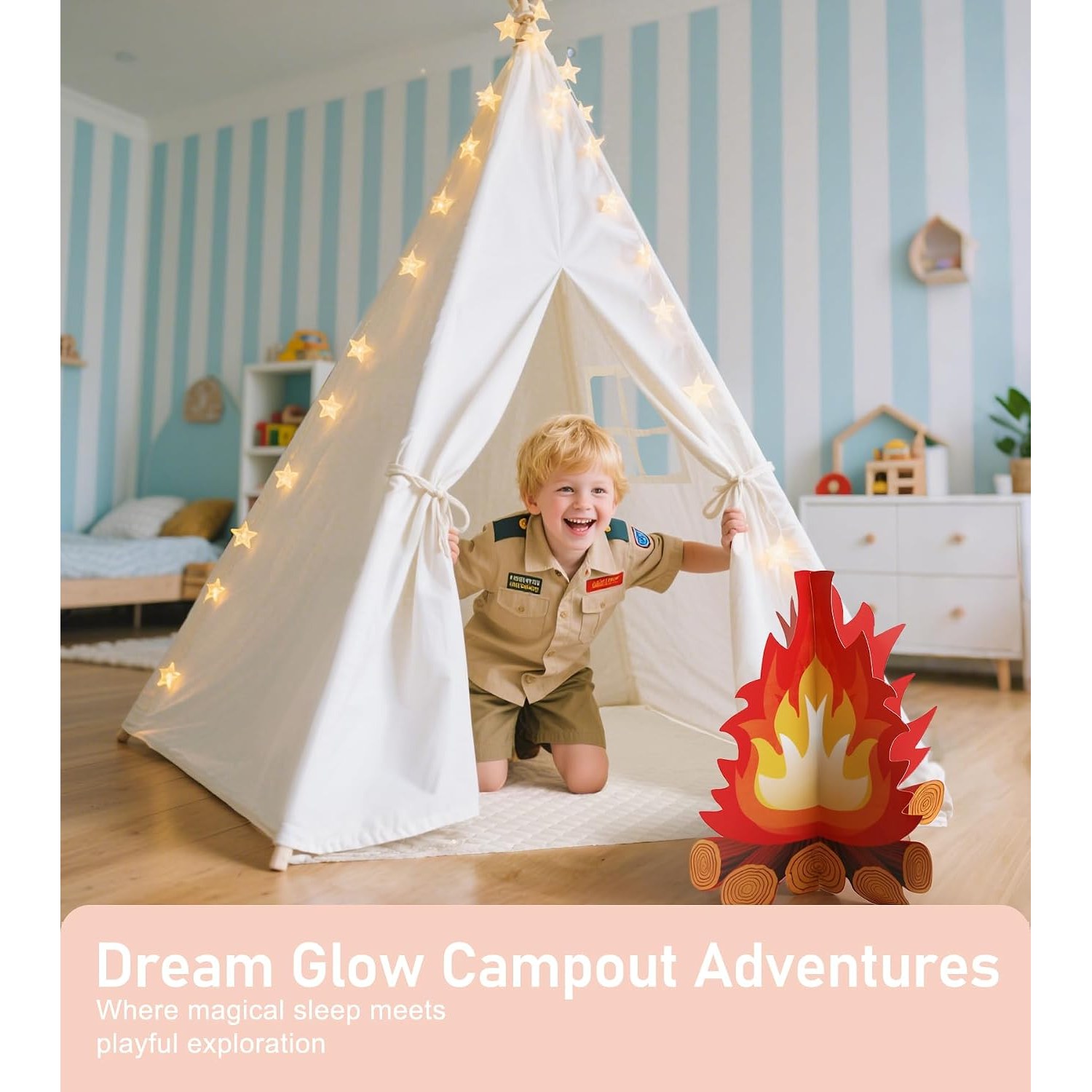
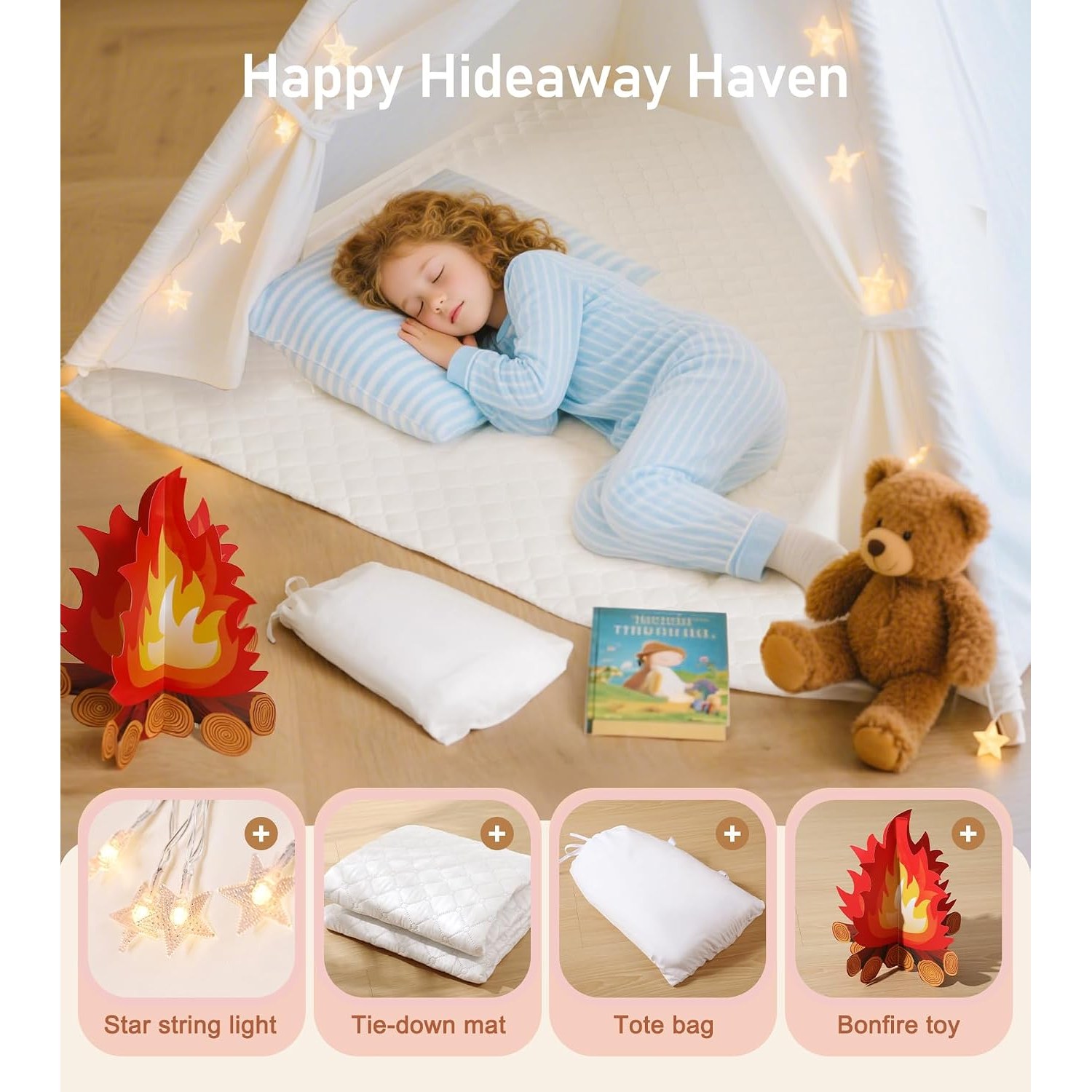
Where this set differs from a bare tent is what comes with it. The listed components are the teepee tent with a carry case, a banner, fairy lights and olive branches, and the maker also describes a pretend campfire toy for indoor camping games.
The lights are the piece that changes the mood most. A teepee in daylight is a tent. A teepee with a soft string of lights after bath time is a campsite, and kids treat it differently. The pretend campfire does similar work for imaginative play. Sit around it, pretend to toast marshmallows, tell a story, and suddenly a quiet Tuesday evening is an adventure.
The banner and olive branches are styling pieces. They matter more than you might expect, because a tent that looks finished out of the box is a tent that stays in the living room. A plain cover often prompts a shopping list of extras before it looks right.
Who it suits
The listed age range starts at 36 months. In practice, the sweet spot runs from around three to roughly seven or eight, when children still like a den but have outgrown needing a parent inside it with them.
It works well for a few specific situations. Only children who want a space of their own. Siblings who share a room and need a boundary that is not a door. Children who are being coaxed into reading and respond better to a cosy corner than a desk. And families with a playroom that needs one defined zone rather than toys spread wall to wall.
It is less suited to very rough-and-tumble play. A teepee is not a climbing frame, and no fabric-and-pole structure handles being jumped on. If your child's play style is physical, you will get more life out of it by setting an early rule that the tent is for sitting in, not wrestling in.
How to choose and where to put it
Start with a tape measure. Mark out 120 cm by 123 cm on the floor of the spot you have in mind and leave a little breathing room on each side so the walls do not push the poles inward. Check the ceiling too, since 150 cm is nothing for a standard room but can be awkward under a sloped attic ceiling or a loft bed.
Think about the floor. Hard floors are easy, and a rug or folded quilt underneath makes the inside far more comfortable. Carpet is fine, though a very deep pile can make the base feel unsteady, in which case a flat rug under the tent helps.
Think about where the lights will run. A corner near a socket is simpler than the middle of a room, and it keeps any cable tucked out of the walkway. An adult should always be the one setting up and taking down the lights.
Finally, be honest about whether the tent lives up permanently or packs away. This one folds into a carry case, so you genuinely can put the floor back when guests come. If you know you want it up all year, choose a corner you are happy to lose rather than a spot in the middle of a busy room.
Keeping it in good shape
Care is low effort. Spot clean the polyester with a damp cloth and a little mild soap, then let it dry completely before folding. Take the fairy lights and campfire out first so nothing gets wet. Skip the washing machine, since the shape and seams do not love a spin cycle.
The pine poles want a dry cloth, not a wet one. Keep them out of damp cupboards, garages and sheds, because wood stored damp does not come back the same.
When you pack it away, fold it loosely into the case rather than cramming it in. Hard creases set into fabric over time and they are noticeable when you set the tent up again. Store the case somewhere dry and flat.
Small things that make it get used more
A few habits make the difference between a tent that lasts a fortnight and one that lasts years.
Put something soft inside on day one. A cushion and a blanket turn a tent into a place to stay rather than a place to look at.
Let them decorate it. Drawings taped to the inside of the cover, a favourite toy on guard duty, a flashlight in the corner. The more it feels like theirs, the more they use it.
Build a small ritual around it. A story in the tent before bed, or ten minutes of reading in there after school. Rituals do more for use than novelty ever does.
Move it occasionally. A teepee in a new corner feels like a new tent to a four-year-old, and it costs you nothing.
The short version
This is a 120 by 123 cm teepee standing 150 cm tall, with a polyester cover in beige over a pine wood frame. It arrives with a carry case, fairy lights, a banner and olive branches, and The maker includes a pretend campfire for indoor camping games. Setup comes down to tightening the top cord and laying all four corners flat.
It suits children from around three up, works best indoors, and folds away when you want your floor back. Measure your corner first, add something soft inside, and it will earn its space.