
The complete guide
Choosing a Kids Play Tent That Actually Gets Used
The problem with most play tents
Plenty of play tents get bought with good intentions and end up shoved behind a closet by March. The reasons are usually the same. They are too big for the room. They take forever to set up, so nobody bothers after the first weekend. They are stuffy inside. Or they look like a toy from a catalogue rather than somewhere a child actually wants to be.
What children want is simpler than the packaging suggests. They want a small space with a door they control, something that feels separate from the rest of the house. That is it. The theme matters, but only because it gives the space a story. The practical side matters more, because a tent that is awkward to put up or too hot to sit in will not get used.
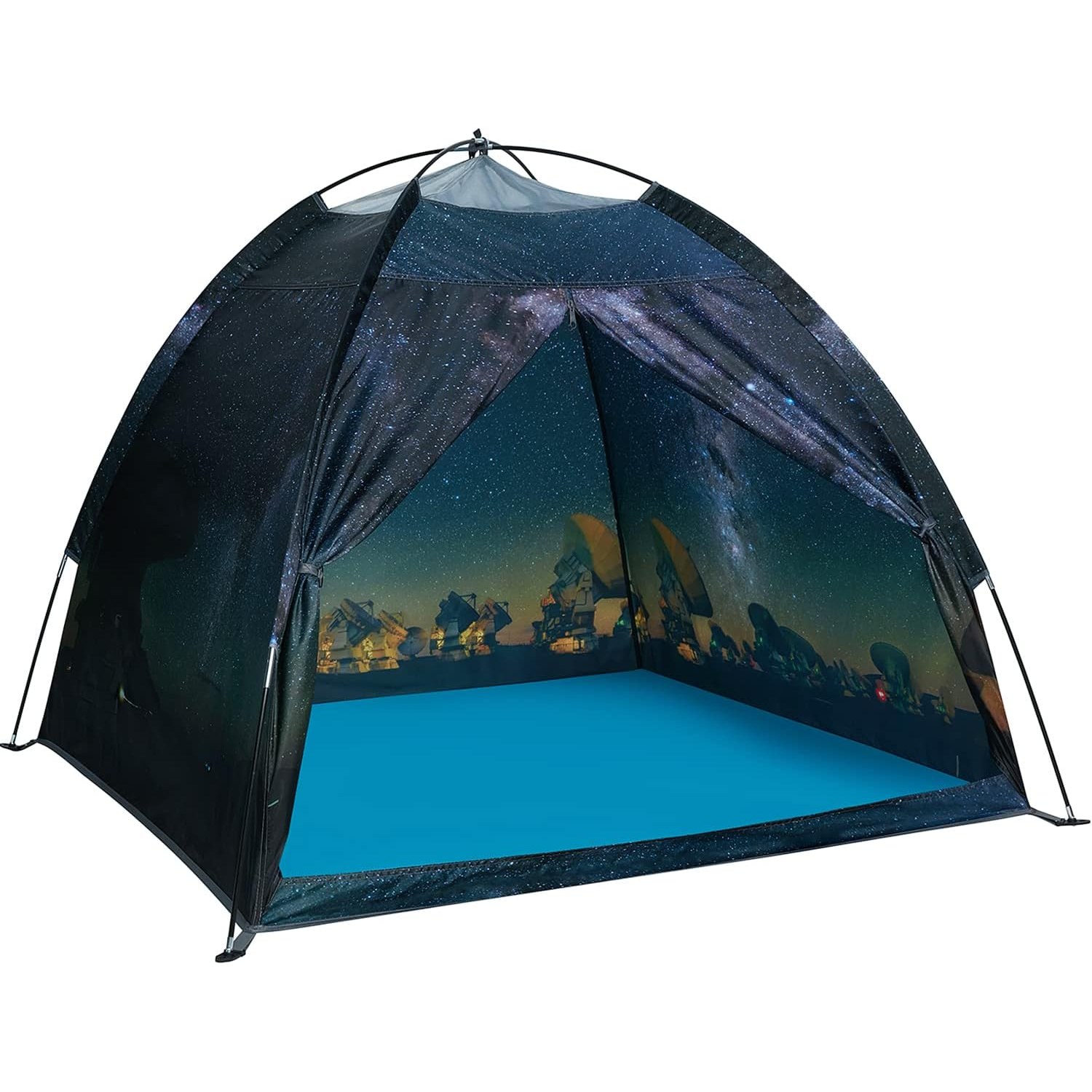
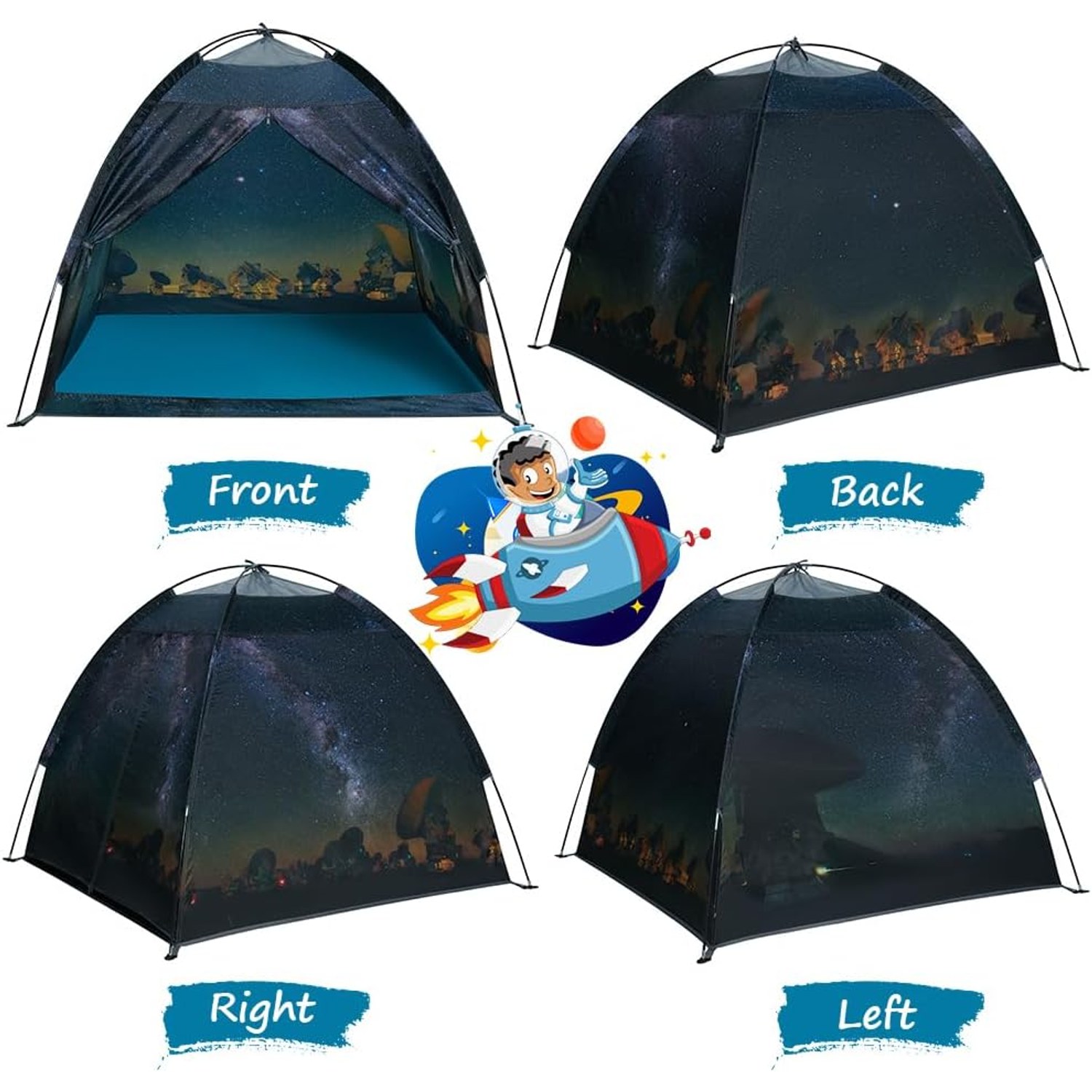
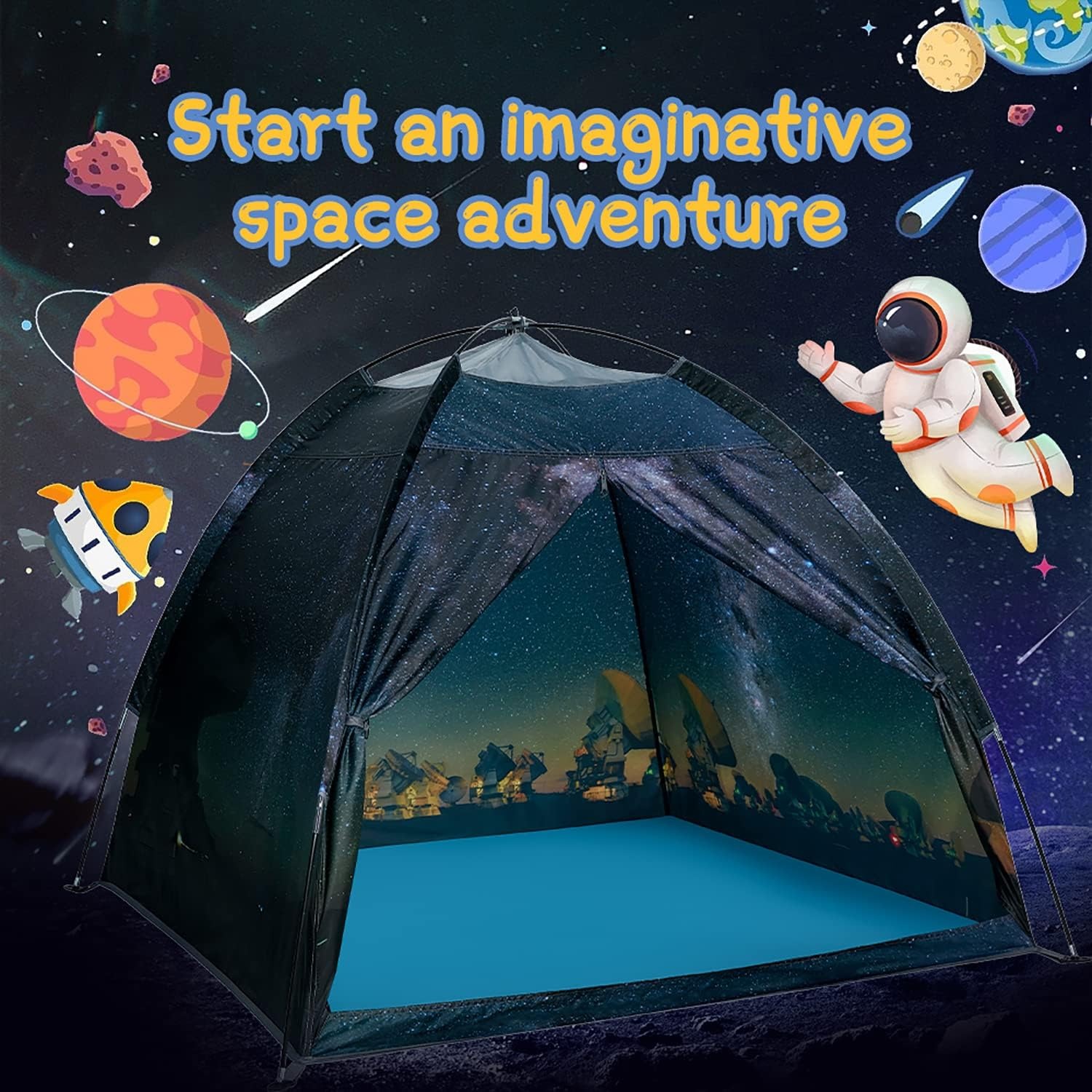
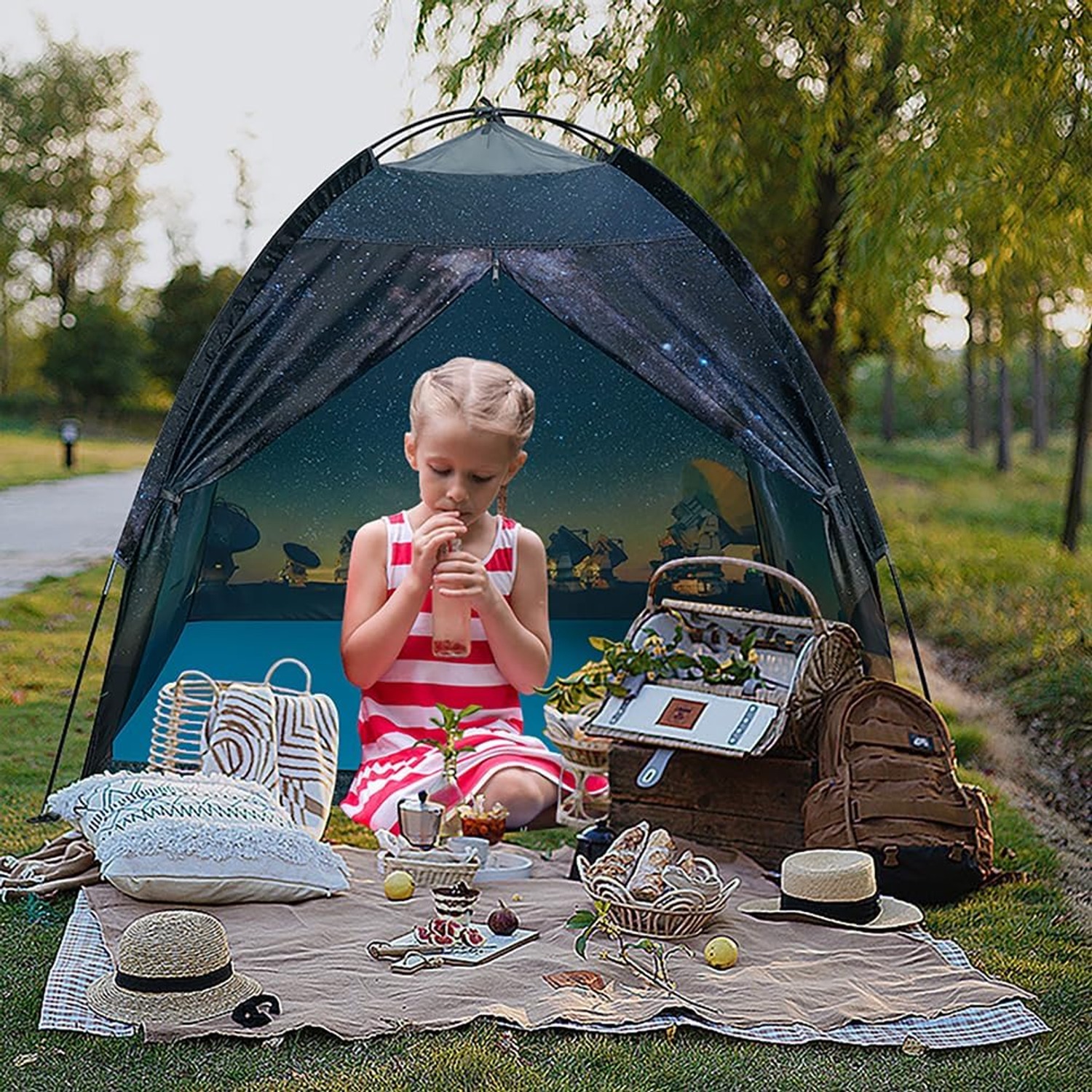
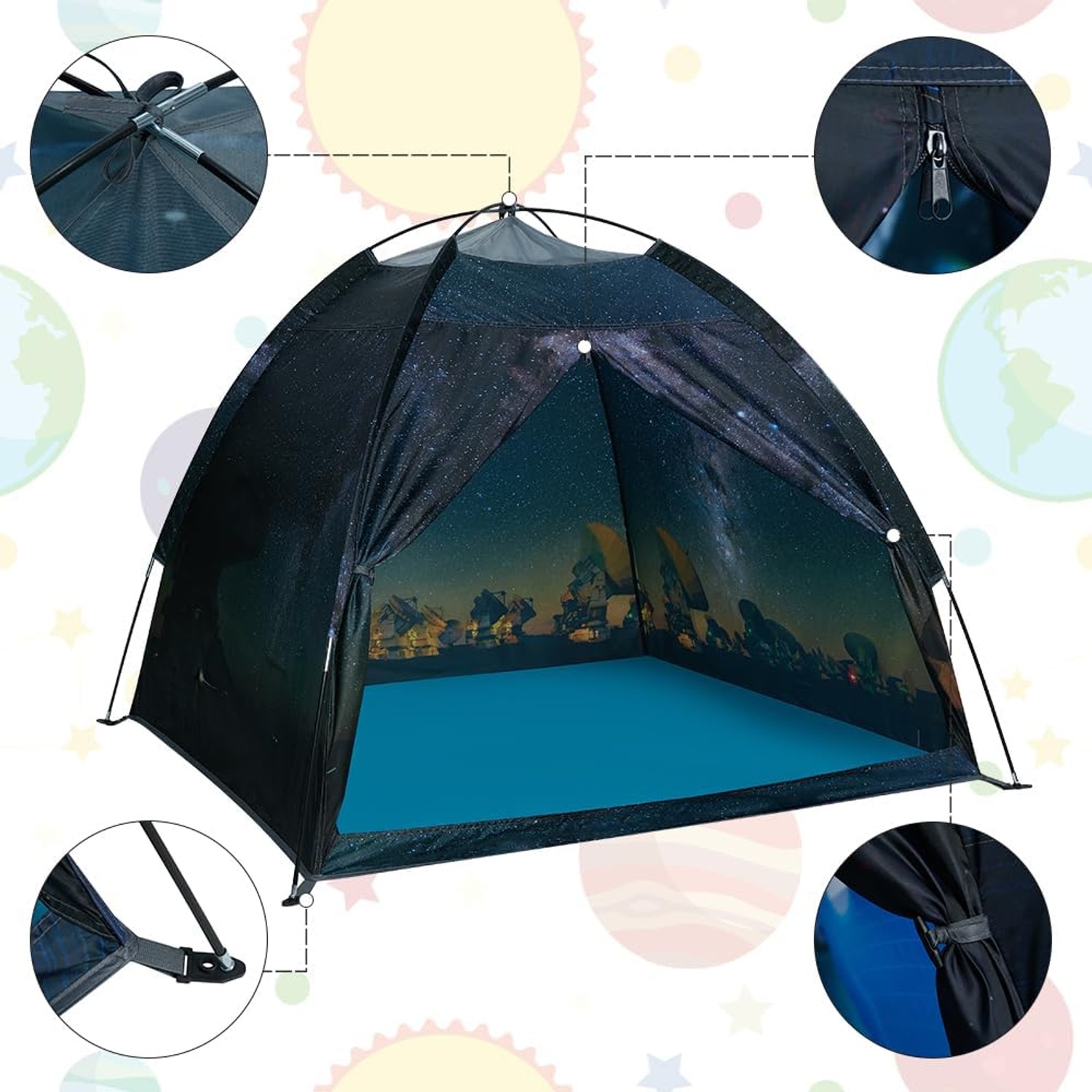
The Starry Galaxy Space Tent is built around that logic. A dark galaxy print on the outside and inside gives the story. A two-pole metal frame, a mesh roof and a carry bag handle the practical bit.
How this tent works
The structure is about as simple as play tents get. Two poles form the dome, the polyester shell goes over them, and the whole thing stands on its own. There is no inflating, no tensioning, no fiddly clips to line up in the right order. One adult can have it standing without a second pair of hands, and taking it down is faster again.
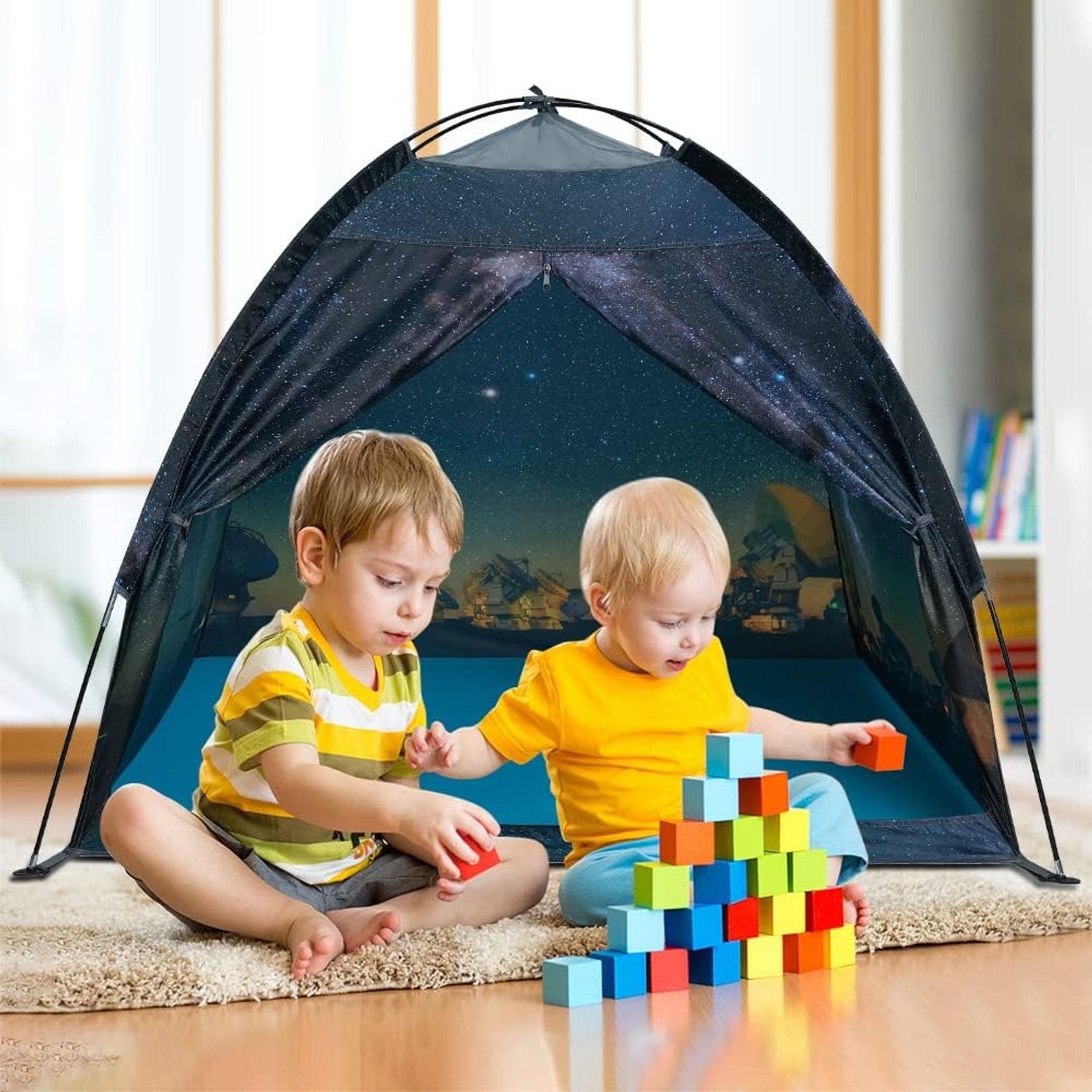
Assembled, it is 119.38 cm square and 109.22 cm tall. In practical terms that is a child sitting upright with room for a cushion, a stack of books and maybe a friend. It is small enough for a bedroom corner and big enough to feel like a real space rather than a token.
The roof mesh does more work than people expect. It lets warm air out, which matters when a child has been inside for half an hour on a summer afternoon. It also gives you a sightline from across the room, so you can check in without unzipping the door and interrupting whatever mission is happening. For children who dislike dark, closed spaces, the open top takes the edge off while the dark print keeps the den feeling.
Total weight is 0.85 kg. That number sounds trivial, but it is the difference between a tent that lives in one spot forever and one that gets carried out to the backyard, into the lounge during a film, or packed in the car for a weekend at a grandparent's house.
Who it suits
This tent lands well with children roughly 3 and up, which matches the manufacturer's recommended age. Below that, a young child can still enjoy it with an adult close by, but you know your own child.
It is a good match for:
- Children who like space, rockets and stars, where the theme does half the imagining for them. - Kids who read alone and want somewhere that is theirs for it. - Families in smaller homes, where a folding tent beats a permanent wooden playhouse. - Children who need a calm retreat when the house gets loud.
It is less of a match for very active play. This is a lightweight fabric structure, so it is built for sitting, lying and pretending, not climbing or wrestling. Set that expectation with your kids on day one and the tent lasts far longer.
How to choose between play tents
A few things are worth checking before you buy anything in this category, including this one.
Measure the floor first. Everyone skips this. A tent that is 119 cm square needs a clear patch of that size plus a bit of room for the door to open. Corners are usually the best home, with the opening facing into the room so children are not crawling into a wall.
Think about setup time honestly. If it takes twenty minutes and a diagram, it will go up once. A two-pole design that one person can manage is the difference between daily use and occasional use.
Check for ventilation. A sealed fabric box gets warm quickly with a child inside. A mesh roof panel is not a luxury feature, it is the thing that makes long play sessions comfortable.
Decide whether it needs to pack down. If the tent is staying put in a playroom, storage barely matters. If it needs to disappear at bedtime or travel at weekends, a carry bag and a weight under a kilo change everything.
Look at the theme realistically. Children's interests move fast. A galaxy print is broad enough to survive a few phases, where a tent branded with one specific character may not.
Setting it up well
Getting the most out of a kids playhouse tent takes about ten minutes of thought beyond the assembly.
Put a soft base down. A folded quilt, a small rug or a couple of cushions makes the inside somewhere a child will stay rather than visit. Hard floor plus bare fabric is not inviting.
Think about light. Battery fairy lights or a clip-on book light turn the space into a proper reading nook after dark. Keep anything you add cool to the touch and low powered, and never run a cable into a fabric tent where someone can trip on it.
Give the tent a job. Some families use it as a reading corner, others as the designated calm-down spot when things get heated. A tent with a purpose attached gets used far more than a tent that is just there.
Keep it near where the family already is. A hideaway in a room nobody enters is a hideaway nobody enters. The best indoor play tent placement is often the lounge corner, not the spare room.
Looking after it
Care here is straightforward because there is not much to go wrong.
Spot clean the fabric with a damp cloth and a little mild soap. Do not put it in the washing machine, do not bleach it, do not tumble dry it, and skip the iron. Let it air dry completely before you fold it, because fabric packed away slightly damp picks up a musty smell that is hard to shift.
Wipe the metal poles dry if they get damp from outdoor use. Store the folded tent in its carry bag somewhere dry and away from direct heat. Check the pole ends occasionally for wear, the same as you would with any frame.
If the print fades a little after long spells in direct sun, that is normal for printed polyester. Keeping it out of a hot sunny window most of the time slows that down.
Making it last
The two things that shorten the life of a tent like this are rough play and careless packing. A quick family rule covers the first: this is a sitting and reading tent, not a climbing frame. For the second, take two extra minutes when folding rather than cramming everything into the bag.
It also helps to rotate what is inside. Swap the books, add a flashlight for a week, bring in a different soft toy. A space that changes slightly stays interesting, and an interesting tent does not end up behind the closet.
The short version
The Starry Galaxy Space Tent is a 119 cm square dome with a 109 cm peak, made from polyester with double stitching over a metal two-pole frame, weighing 0.85 kg and packing into an included carry bag. The deep black galaxy print gives children a story to play inside, and the mesh roof keeps it airy while letting you see in.
It suits children 3 and up who want a reading spot, a pretend-play base or somewhere quiet to go. It sets up in minutes, moves between rooms easily and folds away when the floor is needed back. If you want a play tent that actually gets used rather than stored, the combination of fast setup, small footprint and real portability is what to look for, and that is what this one is built around.