

The complete guide
Choosing a Kids Play Tent That Actually Gets Used
The problem with most play tents
Plenty of play tents get opened on a birthday, used hard for a fortnight, then shoved behind a door. The reasons are nearly always the same. The tent is too big for the room, too fiddly to put up again after it comes down, or so plain that the child has nothing to build a story around. None of those are manufacturing faults. They are mismatches between what the tent is and what the family needed.
A tent that keeps earning its floor space usually gets three things right. It fits the room it lives in. It goes up and down fast enough that nobody dreads moving it. And it suggests a world, so the child arrives with an idea already forming instead of waiting to be entertained.
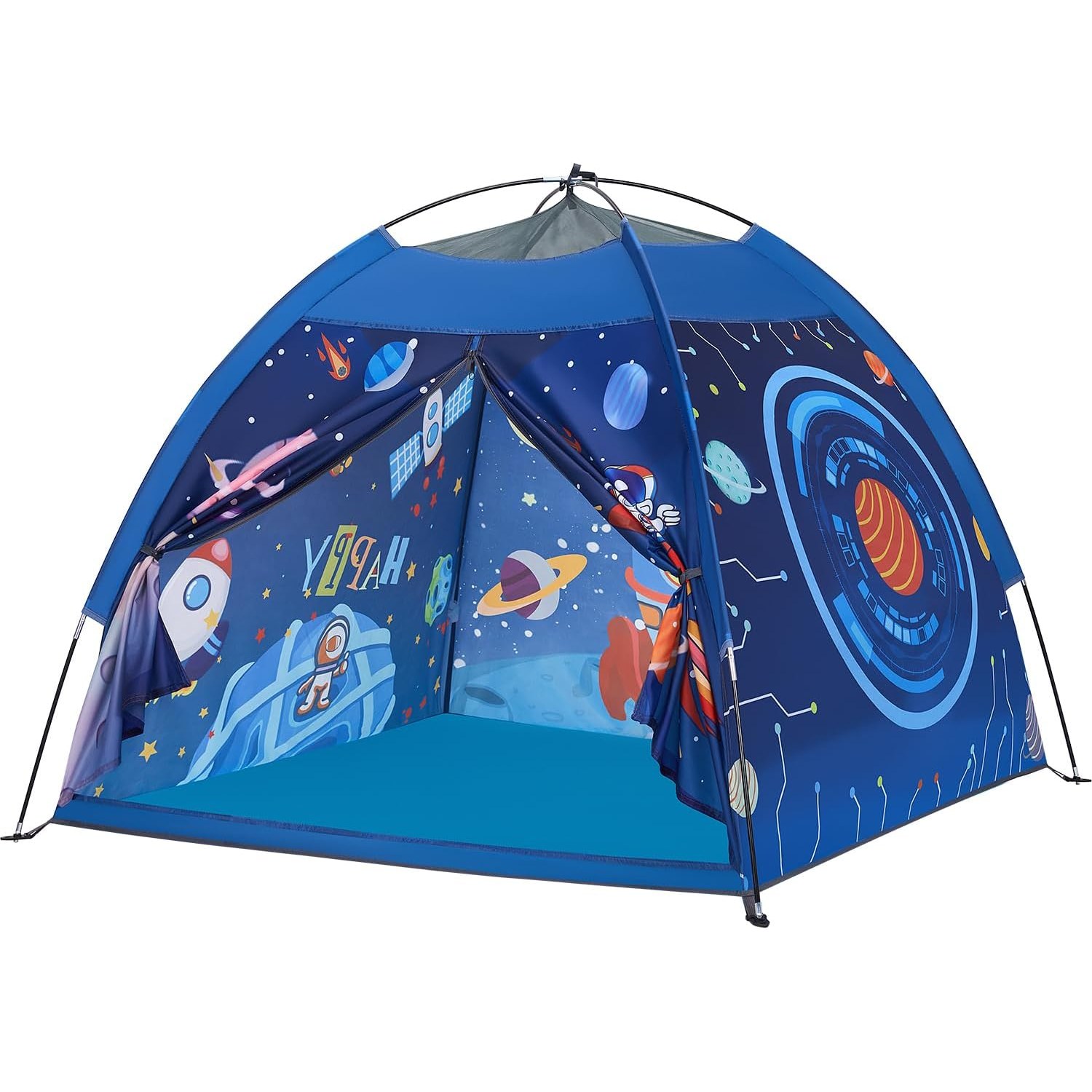
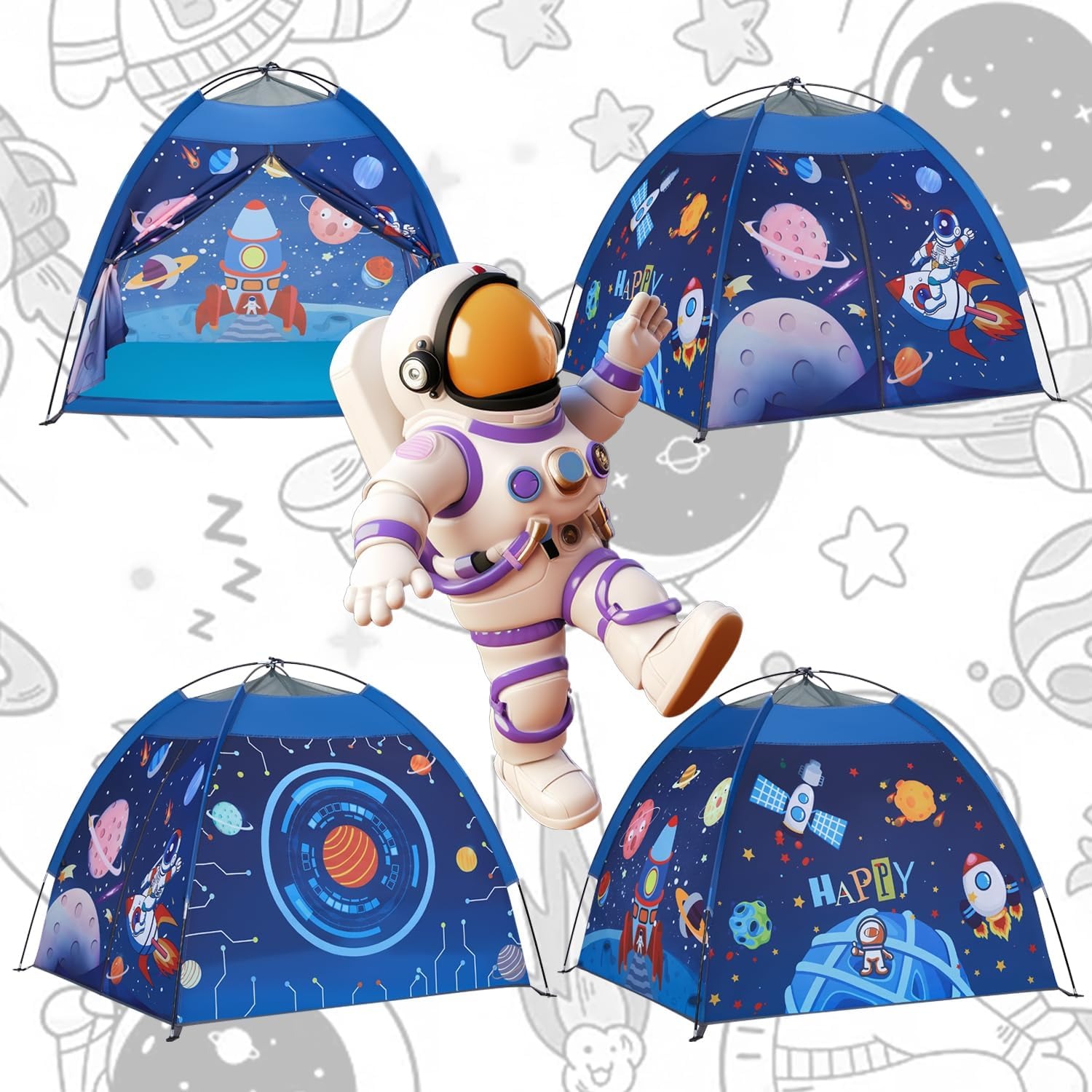
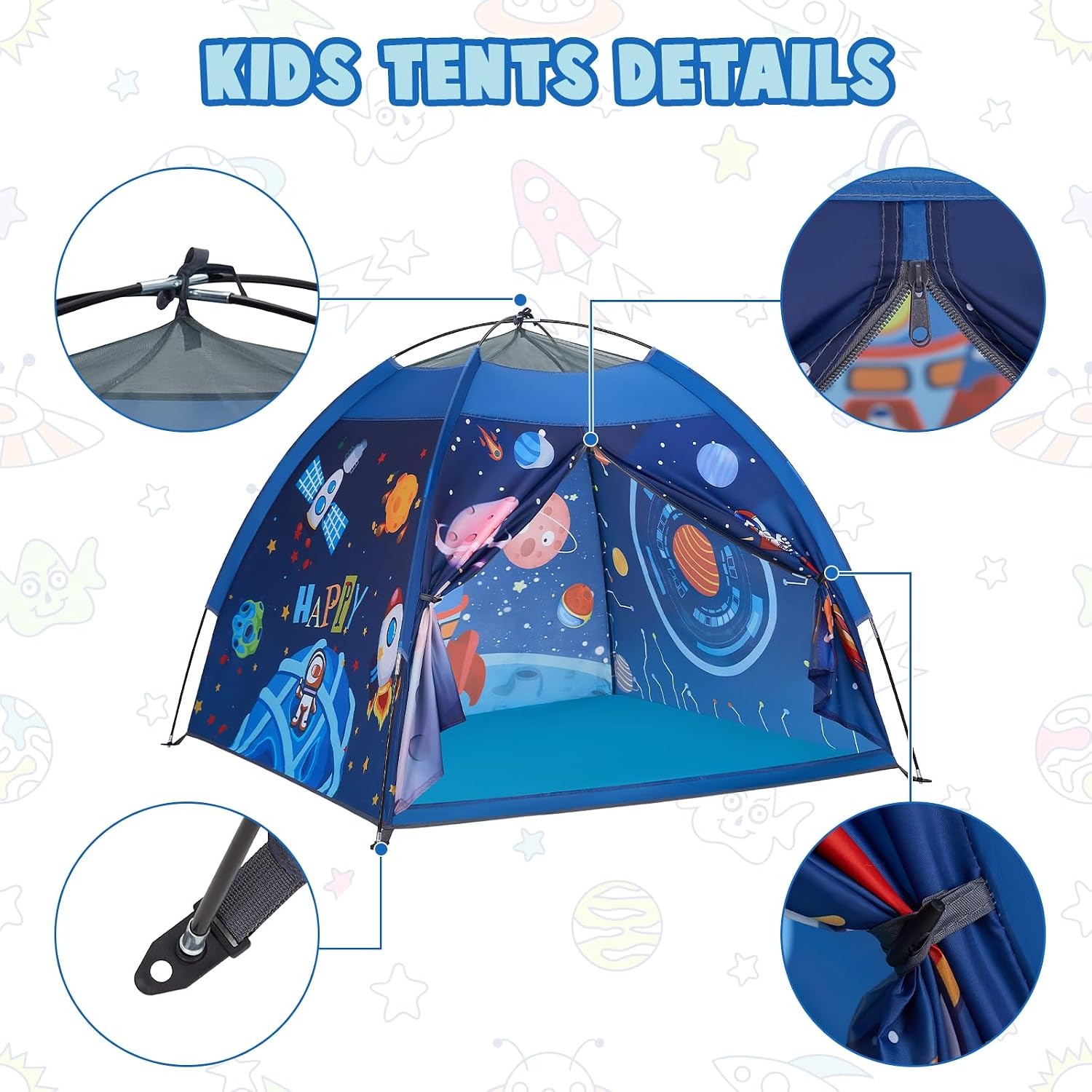
The Astronaut Space Dome Tent is built around those points. It is a small dome, around 119 cm square and 109 cm tall, pitched on two fibreglass poles, printed with astronauts and space detail, and it folds into a carry bag at 862 g.
How a two-pole dome works
The frame is straightforward. Two flexible fibreglass poles thread through sleeves sewn into the fabric. As each pole bends, it pushes the fabric up and out, and the two crossing poles hold the dome in tension. There is no hardware, no screws, no connectors to lose in the carpet.
That design has a practical advantage over sprung pop-up tents. Pop-ups are faster to deploy but notoriously awkward to fold, and the spring ring means they pack as a wide flat disc rather than a small bundle. A pole frame takes a couple of extra minutes going up, and in return it comes apart into a short roll that slides under a bed. If storage is your constraint, that trade is usually worth making.
The roof panel is mesh rather than solid fabric. Inside a closed tent, a child's body heat builds up quickly, and a stuffy tent is one a child leaves. Mesh lets warm air escape upward. It also gives parents a sightline from standing height, which solves the small nagging worry of not knowing what is happening in there. Children still feel enclosed, because the walls are what create that feeling, not the roof.
Who it suits
The manufacturer lists ages 36 months to 12 years. In practice the sweet spot is roughly three to seven, when pretend play is at its strongest and a child is small enough that 109 cm of headroom feels generous rather than cramped.
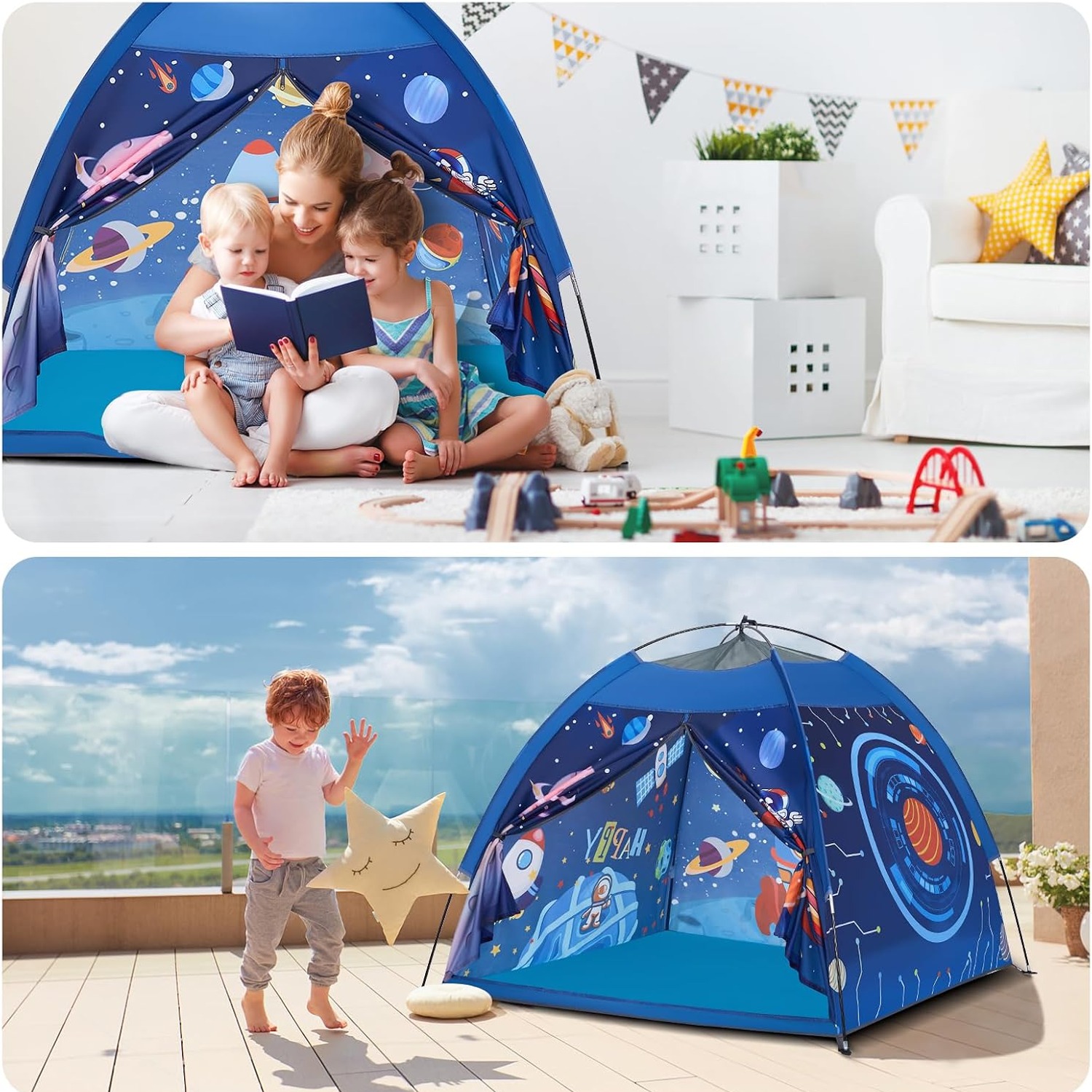
Three and four year olds tend to use it as a den. They drag in cushions, soft toys and anything portable, and the tent becomes a container for a whole afternoon. Five to seven year olds lean harder on the theme. The space print gives them a setting, and you will hear countdowns, mission reports and landings. Older children usually shift to using it as a quiet spot, somewhere to read or draw away from a busy household.
It also helps children who find open rooms overwhelming. A small, defined space with a visible way out gives some kids a place to reset. The mesh roof matters here too, since full enclosure can feel like too much for a child who is sensitive about confined spaces.
It suits homes without a dedicated playroom. The footprint is close to a small rug, so it can live at the end of a bed or along a living room wall and still leave a walkway.
How to choose
Start with the floor, not the tent. Measure the space you plan to give it, allowing a hand's width clear on each side so the fabric is not pressed against furniture. If you can fit a square of about 120 cm, this dome works. If you cannot, no amount of enthusiasm will make it fit, and a smaller teepee or a fabric bed canopy will serve you better.
Then think about how often it will move. If the tent will stay in one corner for months, pack-down speed barely matters. If it needs to disappear before guests arrive every weekend, the carry bag and the 862 g weight become the features you actually use. Light and foldable beats large and impressive in that situation every time.
Consider the theme against your child's current interests, but do not over-think it. Space is unusually durable as a play theme because it covers so much ground, including rockets, planets, aliens, exploring and building bases. A child who is into dinosaurs this month may well be running moon missions next month in the same tent.
Finally, plan for the floor inside. The tent itself is a shell. Most families add a folded blanket, a small rug or a couple of cushions, and that single addition is usually what turns the tent from a novelty into the spot the child keeps going back to. A clip-on battery light is the other small upgrade worth making, especially if you want the tent to work as a reading corner in the evening.
Setting it up and keeping it right
Clear the area before you start, including anything with sharp corners. Lay the fabric flat, find the sleeve entries and feed each pole through slowly. Fibreglass is flexible but it does not like being forced, so if a pole snags, back it out and try again rather than pushing. Once both poles are through, seat the ends and let the dome rise.
On a hard floor, put a rug underneath. Children lean on tent walls, and a dome with nothing anchoring it will scoot across laminate. Carpet grips well enough on its own.
For care, wipe marks with a damp cloth and a little mild soap. Let it dry fully in the air before folding, because fabric packed away damp will smell by the time it comes out again. Skip the washing machine, bleach and the tumble dryer. Check the poles occasionally for cracks or splintering, particularly near the ends, and keep the whole tent away from heaters, fireplaces and candles. Flame retardant treatment is not specified for this product, so sensible placement matters.
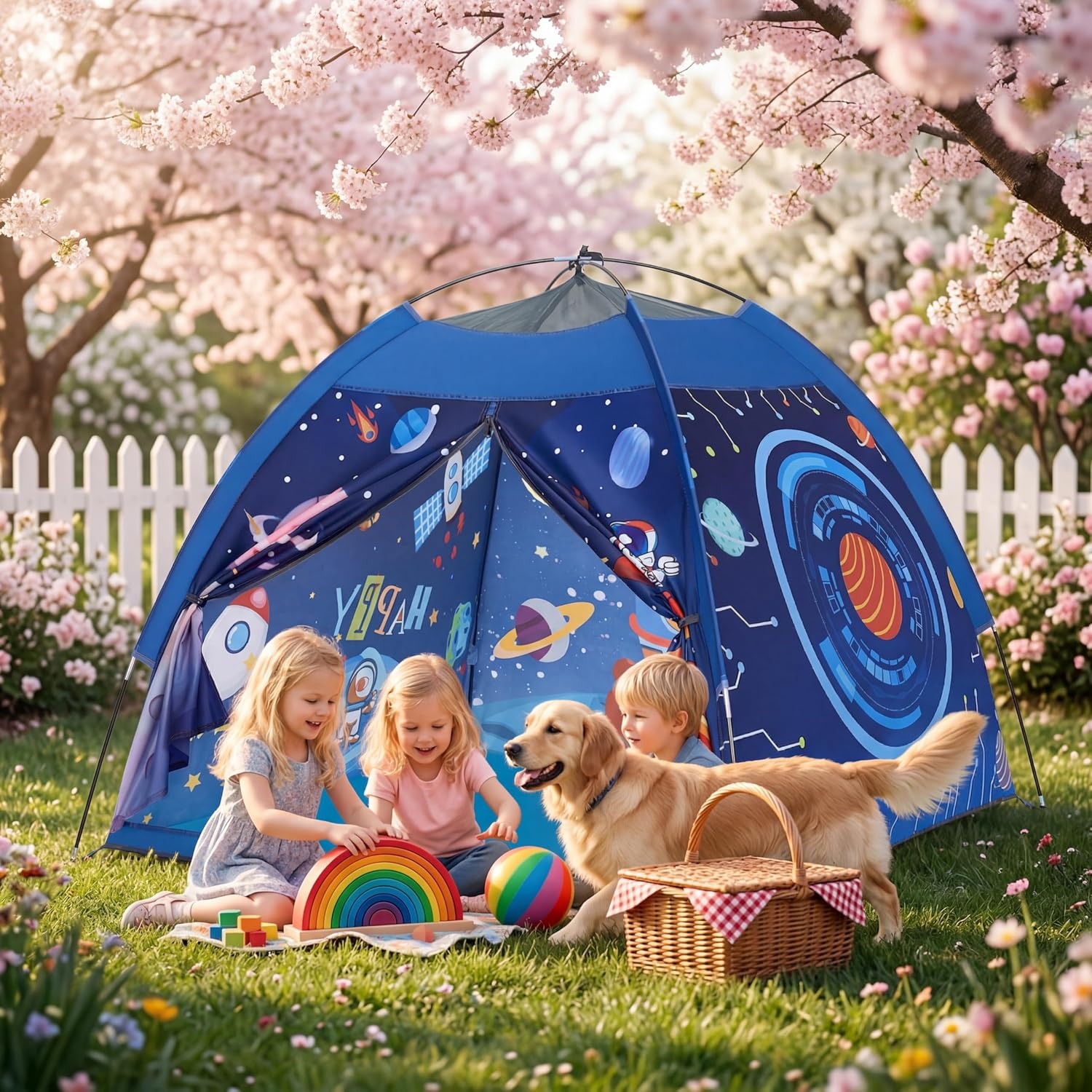
If it visits the backyard, pick a dry, calm day and bring it back inside afterwards. It is not designed for wind or rain, and the fibreglass frame will take a bending load from a gust that it was never meant to handle.
The short version
The Astronaut Space Dome Tent is a small indoor play tent with a real purpose behind its design. It measures 119.38 x 119.38 x 109.22 cm, weighs 862 g, uses a polyester taffeta shell on two fibreglass poles, and comes with a bag for storage. The mesh roof keeps the inside breathable and keeps you in the loop. Setup needs no tools and one adult.
It fits households that want a hideout without giving up a room, and children aged roughly three to seven who will take a space theme and run with it. Add a rug and a cushion, give it a corner, and it tends to stay in use far longer than the usual fortnight.