
The complete guide
Choosing a Pop Up Tunnel and Tent Set That Actually Gets Used
The problem with indoor energy
Every parent knows the stretch between four and six in the afternoon. The weather is wrong, the backyard is a swamp, school is finished, and there is a child in the house with a full tank of energy and nowhere to put it. Screens solve it for twenty minutes and then make it worse.
Big outdoor play equipment does not help here, because it lives outdoors. What helps is something indoors that rewards physical movement: crawling, ducking, scrambling, and popping out the other end. That is the whole job of a play tunnel set, and it is a surprisingly good one. A child who crawls through a tunnel ten times has done real physical work without being told to exercise.
The catch is that a lot of these sets get used hard for a fortnight and then live in the loft. Usually that is a storage problem rather than a fun problem. If a toy takes fifteen minutes to put away, it stops coming out. This is why the pop up design matters more than the colour printed on the fabric.
How a pop up set works
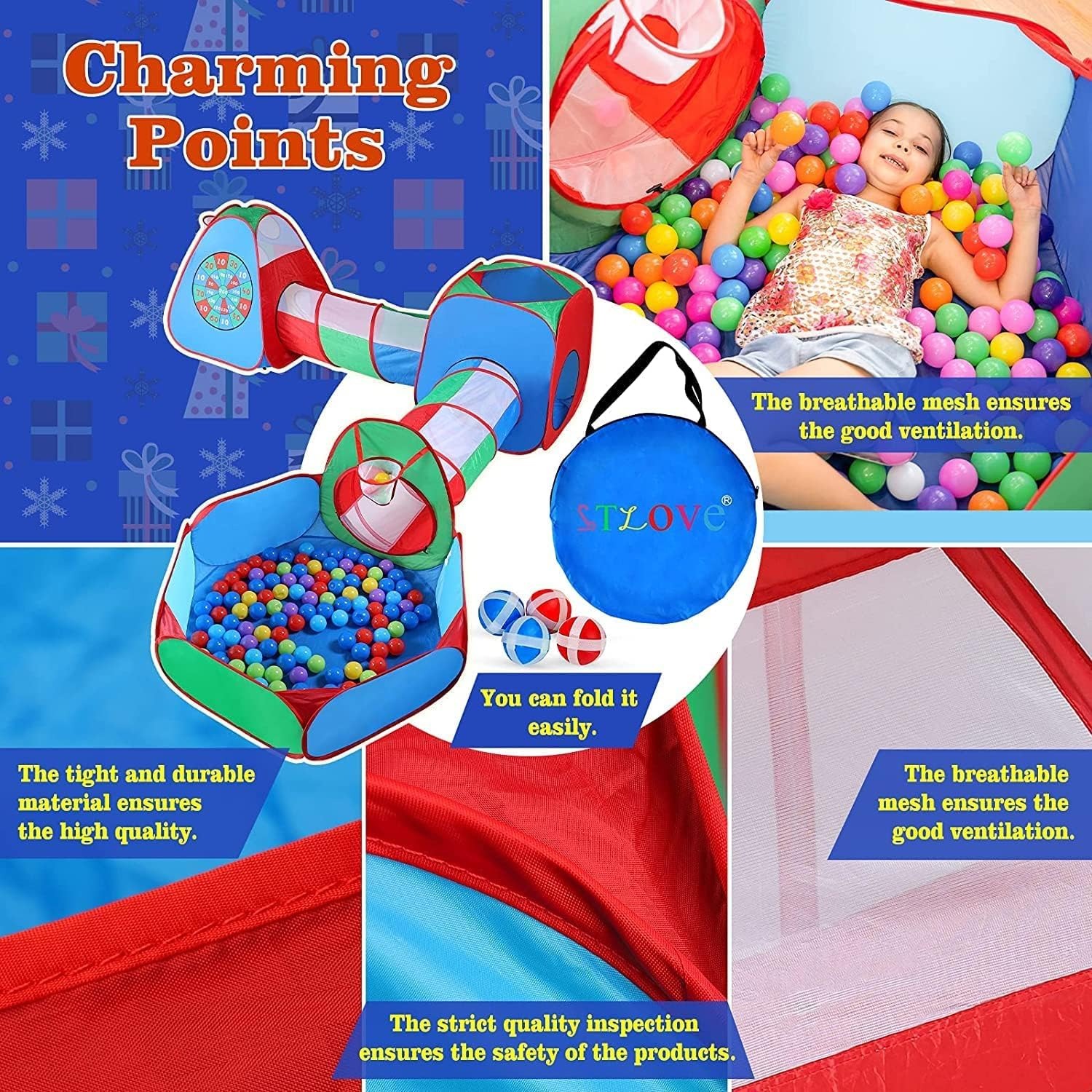
Inside each panel of fabric runs a loop of alloy steel wound into a spring. The steel wants to be a circle. The fabric is cut to hold it in a specific shape, so when the tension is released, the piece snaps open and stays open. There are no poles to slot together and nothing to tighten.
Folding is the reverse, and it is the part that trips people up on day one. You push the hoop in on itself so it forms two or three smaller rings stacked together, then flatten them. Anyone who has folded a car windscreen shade already knows the motion. Give it three or four tries and it becomes automatic.
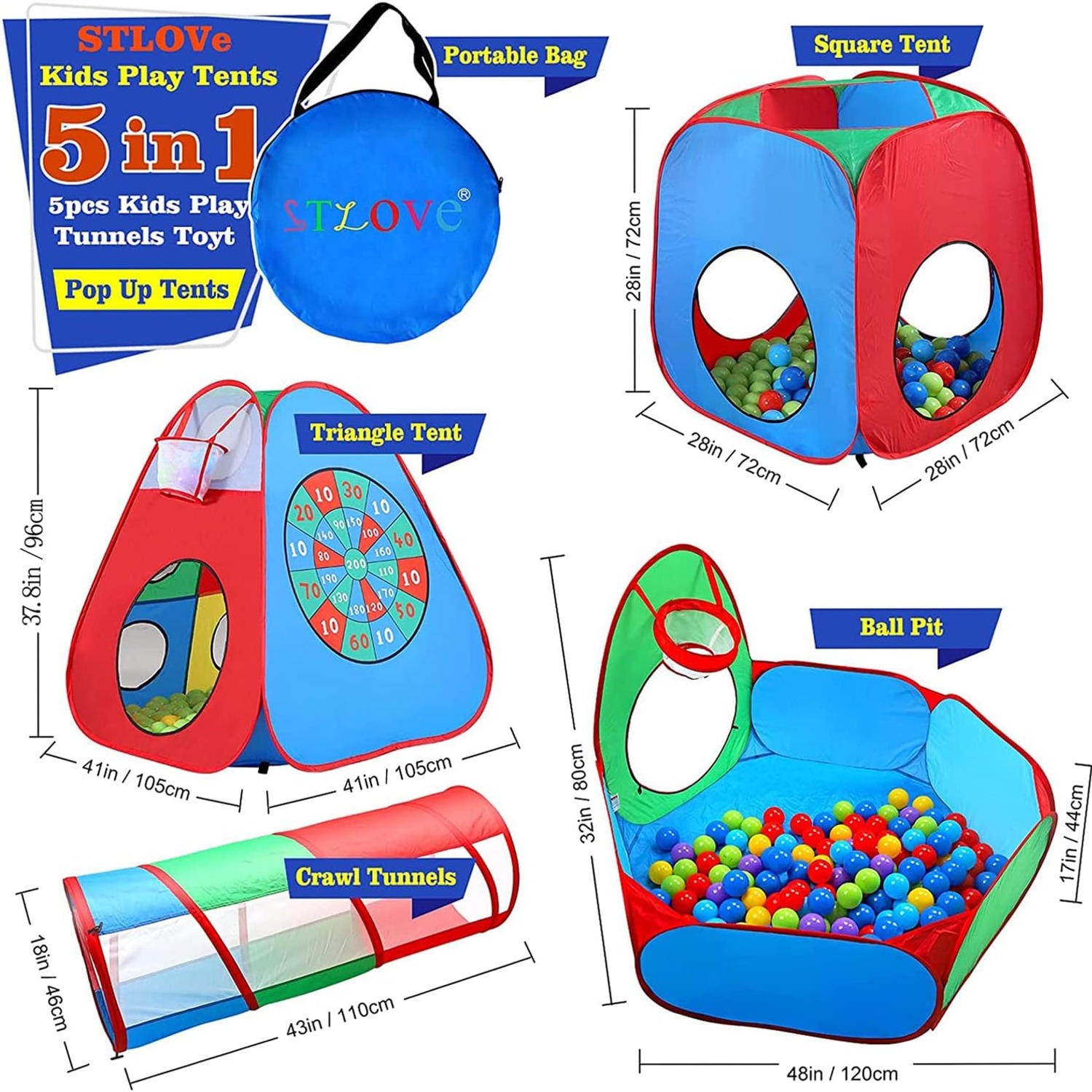
This set packs down to 50 x 50 x 5 cm. That is the important number. A flat disc of that size goes behind a sofa, under a bed, on top of a closet, or in the boot of a car. The whole thing weighs 2.84 kg, which is less than a bag of flour and a half. A seven year old can carry it to the backyard without help.
What you get in the five pieces
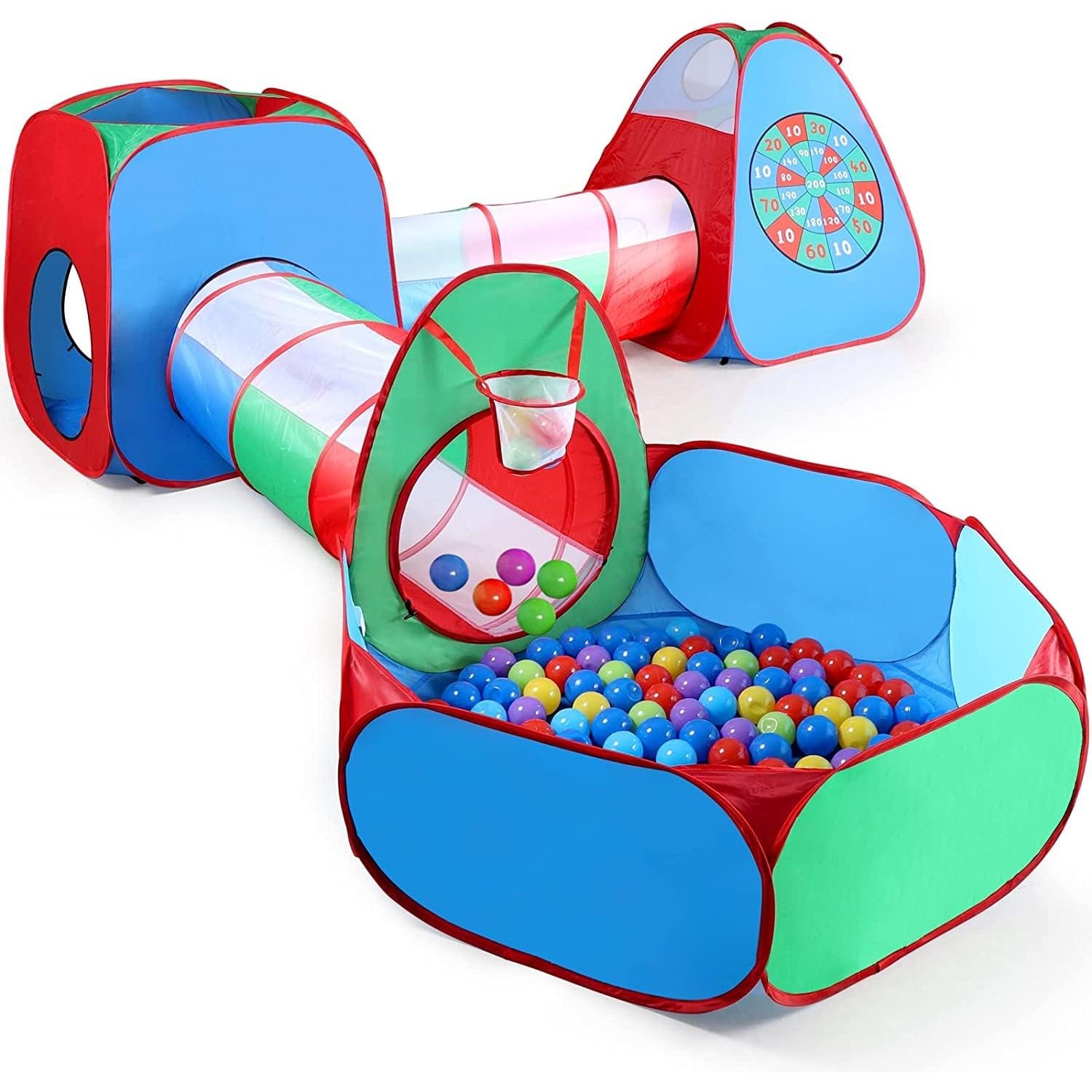
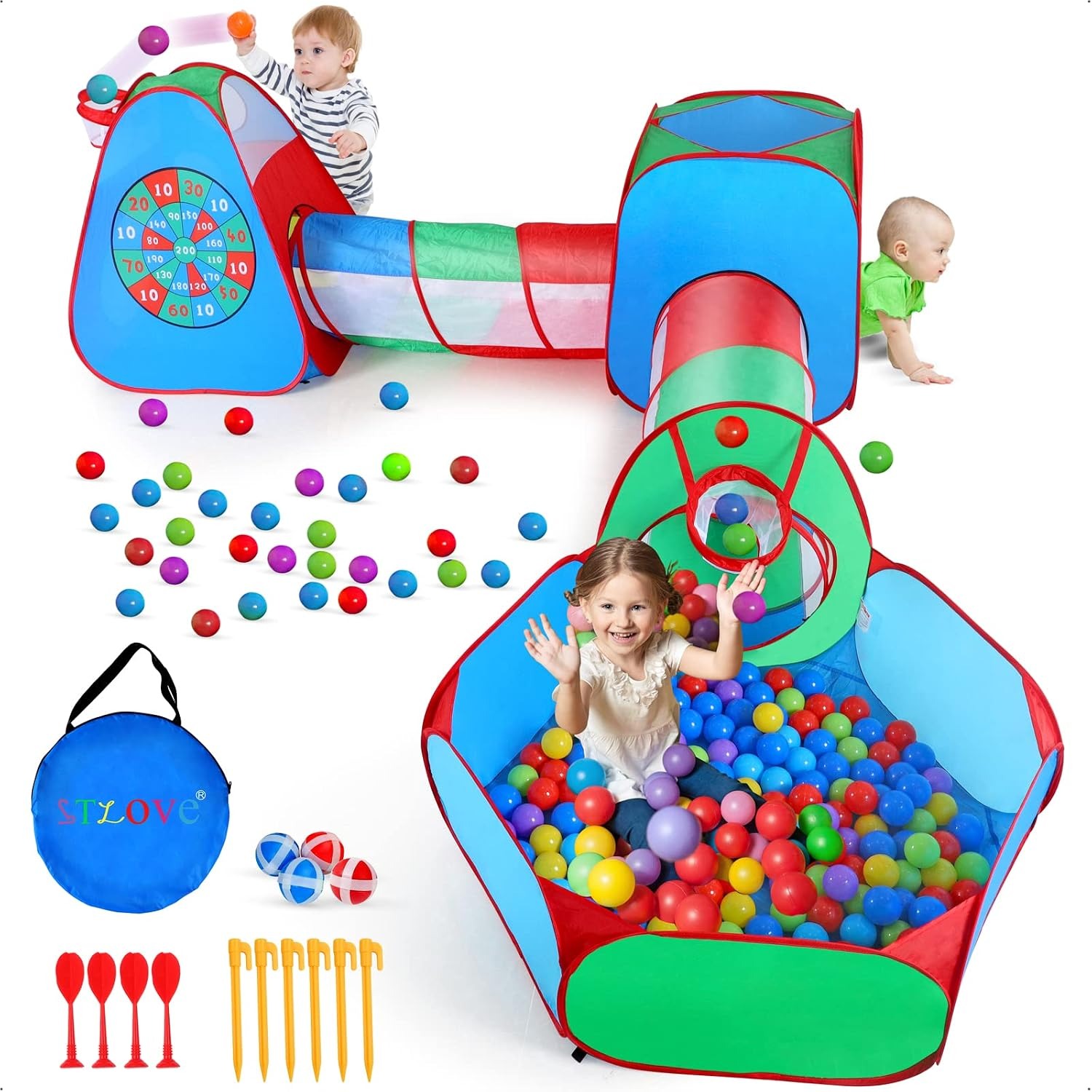
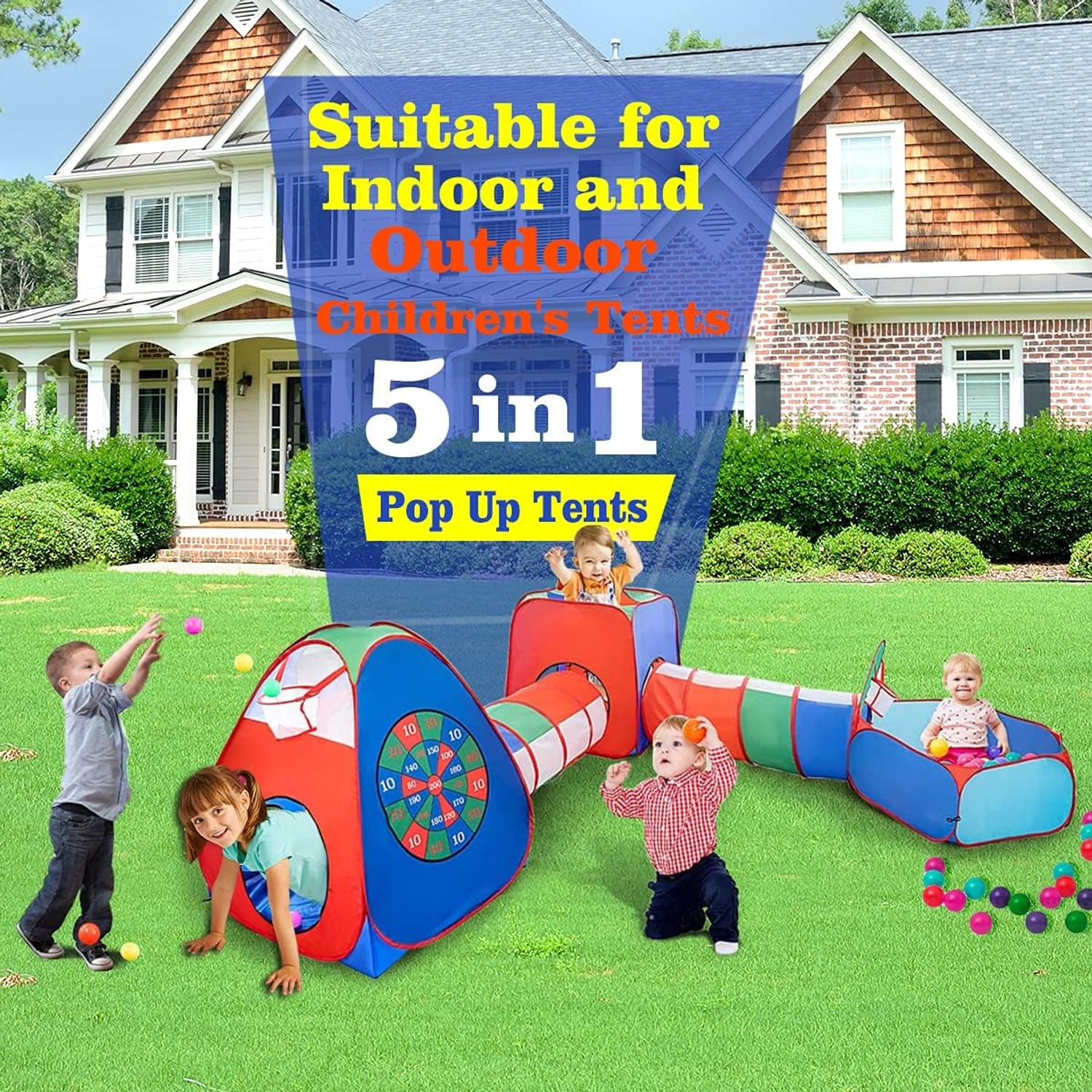
The set is built around two crawl tunnels, a triangle tent, a cube tent, and a ball pit area. The tunnels are the connectors. The tents are the destinations. The ball pit area is where play usually ends up once the running has worn off.
The reason five pieces beats one big playhouse is reconfiguration. A single playhouse is the same every day, and children get bored of sameness faster than adults do. With five linkable parts, the layout changes. A straight line becomes a racing course. A horseshoe becomes a maze. Split the pieces across two rooms and you have a game of hide and seek with checkpoints.
Children work this out quickly and start designing their own courses, which is where the set earns its space. The best kids play tunnel arrangements in our experience are the ones invented by the child, not the ones shown on the box.
Materials, and why they matter
The cover is polyester. For children's play gear that is the sensible choice. It takes abrasion from knees and shoes, it wipes clean with a damp cloth, and it dries fast if it meets wet grass. It does not absorb spills the way cotton canvas does.
The frame is alloy steel. Steel holds its shape through hundreds of folds, which is exactly what you want in a structure that gets collapsed and reopened constantly. Plastic frames lose their spring and start sagging. The trade off with steel is rust, so the one maintenance rule that matters is simple. Dry it before you fold it.
The set is castle themed and supplied in the colourway listed as 5 in 1 -2. Strong colour is not decoration for the sake of it. Younger children respond to high contrast and bright shapes, and a vivid tunnel mouth reads as an invitation in a way a beige one does not.
Note that play balls are not included. If you want the ball pit area filled, buy pit balls separately. Standard sizes around 5.5 to 7 cm work well, and most families start with a few hundred and add more later.
Who it suits
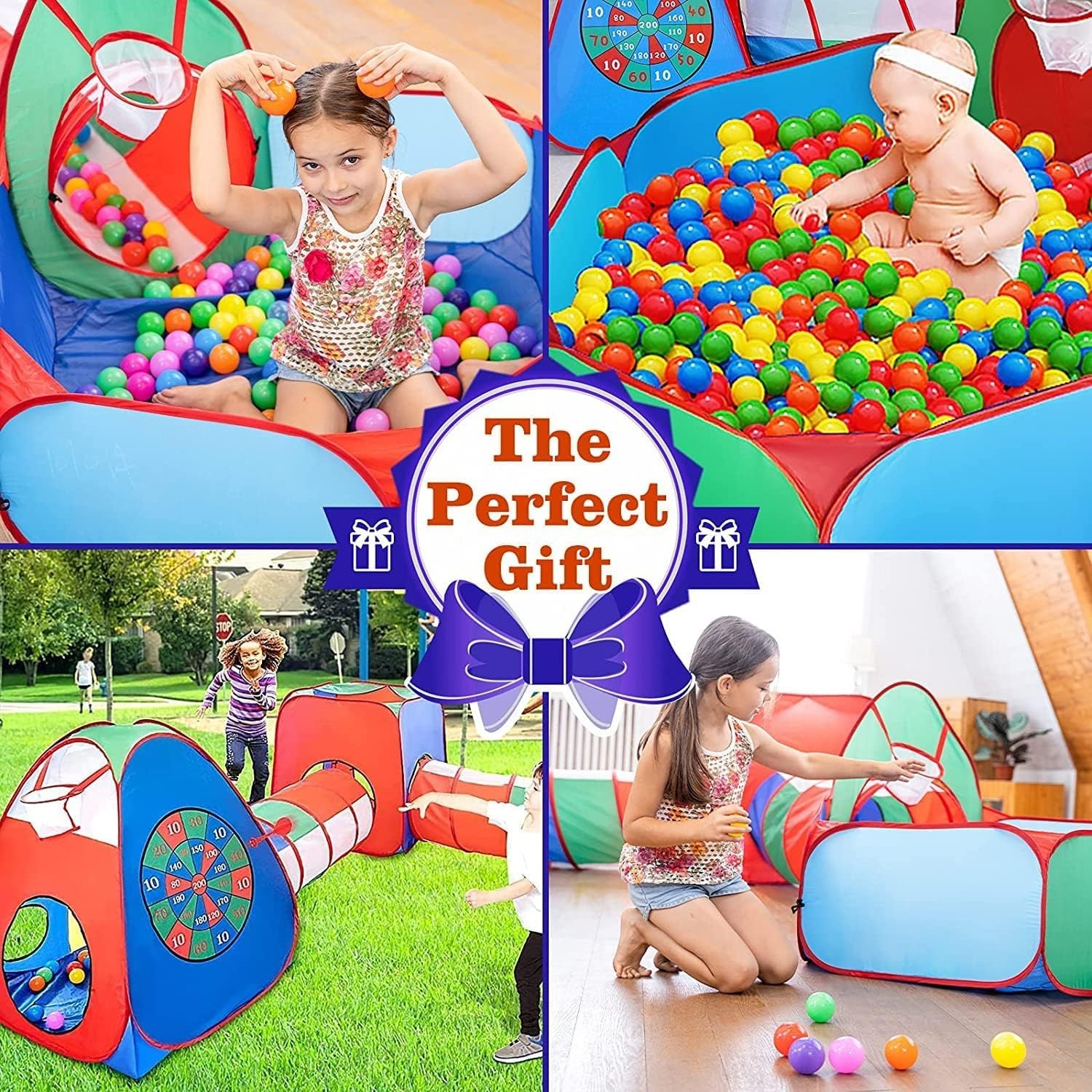
The manufacturer describes the age range simply as Kid. In practice, the sweet spot for the best crawl tunnel for kids style of play is from confident crawling through to early primary school. Below that, a young child may enjoy being gently placed inside a tent with a parent, but will not use the course as intended. Above it, bodies get too long for the tunnels to be comfortable, though older children often keep using the tents as dens.
It also suits a particular kind of household. If you have a long hallway, a spare corner of a playroom, or a flat lawn, this works. If you live in a very small flat with no clear floor run, a single tent might serve you better than a full course.
Supervision is part of the picture. These are soft structures, but tunnels get exciting and children get fast. An adult nearby prevents most of the pile ups.
How to choose between sets
If you are comparing options, there are four things worth checking, and price is not the first of them.
Start with packed size and weight. A set that folds to a flat disc and weighs under three kilos will get used. One that packs into a bulky box will not.
Next, look at frame material. Steel springs last. Fibreglass and plastic hoops tend to soften.
Then count the pieces and ask whether they connect. Three pieces that link beat five that do not, because connection is what creates a course instead of a pile of separate toys.
Finally, think about where it will live. Measure the longest clear run in your home before you buy. If you only have three metres, plan for a curved layout rather than a straight one.
Looking after it
Care here is light but worth doing properly. Spot clean marks with a damp cloth and a small amount of mild soap. Do not put it in the washing machine, because the steel frame is sewn in and will deform. Skip the tumble dryer, bleach, and the iron.
After outdoor sessions, turn the tunnels upside down and shake out grass, crumbs, and sand. Grit trapped against the fabric is what wears a floor panel through over a couple of years.
Store it folded flat and dry in its zippered carry bag, somewhere out of direct sunlight. Sun fades printed polyester faster than anything else. A cupboard shelf is perfect.
The short version
This is a five piece pop up play system made of polyester over an alloy steel frame, with two tunnels, two tents, and a ball pit area that link into whatever layout a child invents. It opens in seconds with no tools, folds to 50 x 50 x 5 cm, weighs 2.84 kg, and zips into a carry bag.
It is a good answer to wet afternoons, a good birthday gift that needs no assembly, and a good way to get a child moving without calling it exercise. Add your own pit balls, dry it before you fold it, and it should keep going for years.