

The complete guide
Choosing a Kids Playhouse Tent That Actually Gets Used
The problem with giving kids "their own space"
Most homes do not have a spare room to hand over to a four year old. What children actually want is smaller than a room anyway. They want somewhere with walls, a doorway and a floor that belongs to them, somewhere a grown-up has to ask before coming in. That is why a cardboard box, a blanket over two chairs or a gap behind the sofa gets so much use.
The trouble is those improvised dens collapse, take over the lounge and look terrible. A proper playhouse tent solves the same need with something that stands up straight, folds away and does not make your living room look like a building site.
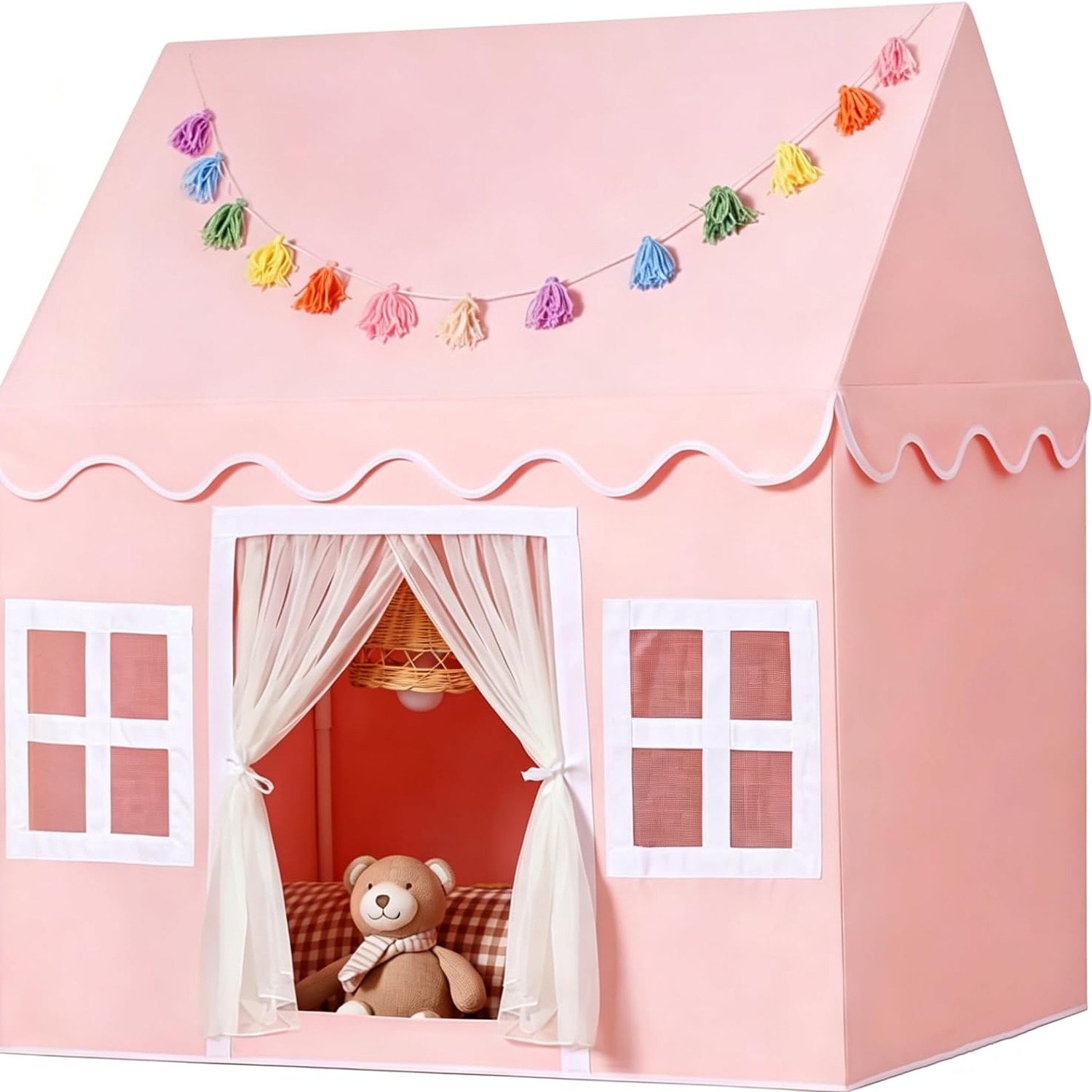
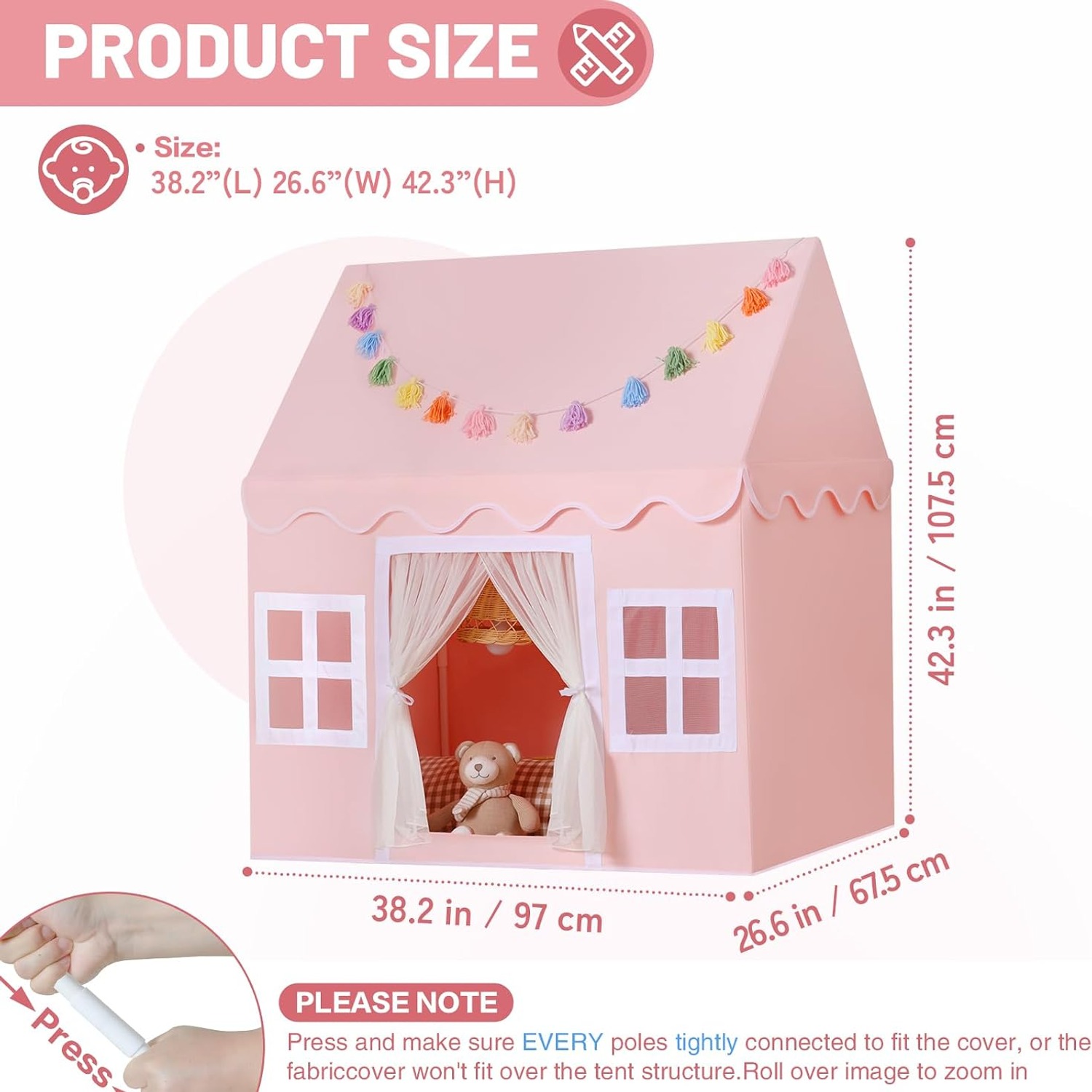
This one is a pink play tent on an aluminum frame, finished with a star theme, and it comes with a floor mat and a tassel garland in the same box. Assembled it is 67.6 cm deep, 97 cm wide and 107.4 cm tall, and it weighs 1.97 kg. Those are the facts that matter most when you are deciding whether it fits your home and your child.
How a frame-and-cover play tent works
There are two common designs in this category. One is a pop-up, where sprung wire hoops snap open and the thing exists whether you want it to or not. The other is a frame build, where light poles slot together into a shape and a fabric cover goes over the top. This is the second kind.
Frame builds take a couple of minutes longer to set up the first time. In exchange you get a tent that holds its shape properly, sits square in a corner and does not keep trying to fold itself back into a disc. The poles here are aluminum, which is why the whole thing still only weighs 1.97 kg. No tools are involved. Parts push together by hand.
The cover is polyester. That is a sensible fabric for anything a child will touch daily. It does not absorb spills the way cotton does, it wipes down with a damp cloth, and it dries quickly if it does get wet.
Who it suits
The manufacturer gives a recommended age of 36 months to 6 years. In practice that lines up with how children play. Around three, pretend play really takes off, and a defined space makes those stories easier to tell. By six or seven, many kids have moved on to other things, though plenty keep a tent as a reading corner for longer.
Interior height is just under 107.4 cm, so a tall five year old will be sitting or kneeling rather than standing. That is normal for this size of play tent and rarely bothers anyone, because children mostly sit inside anyway.
It suits single children best. Two young children fit for a short stretch, but 97 cm of width does not leave room for an argument. If you have siblings close in age, think about whether a wider model or two separate spots works better for your household.
It also suits families short on floor space. The thing that decides whether a toy stays in a small flat is how easily it disappears. This one comes apart and folds flat, so it can live behind a door between uses.
What to look for when comparing play tents
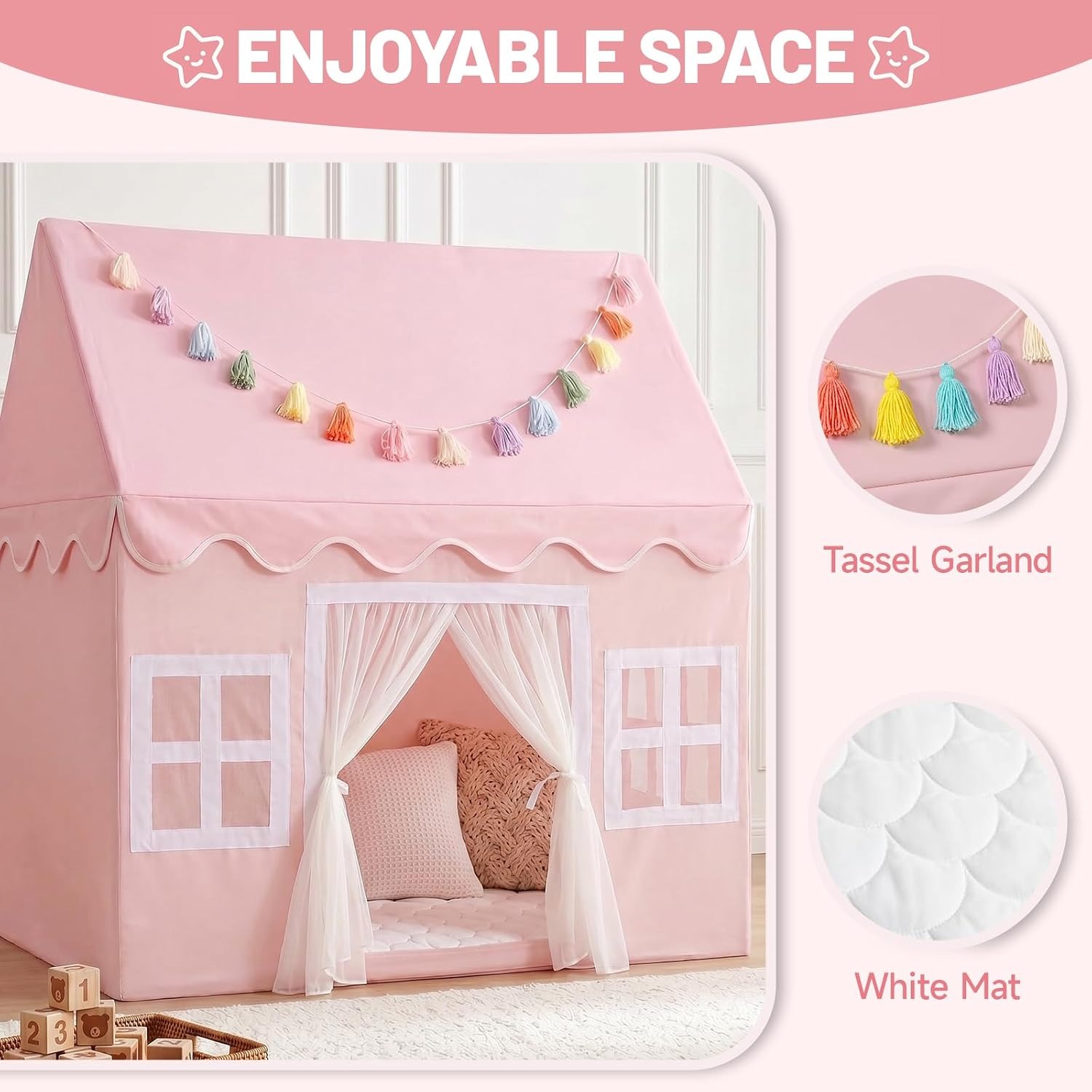
Does the set include a mat? This matters more than people expect. A tent with no mat sits directly on cold floorboards or tile, and children lose interest fast. A mat makes the inside feel like a room. This set includes one.
How heavy is it? Anything over a few kilos stops moving around the house, and a tent that never moves gets stale. At 1.97 kg this can be lifted by one adult and carried outside for an afternoon.
Can you clean it? Snacks go into play tents. So do felt-tip pens, occasionally. Polyester that takes a damp cloth is a lot more forgiving than fabric that needs a full wash.
How fast does it come down? If packing away takes fifteen minutes, it will stay up permanently and you will grow to resent it. Tool-free assembly cuts both ways, it goes up fast and comes down fast.
Is the size honest? Always check the measurements against the actual corner you have in mind. A 97 cm footprint sounds small on paper and takes up real room once it is standing.
Setting it up well
Pick the spot before you build. A corner works better than the middle of a room, because two walls give it a settled look and keep it out of the walkway. Avoid putting it against a radiator or in strong direct sun, which fades fabric over time.
Lay out all the parts first and sort the poles by length. Join the frame on the floor, then slide the cover over. Once it is standing, put the mat in, then hang the tassel garland at the front. The garland is a small touch, but it is the thing that makes a child look at it as a finished house rather than a shape on the carpet.
If you want lighting inside, battery fairy lights are the usual choice. They are sold separately, not included here, and they should always be used with adult supervision. Keep mains cables and anything with a plug well away from the tent.
Care and keeping it looking good
Wipe the polyester with a damp cloth and a little mild soap when it needs it, then let it air dry fully. Skip the washing machine, bleach, tumble dryer and iron, all of which can damage the fabric or its finish. Give the frame poles a dry wipe now and then and keep them dry so they do not mark.
Before folding anything away, make sure it is completely dry. Fabric packed away damp smells within days. Store the folded tent and poles together in a dry indoor cupboard, not a damp shed or a garage that swings between hot and cold.
A quick safety note. This is a toy playhouse, not play equipment. Children should not climb on it, hang from the frame or push against the panels. Set it up on flat ground, keep it clear of stairs and heaters, and supervise young young children who are new to it.
Using it beyond pretend play
A tent like this quietly solves a few other problems. It gives a child a place to go when the house is busy or loud, which helps on days when everything feels like too much. It works as a reading spot, with a cushion and a stack of picture books on the mat. It can be a tidy-up target too, since "put your toys in the house" lands better than "put your toys away".
On warm days it goes outside onto a dry patio or a shaded patch of lawn. Bring it in before the weather turns, and never leave it out overnight.
The short version
This is a pink playhouse tent sized for preschoolers, 67.6 cm by 97 cm by 107.4 cm, weighing 1.97 kg, built on an aluminum frame with polyester panels. It ships with a mat and a tassel garland, goes together by hand with no tools, wipes clean, and folds away when you need your floor back. The maker recommends it for ages 36 months to 6 years.
If you have a child in that window and a free corner, it is an easy call. Buy it, stand it up, and let them get on with whatever story they have in mind.