
The complete guide
How To Choose A Kids Play Tent That Actually Gets Used
The problem with most play tents
Buy a cheap play tent and you usually learn the same lesson twice. The first week it is the best thing in the house. By week three it is a sagging heap behind the sofa, one pole bent, the door flap permanently half-open, and nobody wants to crawl into it anymore.
That is not because children lose interest in hideaways. They do not. It is because the tent stopped behaving like a building. A play space has to hold its shape, stay a comfortable temperature, and go up and down without an argument. Get those three things right and the tent earns its corner of the room for years.
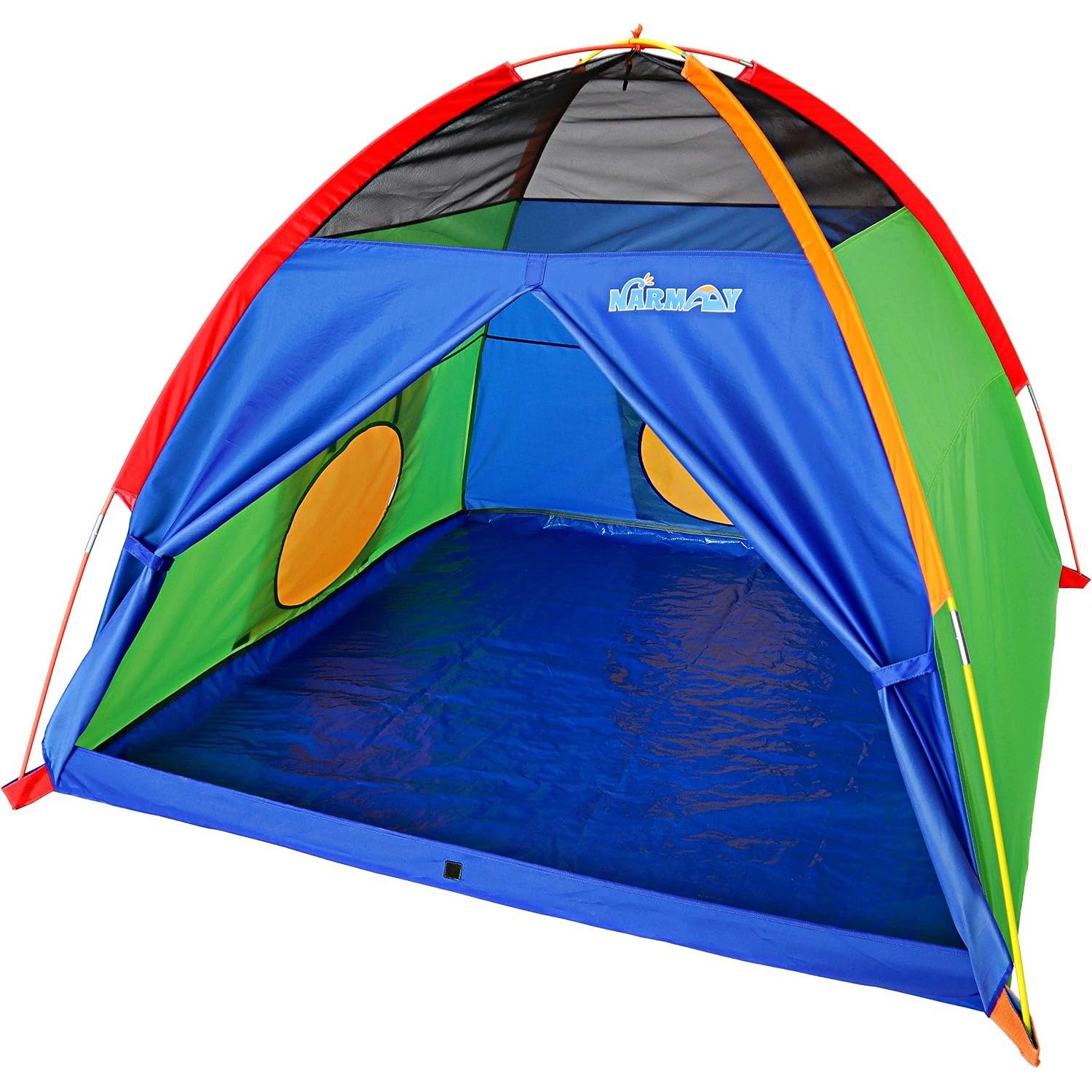
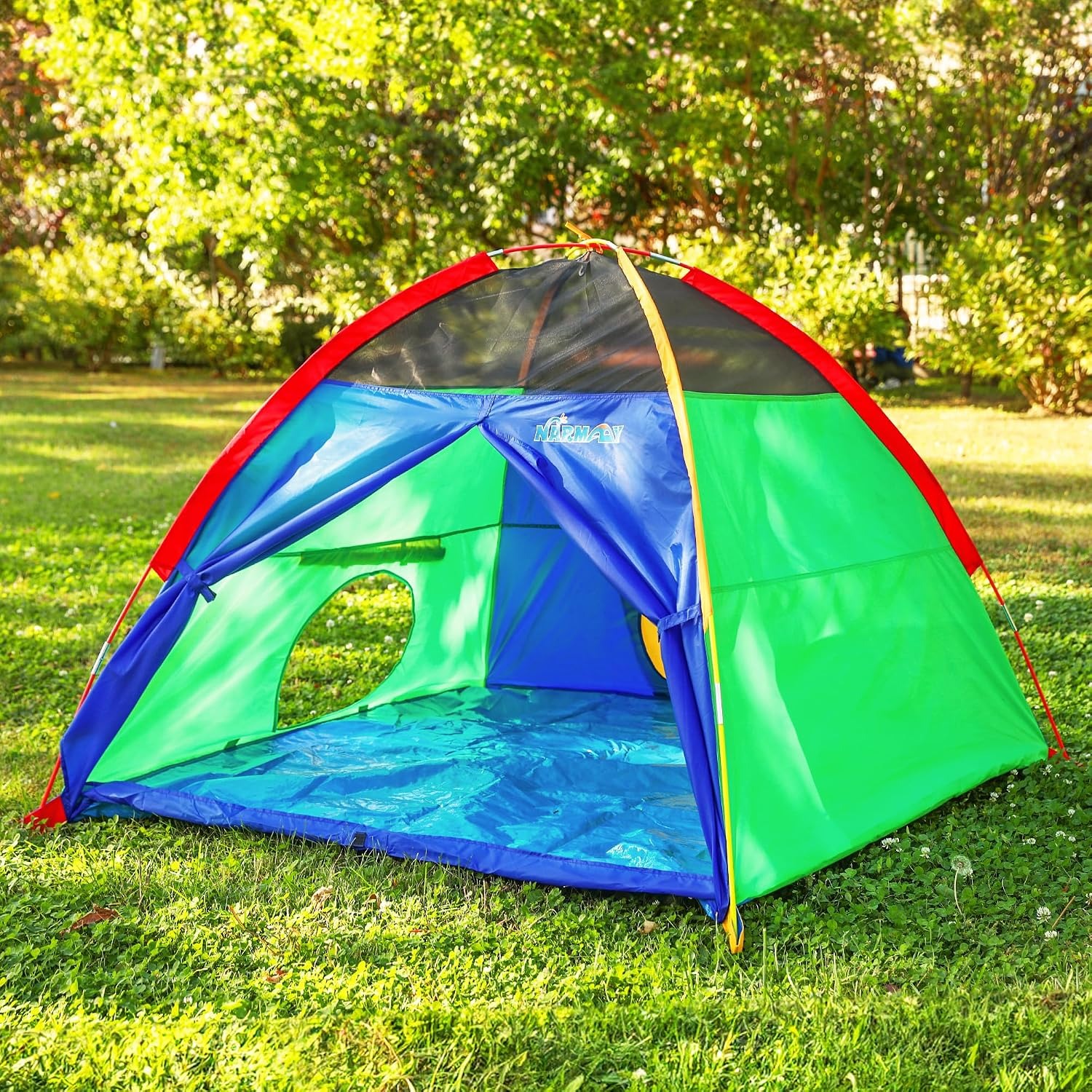
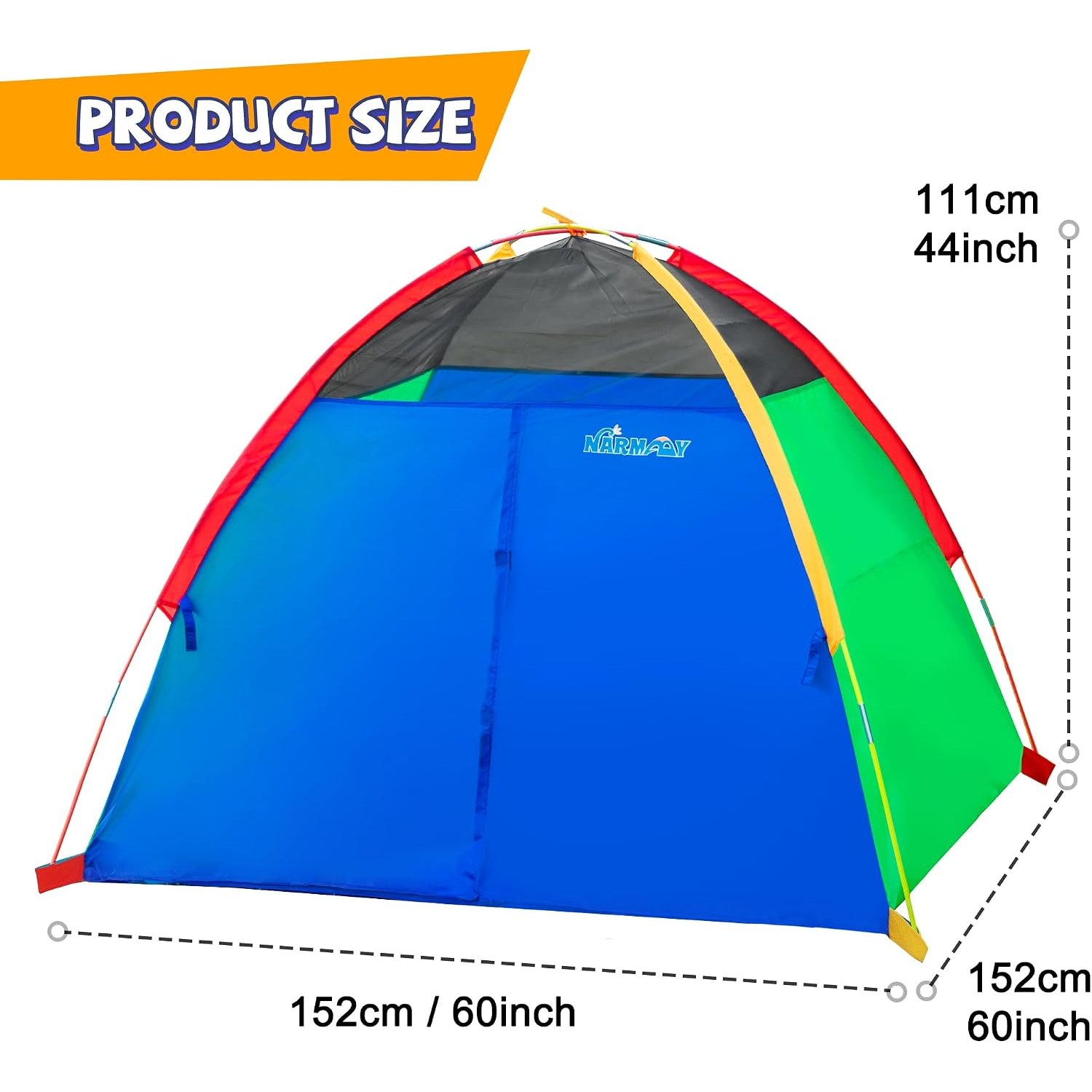
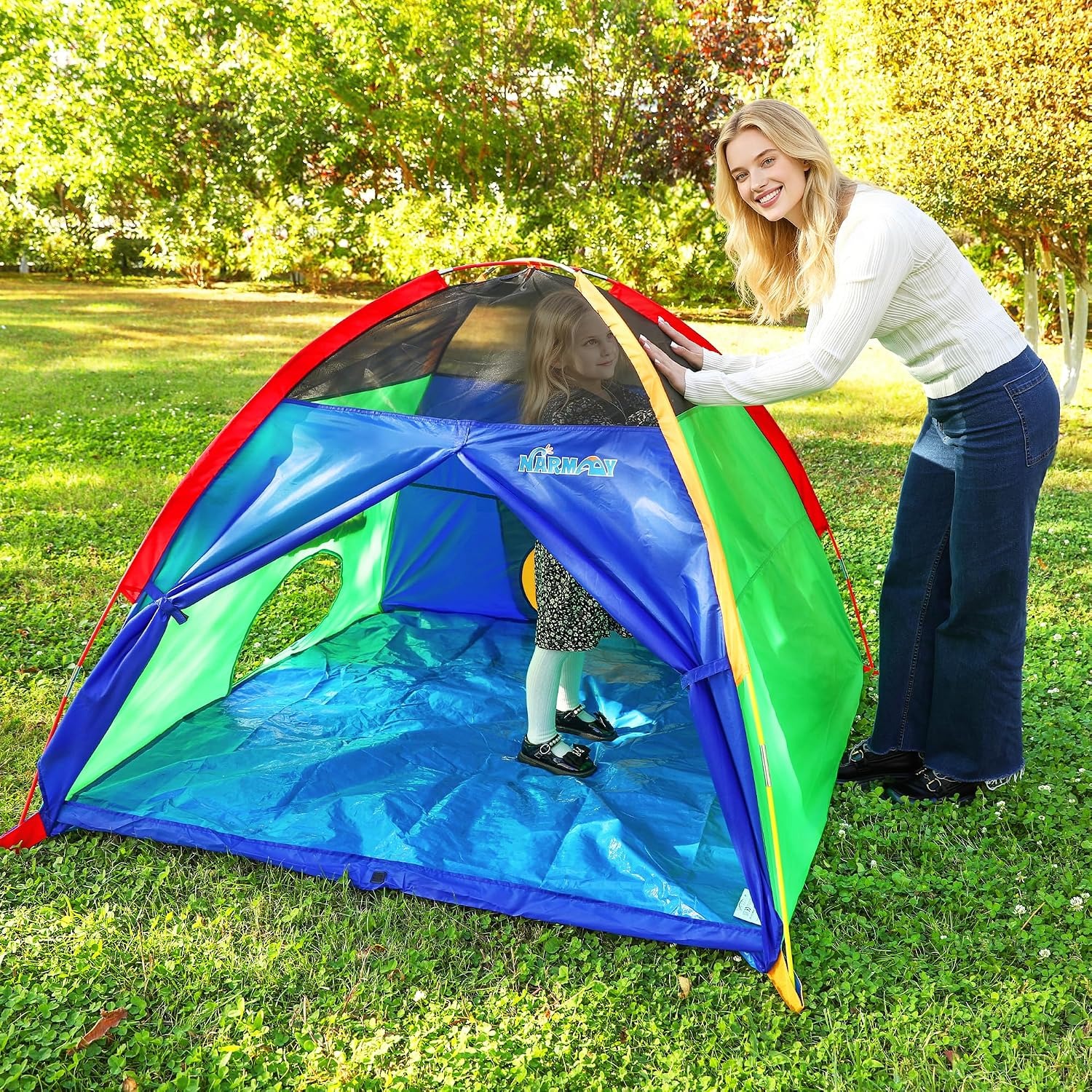
The Easy Fun Dome Tent is built around those basics. A 152 x 152 x 111 cm dome, polyester walls, fibreglass poles, two tunnel ports and a mesh roof. Nothing exotic. Just the parts that decide whether a kids playhouse tent gets used or shoved in a cupboard.
How a dome tent holds its shape
There are two common ways to build a play tent. One is the pop-up, where a sprung wire hoop snaps the fabric open. The other is a pole-and-sleeve dome, where you thread flexible poles through channels and the tension of the bend holds everything up.
Pop-ups are fast, but the wire is doing all the work and it takes a set over time. Once it bends out of true, the tent leans. The dome approach spreads the load across crossing poles, so the structure stays square at the base and rounded at the top. That is why this one keeps a usable 111 cm of height in the middle instead of slumping to knee level.
The poles here are PE-coated fibreglass and shock-corded. Shock-corded means each pole is a set of short sections joined by elastic running through the middle. Shake them out and they find their own joints. For a parent assembling on a Saturday morning with a child hopping around, that detail saves real time.
Fibreglass also flexes rather than creasing. An aluminum pole that gets stood on will stay bent. Fibreglass springs back. It is the sensible material for anything that lives in a room with children in it.
Why the mesh roof matters more than it sounds
Here is something you only notice after an hour of play. A closed fabric box with two warm kids inside gets hot, fast. Warm, still air makes children grumpy, and grumpy children leave the tent.
The oversized mesh panels across the top of this dome deal with that. Hot air rises and goes straight out, pulling cooler air in through the tunnel ports. The tent stays breathable even with both flaps rolled down.
The second benefit is for you. Mesh at the top means you can glance across the room and see movement inside without crawling over and sticking your head in the door. For younger children that is a quiet, practical safety feature rather than a selling point.
Two tunnel ports, and what to do with them
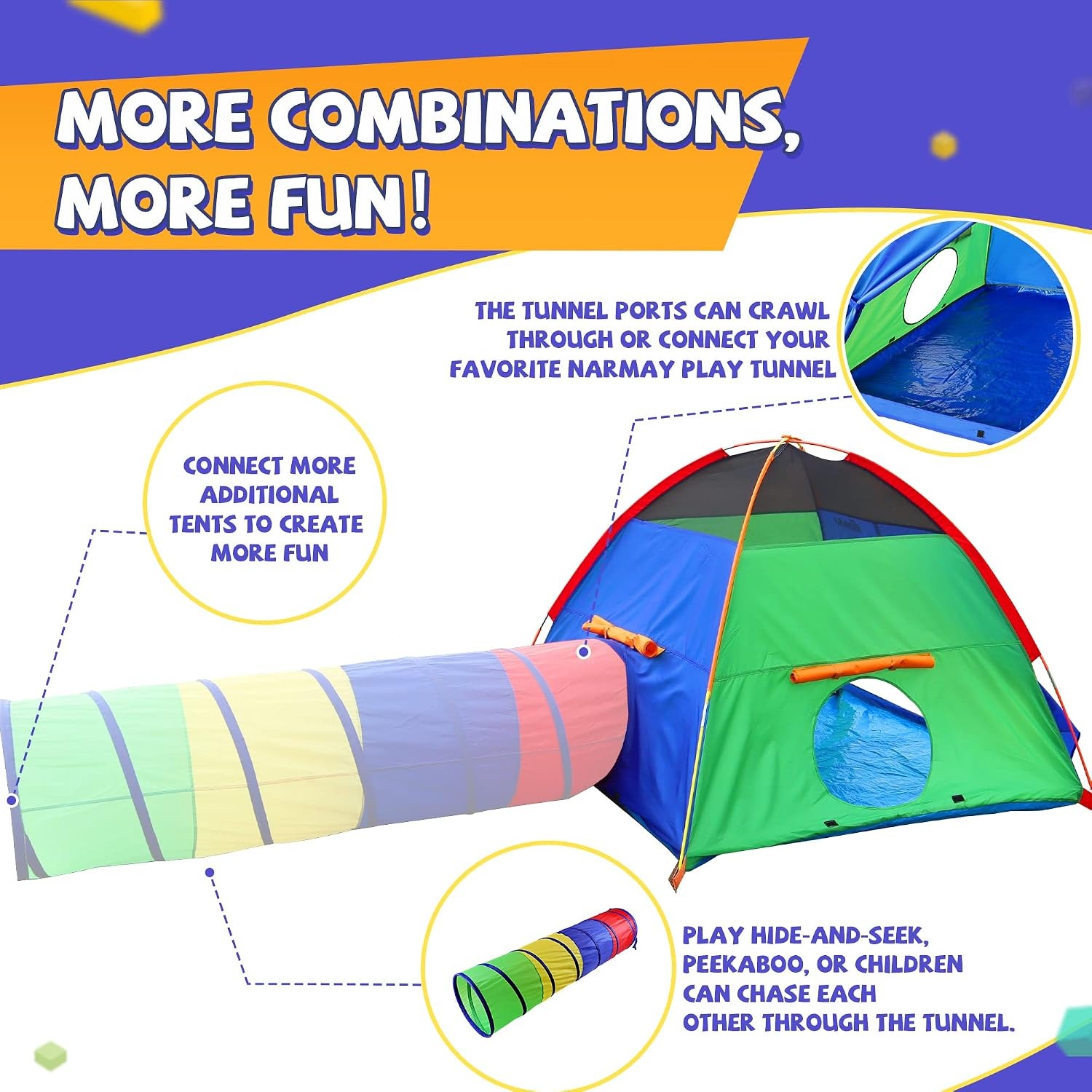
Most play tents have one door. This one has two openings on opposite sides, each with a roll-down flap.
In its simplest use, that means traffic flows. Kids go in one side and out the other instead of piling up at a single doorway. It turns the tent from a container into a route, which is the difference between sitting and playing.
The bigger use is connection. The ports are sized for standard crawl tunnels, so if you already own one, or buy one later, you can link the dome to a tunnel and a second tent. Suddenly you have a circuit across the living room floor. If you have two children of different ages, that layout tends to hold their attention far longer than a single hideaway, which is what makes a play tent with tunnel ports worth the extra consideration.
Fit does vary between brands, so check your tunnel's diameter before you plan a whole course.
Who it suits
The listed age guidance starts at 36 months. That is the sensible floor for a tent with poles and fabric panels, and it reflects where imaginative play really takes off.
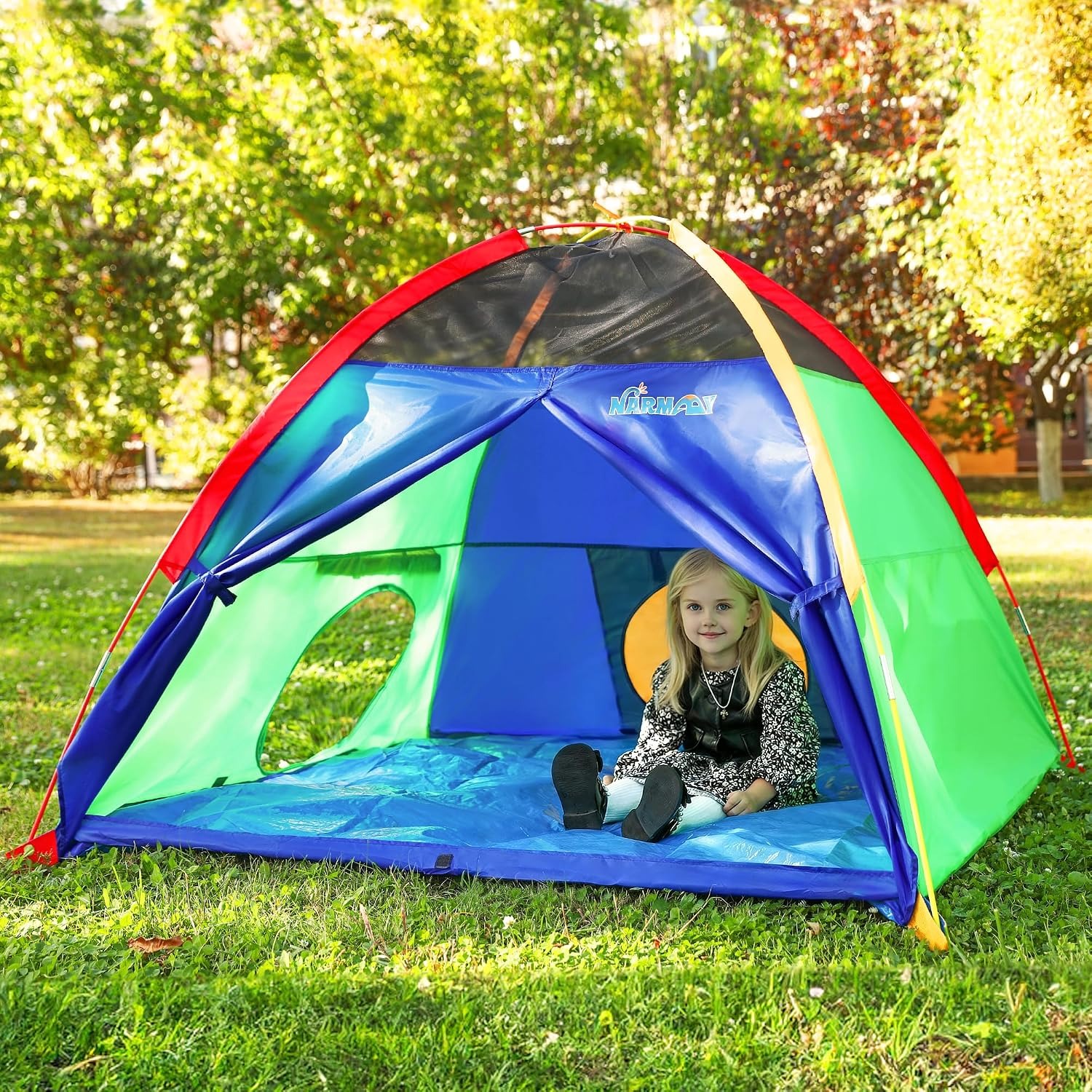
Three to six is the sweet spot. Children in that range will turn a dome into a castle, a shop, a den and a rocket in the same afternoon. The castle theme on the blue and green fabric gives them a starting point without dictating the game.
Older children do not stop using it, they just use it differently. Seven and up tends to mean reading, drawing, hiding from siblings, and taking cushions in for a quiet half hour. At 111 cm tall there is enough sitting room for a nine-year-old to be comfortable.
It also suits houses where floor space is borrowed rather than owned. The whole thing weighs 1.13 kg and packs into a tote, so it can be a playroom fixture on weekends and live in a cupboard during the week.
Measuring before you buy
This is the step people skip, and it is the one that causes returns.
The footprint is 152 cm square. That is roughly the size of a small double mattress laid on the floor. Before ordering, take a tape measure to the spot you have in mind and mark out 152 cm in both directions. Add a little clearance around the sides so the walls are not pressed against furniture, because fabric under constant pressure will distort the frame.
Check height too. You need 111 cm of clear space, which rules out pitching it under a low shelf or a bunk bed with a tight clearance.
If the square does not fit, do not try to force it. A smaller playhouse tent for small rooms will get more use than a big one squeezed into a bad spot.
Think about the surface as well. Carpet is kindest. On tiles or timber the tent stands fine, but kids will want a rug or play mat inside before they settle.
Keeping it in good shape
Care here is simple, and sticking to it is the difference between one season and several.
Clean the polyester with a damp cloth and a little mild soap, then let it air dry fully. Skip the washing machine. Washing machines stretch seams and work the coating off the fabric, and a stretched panel never sits properly on the frame again. Bleach, tumble drying and ironing are all out for the same reason.
Treat the poles gently. Fold them along the joints they already have rather than bending them across the middle, and keep them away from radiators and direct sun for long periods. Fibreglass is tough but it does not love heat.
Before packing away, make sure everything is dry. Folding damp fabric into a closed tote is how you get mildew spots that will not come out. Shake the floor panel out, give it a minute in the air, then pack it.
Keep the poles in the tote with the tent rather than in a separate drawer. Lost poles, not torn fabric, are what usually ends a play tent's life.
A few safety habits
None of this is complicated, but it is worth saying.
Pitch away from stairs, heaters, fireplaces, cords and furniture with hard corners. Supervise younger children, particularly if they are playing in a group and getting boisterous. Do not let children climb on the frame, because it is designed to hold fabric, not body weight.
And keep it indoors. It is sold as an indoor toy, and that is where it performs best.
The short version
A play tent lives or dies on four things. Does it hold its shape, does it stay cool, does it go up quickly, and does it pack away without a fight.
The Easy Fun Dome Tent answers all four. The fibreglass dome frame keeps 111 cm of real headroom instead of sagging. The mesh roof moves air so long sessions stay comfortable. The shock-corded poles mean assembly is minutes, not an afternoon. And at 1.13 kg in a storage tote, putting it away is not a chore you will start avoiding.
Measure your 152 cm square first. If it fits, this is a straightforward, well-sized hideaway that children tend to keep going back to.