

The complete guide
How to Choose a Kids Teepee Tent That Actually Lasts
The problem with most play tents
Children want a small space that belongs to them. Watch any young child in a living room and you will see it: they crawl behind the armchair, build a wall of cushions, pull a blanket over two chairs. It is not about hiding from you. It is about having somewhere that is their size, where they decide what happens.
The trouble is that most things sold to meet that need do not last. Pop-up tents made from thin printed nylon look bright on the box and then sag, tear at the seams, or refuse to fold back into the bag. Cardboard playhouses go soft the first time someone leans on a wall. Blanket forts collapse, which is funny the first time and annoying by Thursday.
A proper teepee is a different thing. It is a frame and a cover rather than a toy, and that changes how long it survives. The frame holds a stable shape, the cover takes the wear, and when the cover gets grubby you clean it instead of binning the whole tent. That is the main argument for a washable teepee tent over a cheaper alternative.
How this one is built
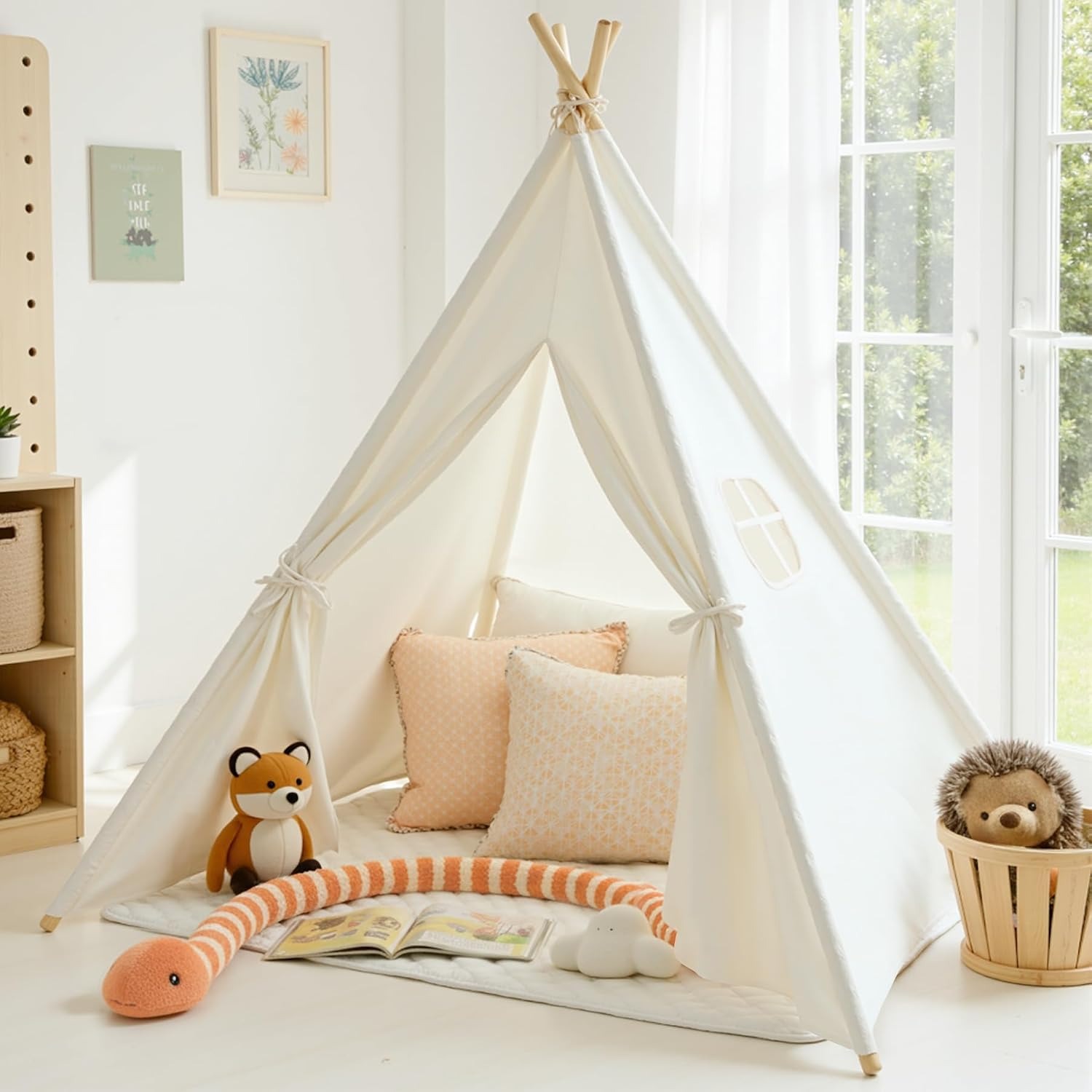
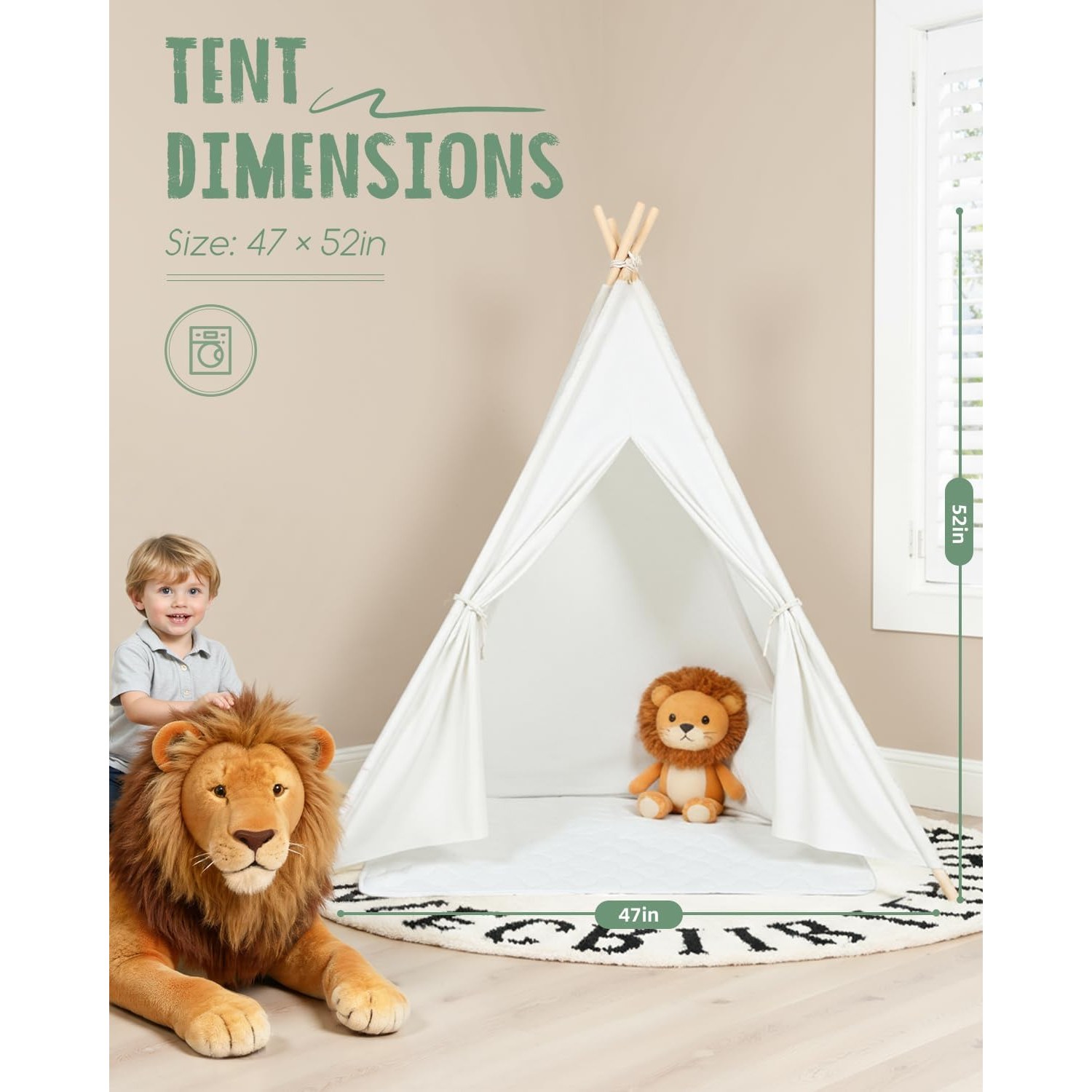
The construction here is straightforward. Four pine poles cross near the top and sit in plastic connectors, which hold the angle steady. The cotton cover slides over the poles and ties into position. Once it is up, the tent measures 119.38 cm square at the base and stands 149.86 cm tall, roughly 47.2 by 47.2 by 61.4 inches.
Those numbers matter when you are planning a room. The square footprint means you need about 1.2 m of clear floor, which usually means a corner rather than the middle of the room. The height means most young children can stand near the centre pole without stooping, and an adult can kneel inside to read a bedtime story.
The poles are sanded. That sounds like a small detail until you remember how much time children spend gripping, pulling and leaning on the uprights. Smooth wood avoids the splinter problem that catches out cheaper frames. The seams and raw fabric edges are finished too, which is what stops a tent unravelling after a few months of being dragged around.
Weight is 2.76 kg packed. Light enough to carry out to the backyard in one trip, heavy enough that it does not blow over in a breeze on the lawn.
Why cotton and wood
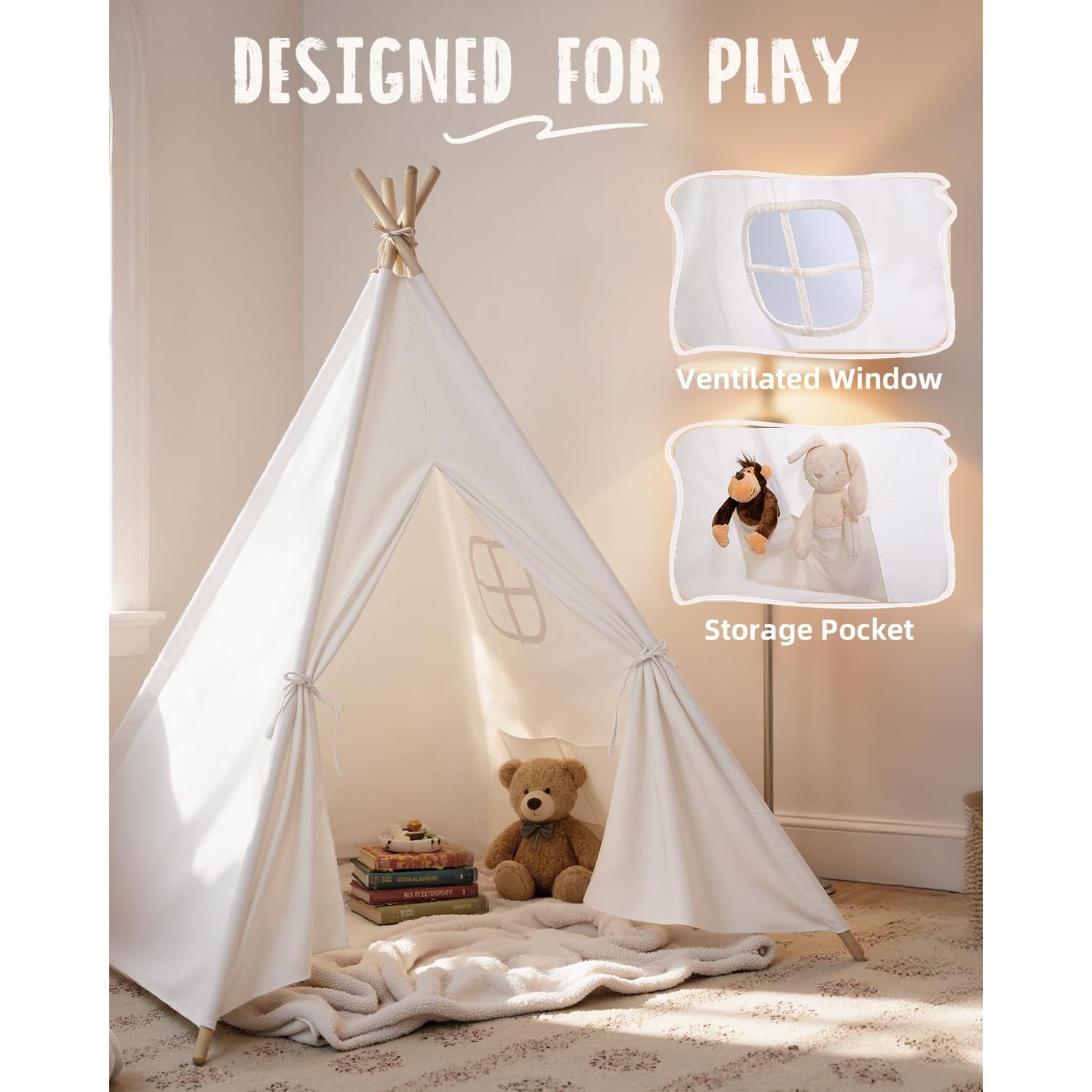
Natural materials are not just an aesthetic choice, though the unpainted Nature finish does sit more calmly in a bedroom than a cartoon print. Cotton breathes. On a warm afternoon, an enclosed fabric space can get stuffy fast, and a breathable weave plus the mesh window keeps the air moving. Synthetic coated fabrics trap heat much more.
Cotton also handles cleaning better. That is the whole point of the washable design. Play tents collect crumbs, felt tip, sticky fingerprints and the occasional spilled drink. Because the cover lifts off the frame, you can treat it like any other piece of household fabric rather than scrubbing at a wall you cannot move.
Wood gives the frame rigidity without the flex you get from fibreglass rods. A rigid frame keeps the cone shape crisp, which both looks better and stops the fabric sagging into the play space. Pine is light, which keeps the overall weight manageable.
Who it suits
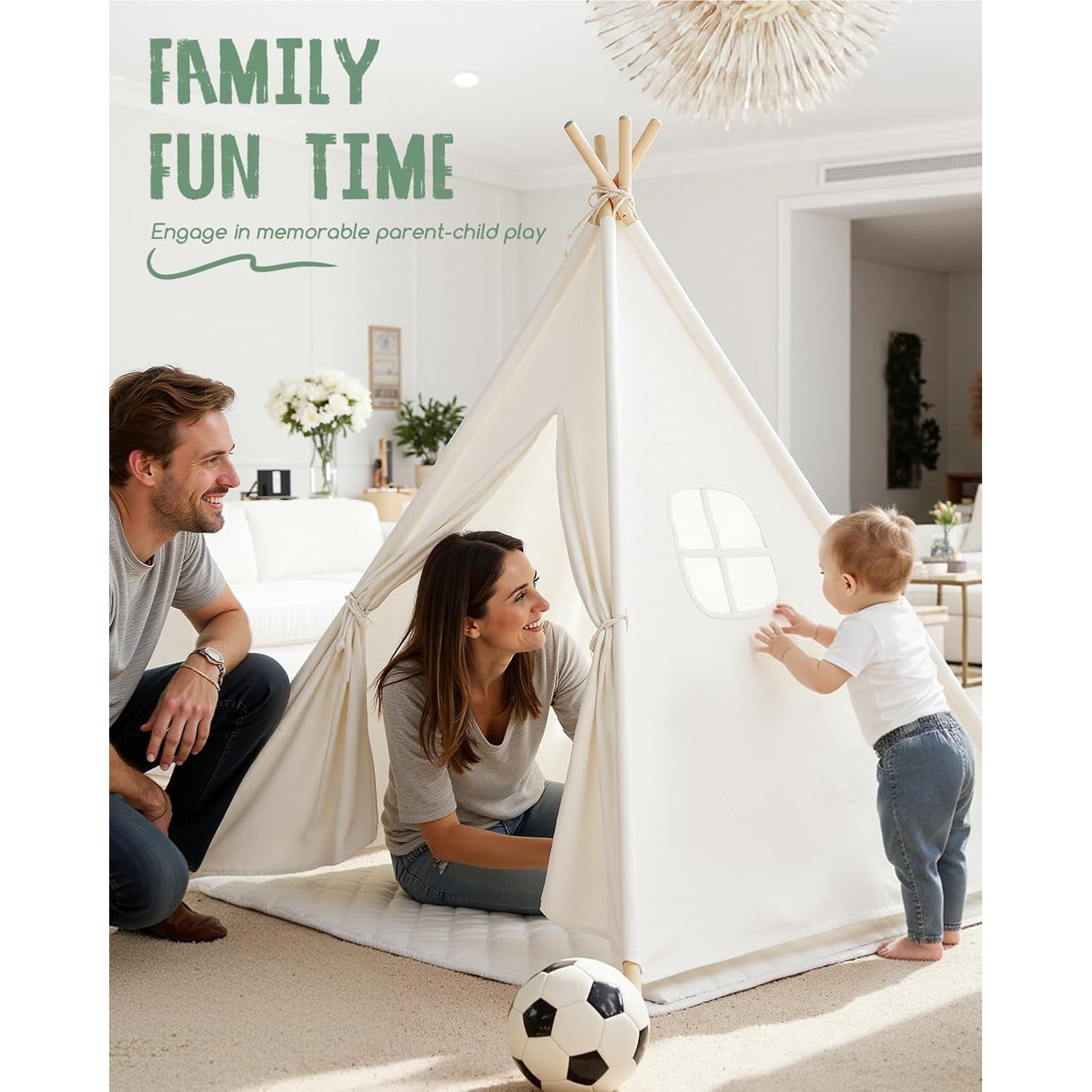
The manufacturer lists a minimum age of 36 months and a suggested range up to 18 years, which sounds optimistic at the top end but is fair in spirit. A three-year-old uses it as a den. A six-year-old uses it as a reading corner. A nine-year-old uses it for sleepovers and for somewhere to go when the house is loud.
It works for one child or two. Two small children fit side by side comfortably. Three is a squeeze, though squeezing in is sometimes the attraction.
Nurseries, classrooms and childminders use teepees as quiet corners. If you are setting one up in a professional setting, run it past your own safety checks, keep it clear of doorways and heat sources, and make use of the mesh window so staff can see in without disturbing whoever is inside.
For a bedroom, it is often the thing that makes a child happy to spend time in their room alone. That is worth more than a shelf of toys.
How to choose between teepees
If you are comparing options, a few things separate the good ones from the rest.
Check the frame material first. Wood poles with solid connectors hold their shape far better than thin metal or plastic rods. Then look at whether the cover comes off. If it does not, you are buying something with a fixed lifespan, because eventually it will be too marked to want in the house.
Look at the stated dimensions rather than the photos. Styling shots make every tent look enormous. Measure the corner you have in mind and compare it to the actual footprint. A tent that does not fit gets moved around and then put away.
Ventilation is easy to overlook. A door that opens and a mesh window make a real difference to how long a child will happily stay inside. A sealed fabric cone gets warm quickly.
Finally, think about storage. A tent that dismantles flat can go in a closet between uses or travel to grandparents. One that does not will end up permanently in the way.
Setting it up well
Pick a flat surface. Carpet is ideal because it grips the pole ends. On hard floors, a rug underneath helps with both stability and comfort.
Keep it away from stairs, radiators, open fires and anything with a cable. Children are enthusiastic rather than careful, and the tent is light.
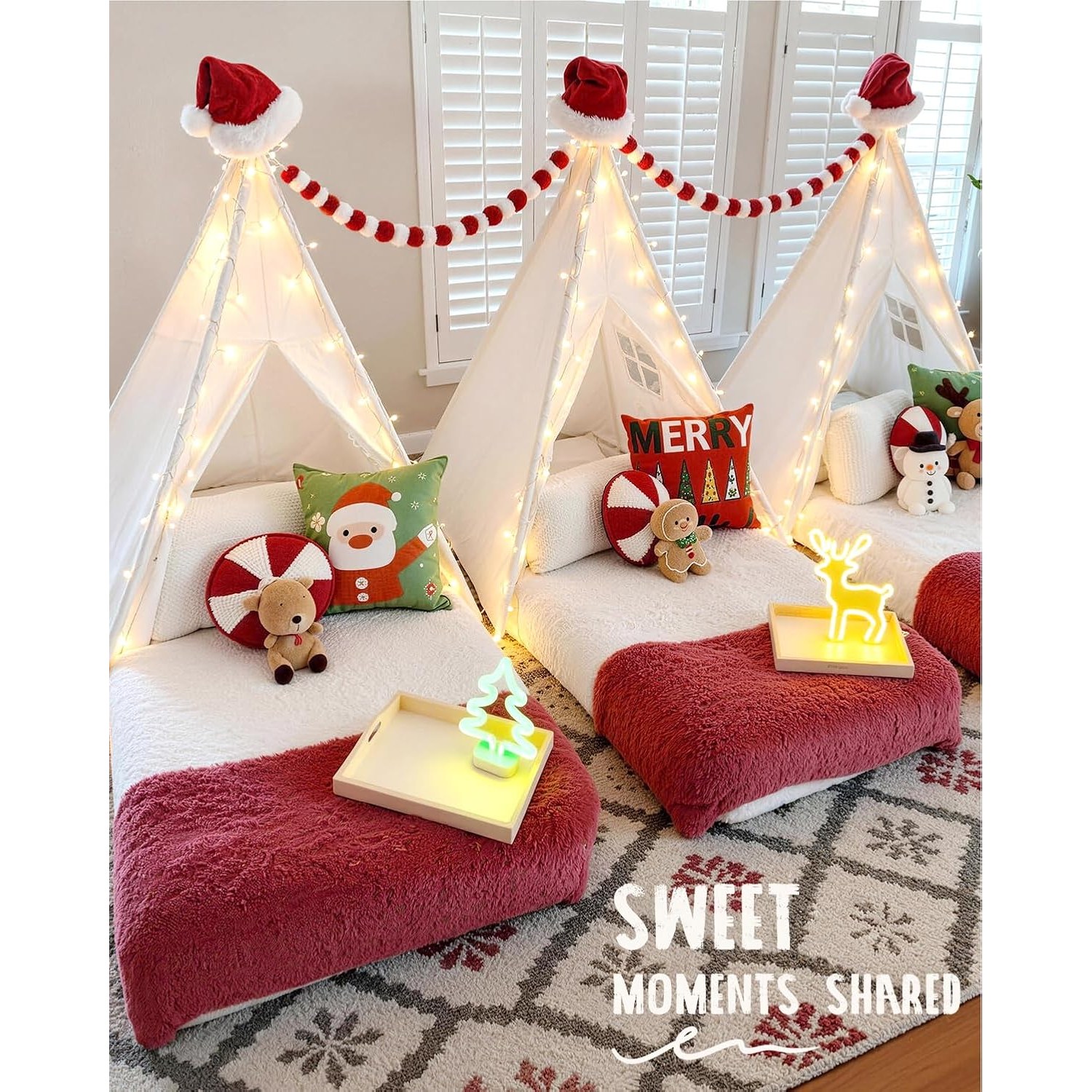
Add something soft on the floor inside. A folded quilt, a sheepskin, a couple of cushions. The tent itself is a frame and a cover, so the comfort comes from what you put under it. A few books in the inner pocket complete the job.
If you want fairy lights, use battery-powered, low-heat sets only, and keep the cables away from the doorway. Never run mains leads into a play space.
Keeping it clean and lasting
Take the cover off before cleaning it. Spot clean small marks with a damp cloth and a little mild soap, which handles most day-to-day mess. For a bigger clean, wash the cover gently and cool, then air dry it out of strong direct sun. Natural cotton can lighten in harsh sunlight, so shade drying keeps the colour even.
Let it dry fully before reassembly. Putting a damp cover back on wooden poles is the quickest way to cause problems for both.
Wipe the poles with a dry or barely damp cloth. Never soak them. If the tent gets caught in a shower outdoors, bring it in, dismantle it and dry everything before packing it away.
Store it folded flat somewhere dry. A closet or under a bed is fine. A damp garage is not.
The short version
A washable teepee tent gives a child a defined space of their own, and this one is built to survive being used rather than admired. Cotton cover, sanded pine frame, flap door, mesh window and an inner pocket. It stands 149.86 cm tall on a 119.38 cm square base and weighs 2.76 kg, so it moves between rooms and out to the backyard without fuss.
The cover comes off and washes, which is the single feature that decides whether a play tent is still in the house in three years or not. Suggested from 36 months upward, easy for one adult to build, and flat-packs for storage when the room needs its corner back.