
The complete guide
How to Choose a Princess Pop Up Tent with Lights
The problem with giving kids their own space
Most homes do not have a spare room going begging. Kids still want somewhere that belongs to them, a corner nobody else uses, where their rules apply and their toys stay put. Parents want that too, because a child with a defined play zone tends to spread less chaos through the rest of the house.
A play tent is the cheap, quick answer to that. It gives a child a door, a ceiling, and a boundary. Unlike a cubby house or a loft bed, it does not need building, does not need floor space twenty four hours a day, and does not cost a month of groceries. When the game is over, it disappears into a cupboard.
The catch is that a lot of play tents are disappointing in person. They are too short to sit up in, too fiddly to erect, or they are made from a stiff fabric that holds a crease and never looks right again. Choosing well matters more than it sounds.
What this tent actually gives you
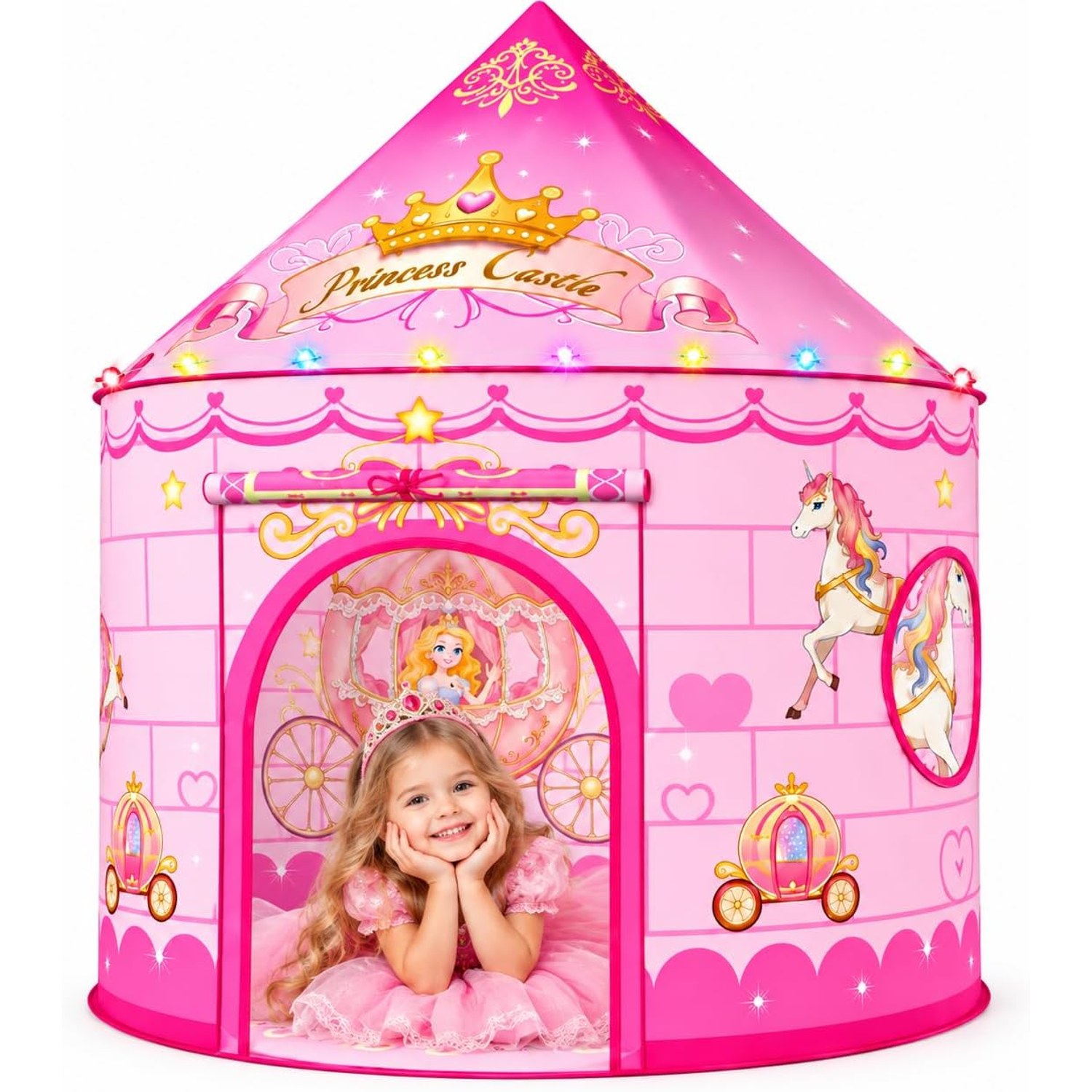
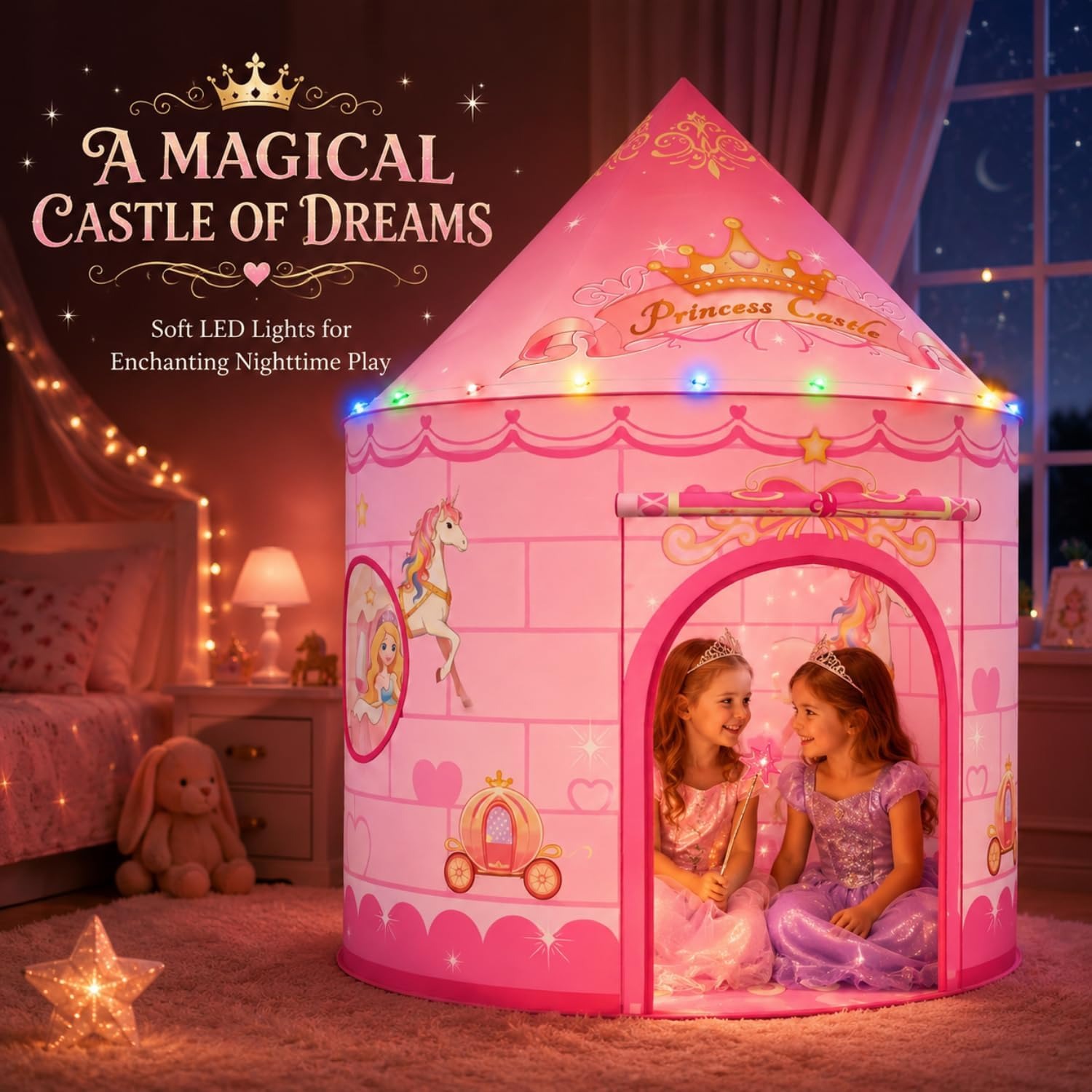
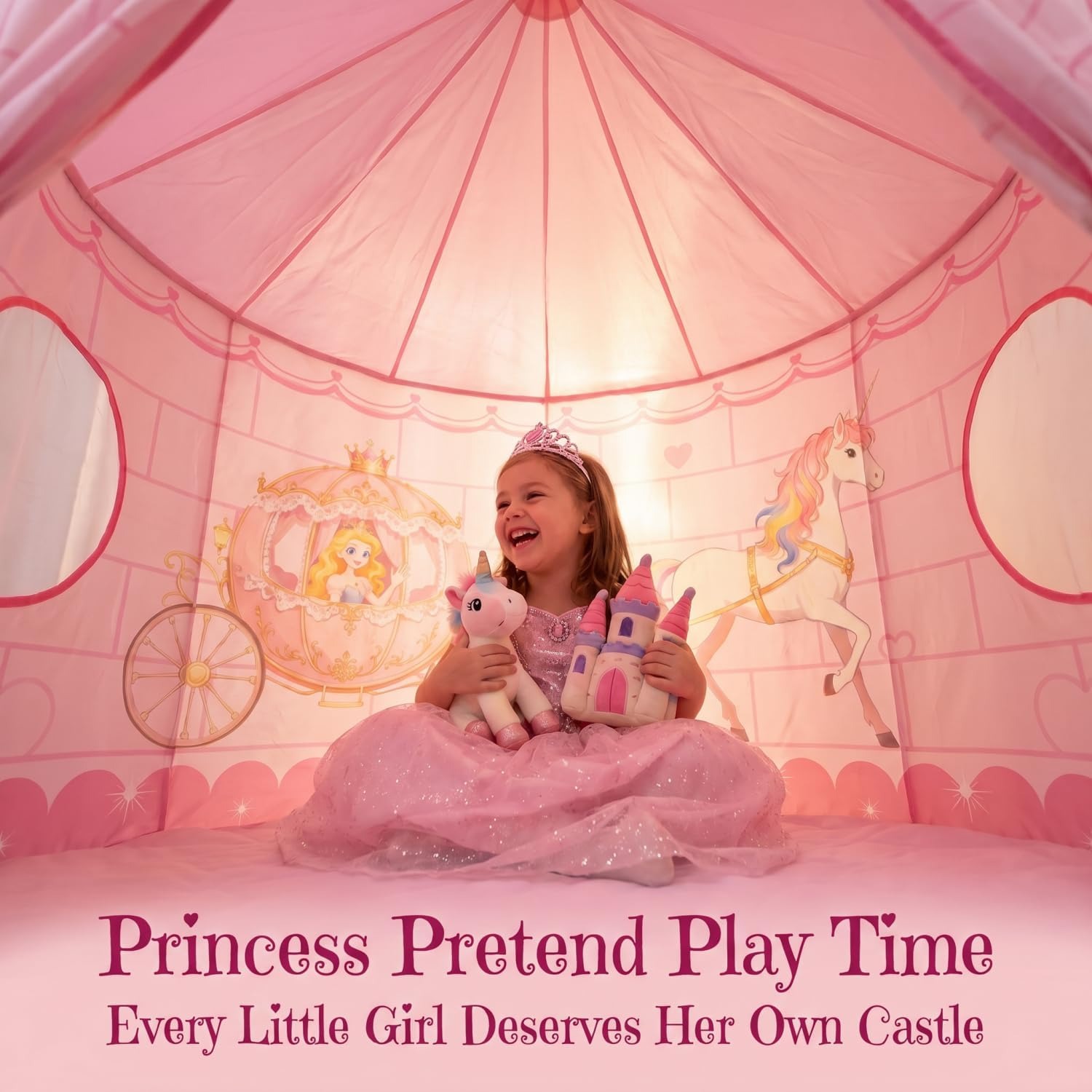
The Princess Pop Up Tent with Lights is a fabric tent printed with a pink castle design. There is a crown, a carriage, and the kind of fairy tale artwork that lands well with kids somewhere between three and eight. The maker lists the age range as 36 months to 8 years.
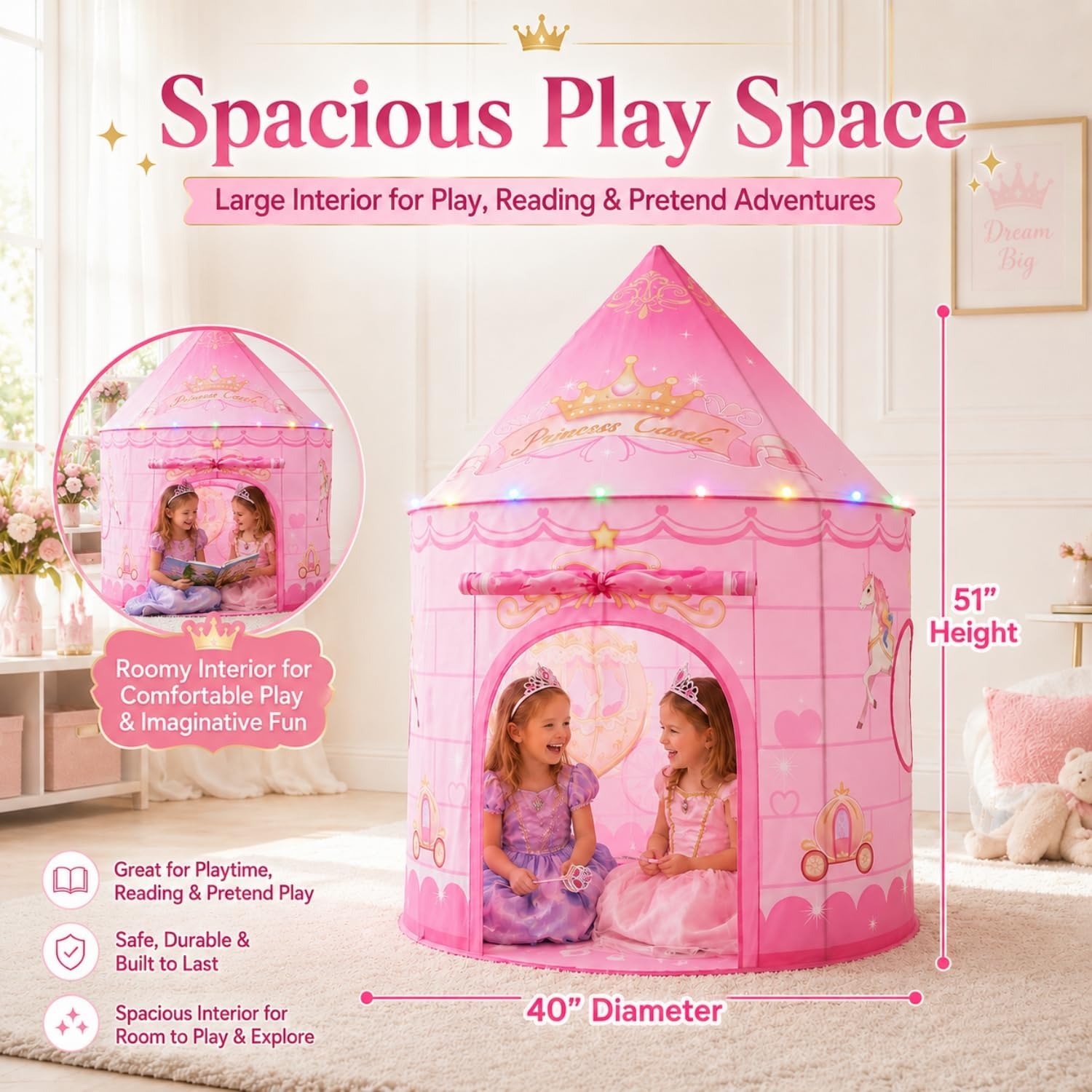
Set up, it measures about 40 inches across and 51 inches tall. In metric that is roughly 102 cm wide and 130 cm high. The height is what makes it usable. A lot of cheaper tents top out around 90 cm, which forces a child to lie flat or hunch. At 130 cm, a young child can kneel, sit cross legged, or stand with a bit of head room. That difference shows up in how long they actually play in it.
Packed down it is 40 x 31 x 20 cm and weighs 948 g. That is lighter than a bag of flour and small enough that a six year old can carry it to the backyard themselves.
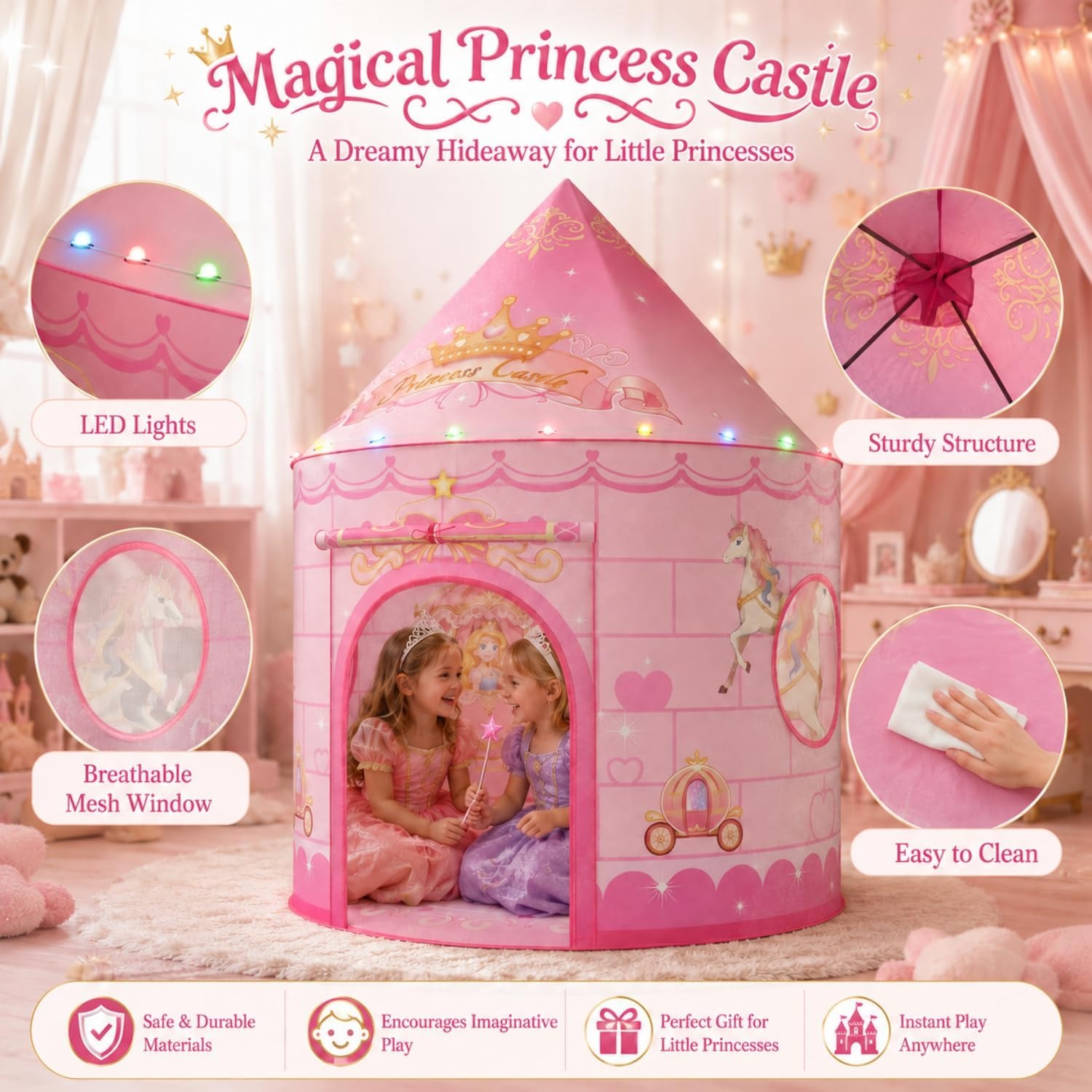
The LED lights come with it. They sit inside and wash the fabric walls in a soft glow, which is the thing that turns a tent into a reading nook. Kids want to be inside a lit space after dark. Plain tents get abandoned at sunset. Lit ones get used at bedtime.
There is also a mesh window in the side. Two jobs there. It keeps air moving so the inside does not turn into a sauna during a long game, and it lets you check in from the kitchen without crawling over and unzipping anything. For parents of three and four year olds, that second job is the useful one.
How the pop up frame works
A pop up tent has a flexible loop frame sewn into the fabric. It is held under tension in its packed shape, and when you release it, the loops spring out into a dome. There are no poles, no sleeves, no clips. You take it out of the box and it is ready.
The trade off is on the way down. Collapsing a pop up frame takes a particular twisting motion, folding the circle in on itself until it becomes a smaller flat round shape. The first attempt is usually clumsy. By the third you will have it in about ten seconds. If you have ever folded a pop up laundry hamper or a windbreak at the beach, it is the same move.
Treat the frame kindly and it lasts. The things that kill pop up tents are being jumped on, being stored damp, and being forced through a fold in the wrong direction. None of those are hard to avoid.
Who this suits
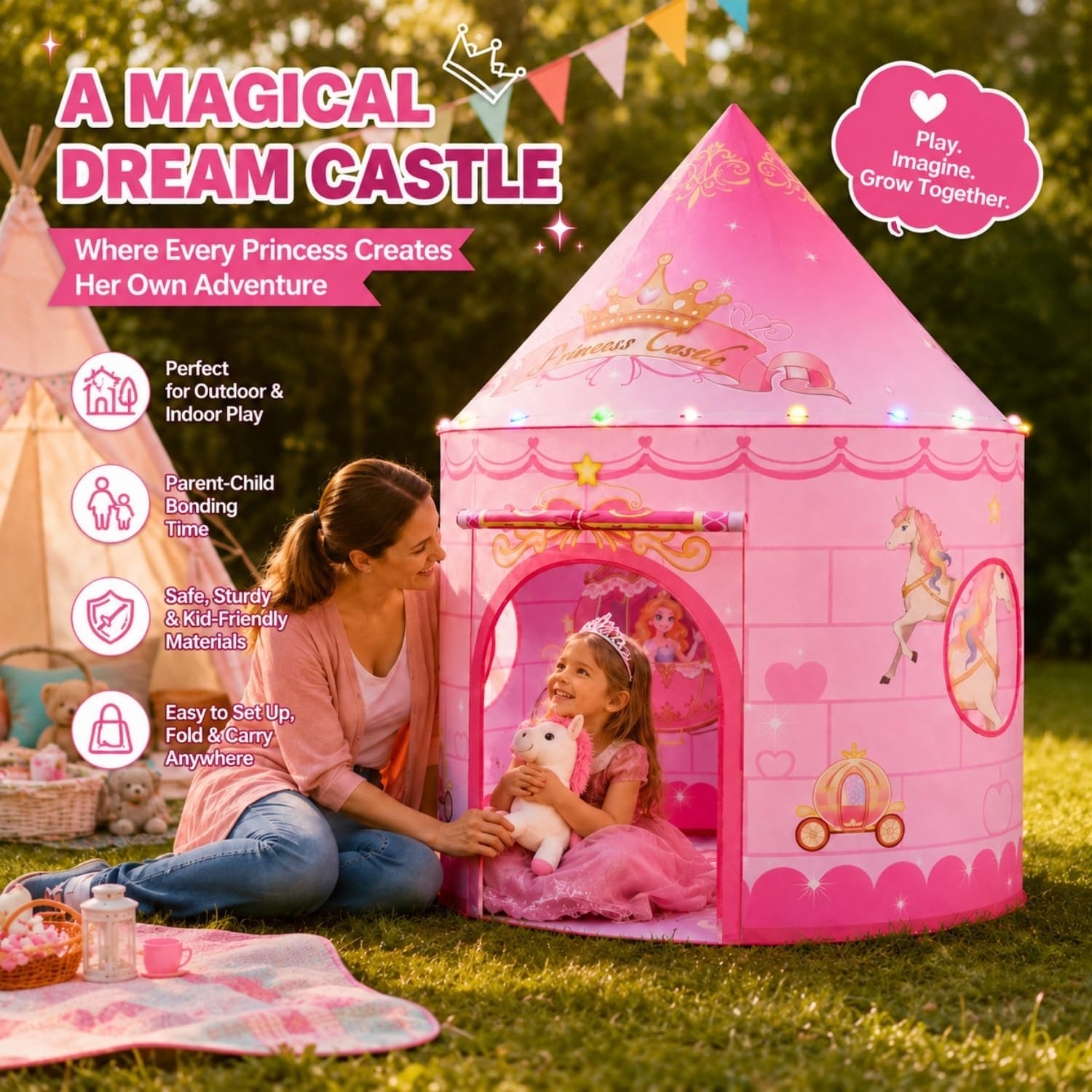
It suits families who need a play space that can vanish. If your lounge doubles as a dining room in the evening, a pop up is the only type of play structure that works.
It suits kids who read, draw, or play quietly. The lights and the enclosed walls make it a genuine calm corner, and some families use it exactly that way, as a place to go and settle down rather than a place to run wild. If you have been looking for the best kids reading nook tent on a modest budget, the lit interior is the feature that earns its keep.
It suits gift givers. Nothing needs building, nothing extra needs buying, and it goes from box to usable in under a minute. That matters on a birthday morning when a child has the patience of a gnat.
It is less suited to outdoor overnight use. This is a play tent, not camping gear. No rain rating, no pegs for serious wind, no groundsheet listed in the components. Dry lawn on a calm afternoon is fine. An actual campsite is not.
Choosing between play tents
A few things are worth checking whenever you compare options.
Height first. Measure it against your child. A tent they cannot sit up in gets used for a week and then becomes a laundry basket. This one at 130 cm has plenty of room for the target age range.
Then setup. Pop up beats pole assembly for almost every family. If you have to spend fifteen minutes threading fibreglass poles each time, the tent will stay in the cupboard.
Then ventilation. Fabric domes get warm fast with a child inside. A mesh panel is not a luxury, it is what makes a long play session comfortable.
Then storage size. Look at the folded dimensions, not just the set up size. At 40 x 31 x 20 cm, this one goes on a shelf. Some frame tents need a closet to themselves.
Lastly, think about whether the theme will age well with your child. A castle print works for a broad stretch of early childhood, roughly three to eight, which is a decent run.
Setting it up well
Pick a corner rather than a middle of the room spot. Tents against a wall feel more like a den and get knocked over less.
Put something soft on the floor inside. A rug, a folded quilt, or a play mat. The maker does not specify a floor mat as an included component, and a padded base makes the difference between twenty minutes of play and two hours.
Keep the lights tidy. Run them along a seam rather than leaving a loop dangling where a foot can catch. Check the cable now and then for pulls.
Give the tent a job. A small basket of books, a couple of soft toys, a flashlight. A furnished tent gets used. An empty one does not.
Looking after it
Spot clean the fabric with a damp cloth and a little mild soap. Do not put it in a washing machine. The frame is sewn in and a wash cycle will bend it out of shape.
Let it dry fully in the air before folding. Trapping moisture in folded fabric is how you get a musty smell that never quite leaves.
Take the lights out before cleaning or packing it down, and store them separately so they do not get crushed in the fold.
Store it dry and flat. A cupboard shelf, under a bed, or behind a door all work. Avoid a shed that swings between freezing and hot, as that is hard on both fabric and frame.
The short version
It stands about 102 cm wide and 130 cm tall, packs to 40 x 31 x 20 cm, weighs 948 g, and is recommended for ages 3 to 8. It has a mesh window for airflow and visibility, and it folds flat when you are done.
Material is listed only as fabric, and colour code, shipping weight, and warranty terms are not specified in the maker's details. Country of origin is China.
If you want a quiet, lit corner your child can call their own without surrendering a room to it, this does the job and then gets out of the way.