

The complete guide
How to Choose an Indoor Play Tent That Actually Gets Used
The problem with big rooms and small people
Walk into most children's bedrooms and you will see a decent amount of open floor. We design them that way because open floor looks clean and feels generous. Children, though, rarely use the middle of a room. They gravitate to the gap behind the door, the space under the desk, the corner between the closet and the wall.
That is not stubbornness. Enclosed spaces are calming. A small roof overhead and walls close by reduce the amount of visual information a child has to process, which is why so many children read, nap and settle more easily in a confined spot than in the open.
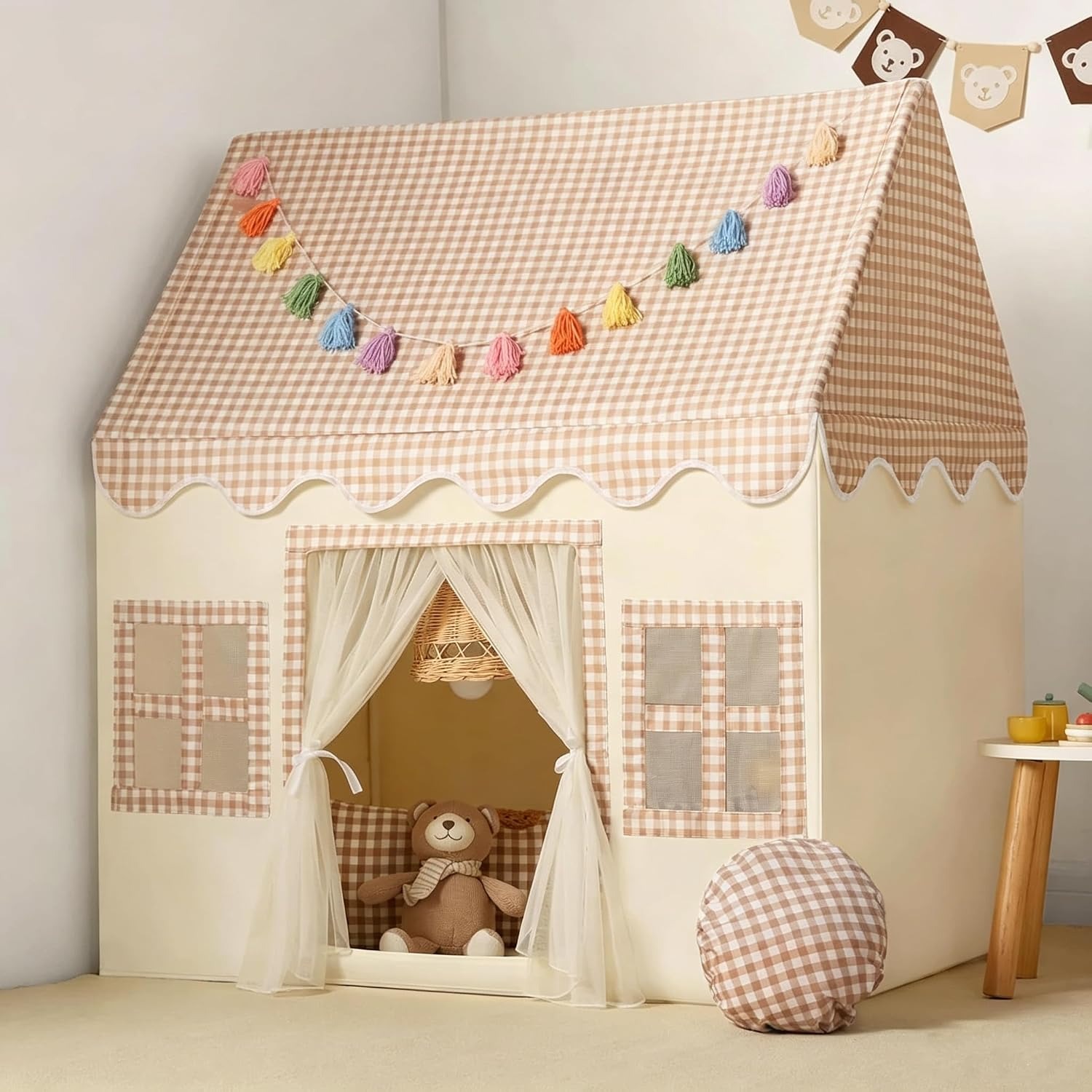
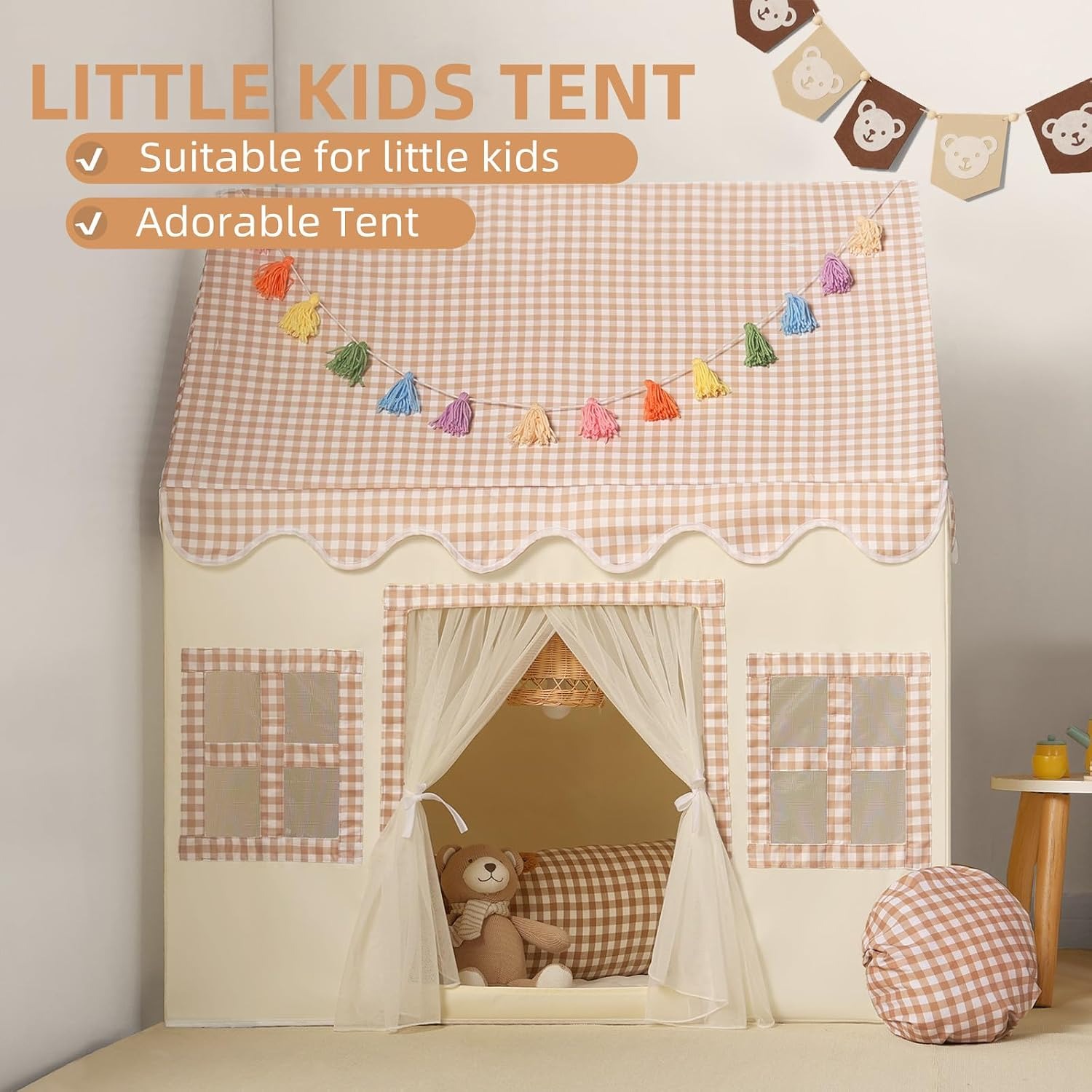
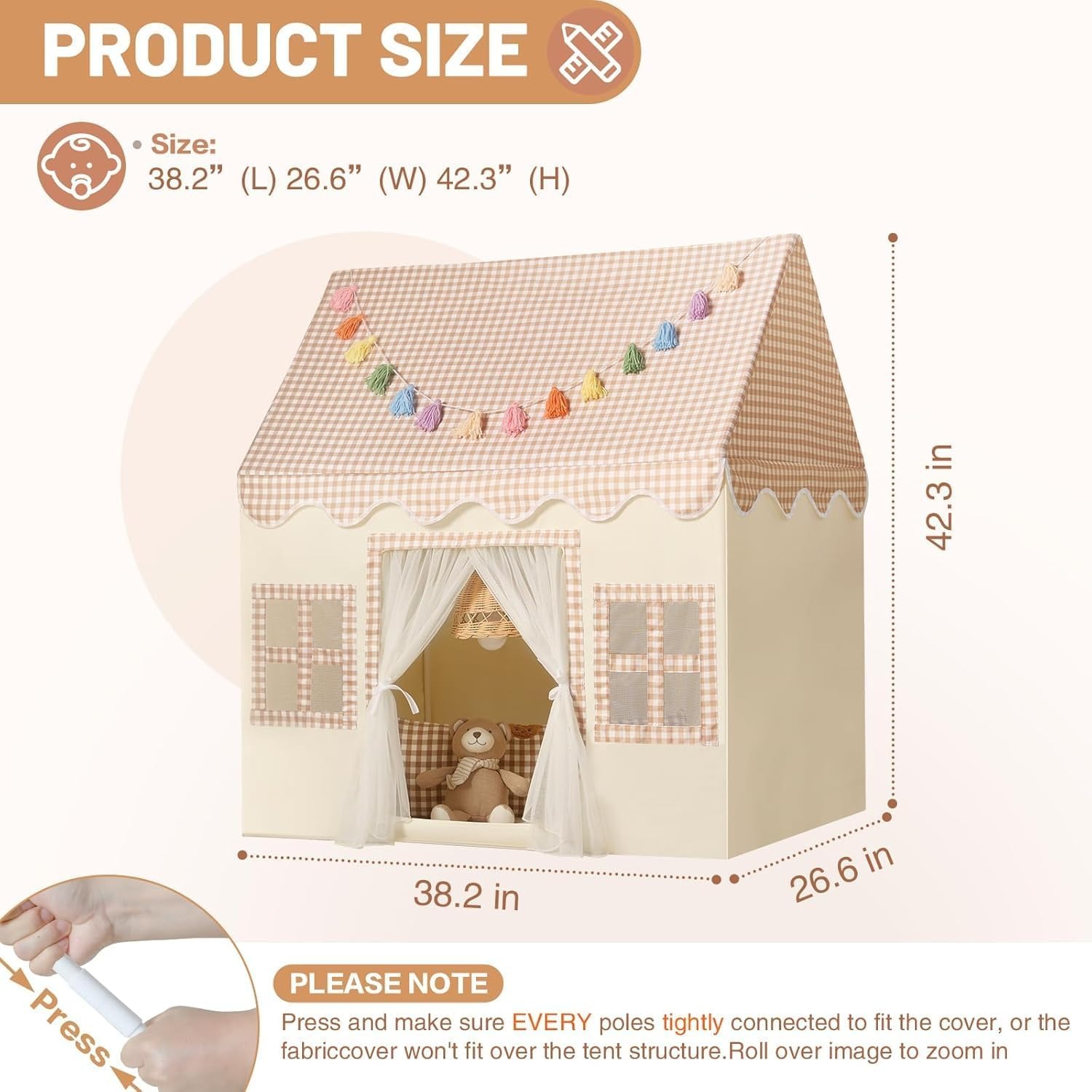
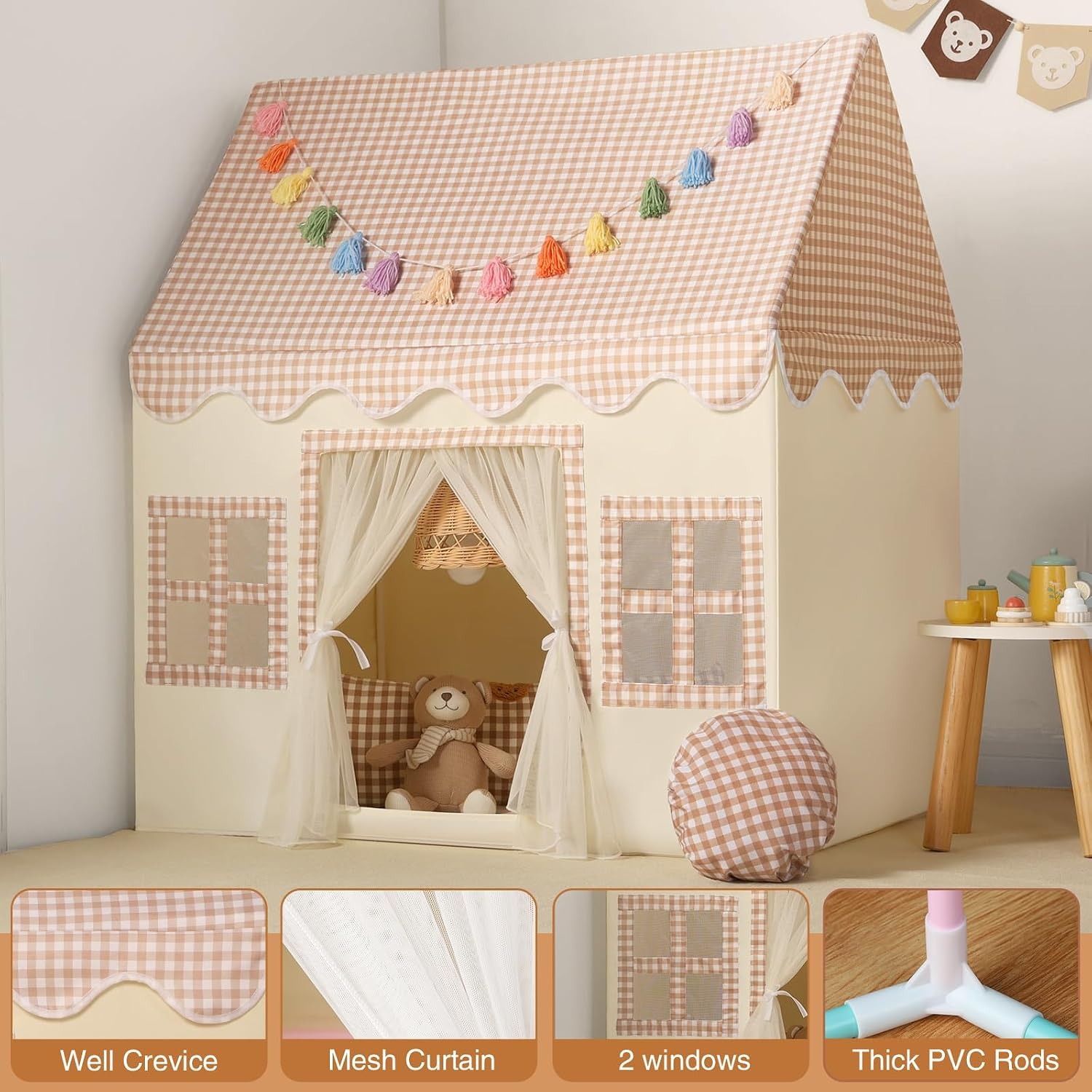
An indoor play tent is simply a way of providing that corner on purpose, in a shape that looks good enough to keep in a living room. The brown playhouse tent with mat and garland sets up a house outline at child scale, measuring 67.3 cm deep, 96.8 cm wide and 107.4 cm tall, which is enough room to sit up and still small enough to feel like a hideout.
How a frame and cover tent works
The build is deliberately simple. A set of lightweight poles, listed as aluminum or stainless steel, connect together to form the house shape. A polyester cover goes over the frame and holds the outline. There are no screws, no brackets and no tools involved, which is why most people can go from box to standing tent in well under ten minutes.
Because the whole assembled unit weighs 1.59 kg, it is easy to shift. That matters more than people expect. A tent that lives in a bedroom all week often migrates to the living room on a rainy Saturday, and a heavy one simply stays where it is.
The same lightness has a trade-off. This is a play structure, not furniture. It handles children crawling in and out, sitting, rolling and dragging toys inside. It does not handle being climbed, swung on, or used as a wrestling target. Setting that rule on day one saves a lot of repairs later.
What the mat and garland change
Plenty of play tents arrive as a bare shell. You put it up, your child looks inside, sees a hard floor and empty fabric, and loses interest. Then you spend another thirty minutes hunting for a rug and some cushions.
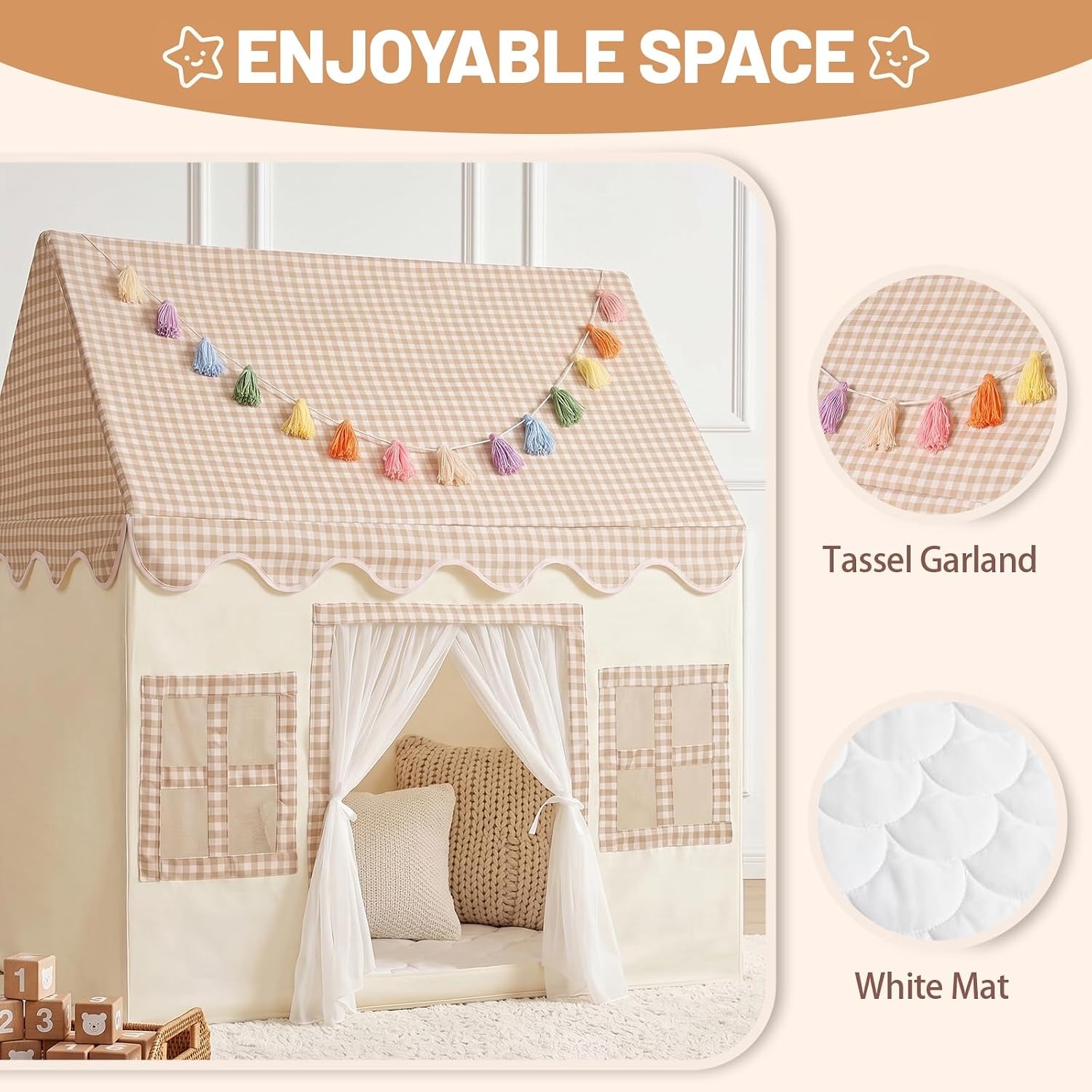
Here the floor mat and rainbow tassel garland come in the box. The mat covers the sitting area, which makes a real difference on timber or tile. The garland adds colour against the brown, giving the inside a finished look straight away.
That first impression matters. A child who crawls into a tent that already feels like a little room is far more likely to keep going back to it.
Who this suits
The manufacturer lists a minimum age of 36 months and a recommended range of 36 months to five years. In practice the way it gets used shifts over that period.
At three, it is mostly a den. Soft toys get carried in, blankets get piled up, and the tent becomes a nest. At four, pretend play takes over, and the tent becomes a shop, a house, a spaceship or a vet clinic depending on the week. By five, it is often a quiet spot, somewhere to read or hide from a noisy sibling for a while.
It suits families in apartments and smaller homes particularly well, because the footprint stays under a metre wide and the whole thing folds away. It also suits households where the play space is shared with adult living space, which brings us to colour.
Why the colour is worth thinking about
Most kids playhouse tents come in bright primaries, cartoon prints or heavy character themes. Children do love them. The catch is that a licensed print lives in your living room for years and dates fast, and a loud pattern fights with whatever else you own.
This one is brown, listed under a Winter Wonderland theme, with the rainbow garland providing the colour accent. A warm neutral tone sits comfortably with wood furniture, plain walls and the beige and cream rugs most family rooms end up with. It reads as part of the room rather than an intrusion into it.
There is a practical bonus too. Neutral tents tend to hold their appeal across siblings. A tent decorated for one specific interest at age three can feel wrong for a second child with completely different tastes.
Choosing the right size and spot
Before ordering any play tent, do two measurements. First, measure the floor area you intend to give it, and add a bit of clearance at the front so the entrance is not blocked by a bed frame or a bookshelf. Second, consider your child's height. At 107.4 cm tall, this tent gives comfortable headroom to children in the recommended age range, and gets tight for taller kids.
A corner is usually the best position. Two walls give the tent a natural frame, keep it out of walkways and stop it being knocked while people pass. Keep it away from heaters, radiators, open fires and window blind cords. Flat floor matters too, since a tilted rug under one side makes the frame sit unevenly.
If you plan on adding lights, use battery operated fairy lights rather than anything mains powered, and tuck the strand along the roof line where it will not be tugged.
Looking after it
Polyester is forgiving, which is the main reason it is used for a play tent with mat. Sticky fingers, crumbs and the occasional juice drip wipe off with a damp cloth and a little mild soap. Let the fabric dry fully before you fold it, because packing anything damp leads to musty smells and marks.
Skip the washing machine, the bleach and the tumble dryer. They are all harder on seams and coatings than hand cleaning. Give the frame poles a dry wipe now and then and check the joints feel firm before each new setup.
For storage, lift the cover off, separate the poles, roll the mat and keep the parts together in one bag or box. Store it somewhere dry and out of direct sunlight, since long periods in strong sun will fade any fabric over time.
Getting more use out of it
A few small habits keep a tent in rotation rather than in the cupboard.
Move it occasionally. The same tent in a new corner often feels new again to a four year old. Change what is inside, swapping a book pile for a flashlight, or adding a small basket of play food for a shop game. Let your child decide what it is. A tent that the adults keep calling a castle stops being interesting the moment the child wants it to be a submarine.
And use it for quiet time, not just play. Ten minutes inside with a picture book is a genuinely useful reset on a difficult afternoon.
The short version
This is a brown indoor play tent with a metal frame and a polyester cover, measuring 67.3 by 96.8 by 107.4 cm and weighing 1.59 kg. It comes with a floor mat and a rainbow tassel garland, assembles without tools, and is recommended by the manufacturer for ages 36 months to five years.
It works best as a neutral corner den in a bedroom, playroom or shared living space, especially where you want something that folds away and does not clash with the rest of the room. Measure the spot, set the no climbing rule early, wipe it down as you go, and it will carry a child through several years of pretend play.