

The complete guide
Choosing a Princess Castle Play Tent, A Practical Buyer's Guide
The problem a play tent actually solves
Children build dens whether you buy them one or not. Sofa cushions get stacked, dining chairs get draped with the good blanket, and the washing basket becomes a boat. It is one of the clearest signs that a child wants a space that is theirs, scaled to them, with a door they control.
The trouble is that homemade dens collapse, eat your bedding, and have to be rebuilt from scratch every single time. By the fourth rebuild of the afternoon, the fun has drained out of it for everyone.
A proper kids castle tent fixes that. It stands up on its own, it goes up in minutes, and it stays up. The child gets the enclosed, slightly secret feeling they were after. You get your blankets back.
What makes this one different
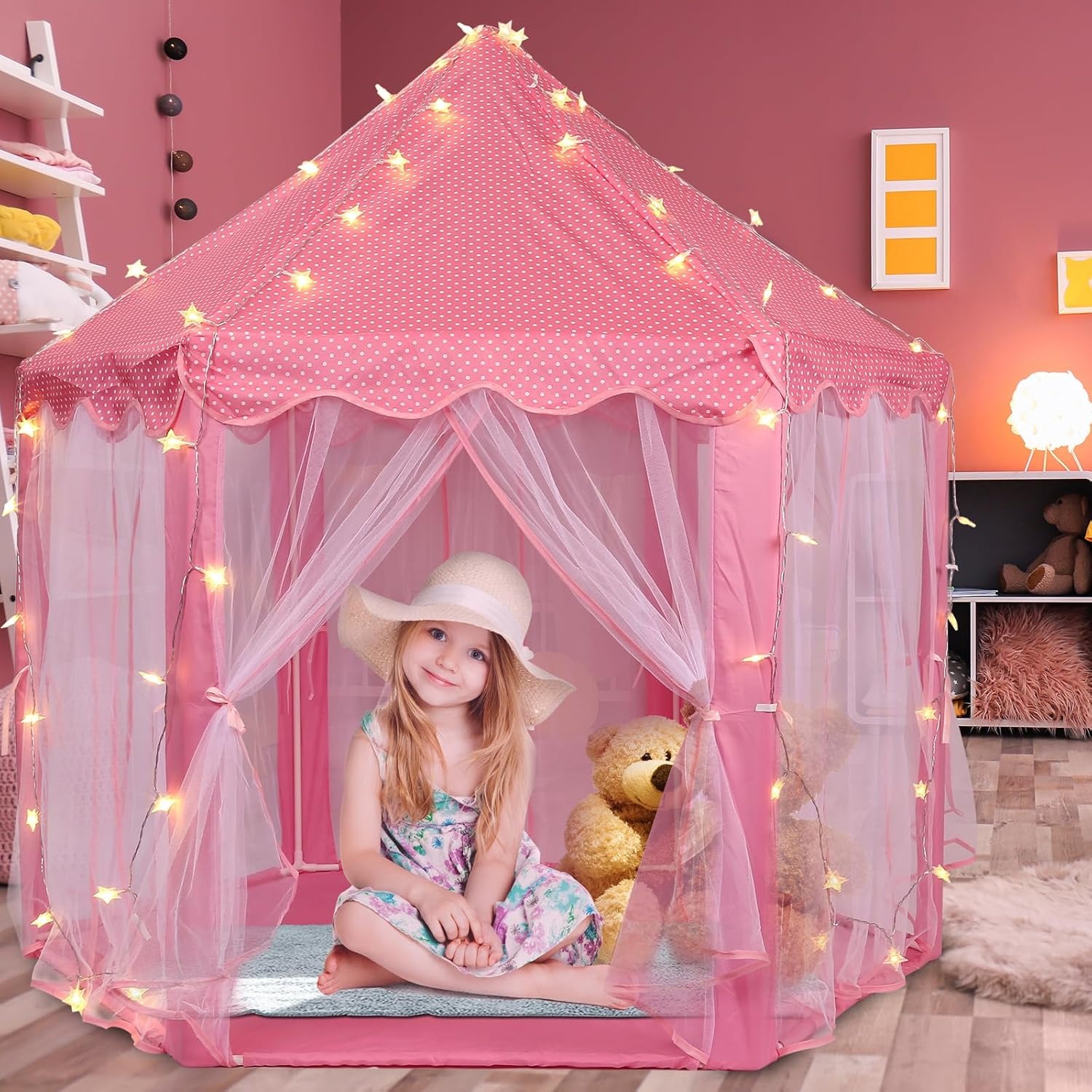
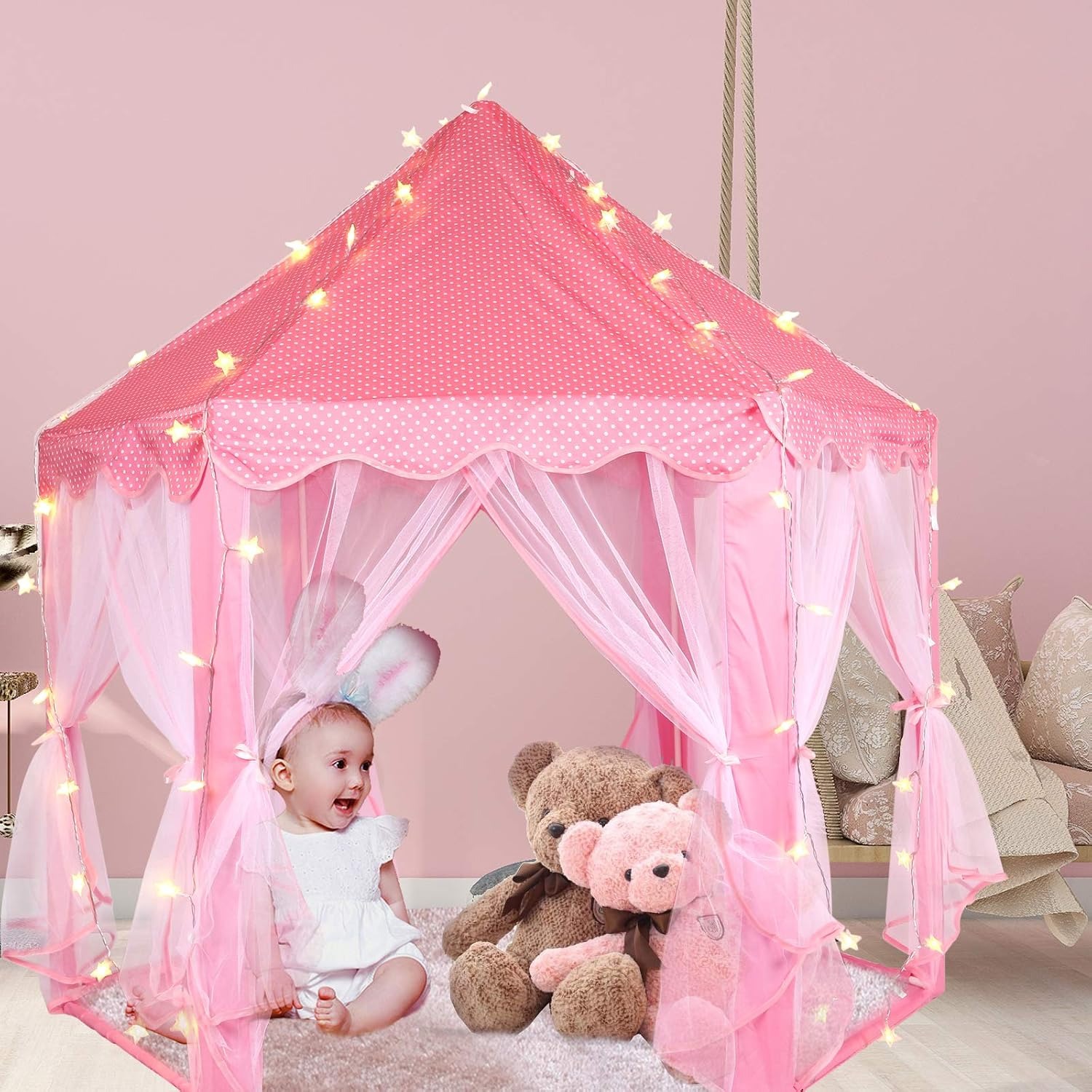
Two things stand out on this model. The first is the LED star lights. A plain tent is a box with a door. Add a scatter of small lights across the inside and it becomes somewhere a child wants to stay. The glow changes the mood, especially in the evening, and it turns the tent from a daytime toy into a quiet-time spot.
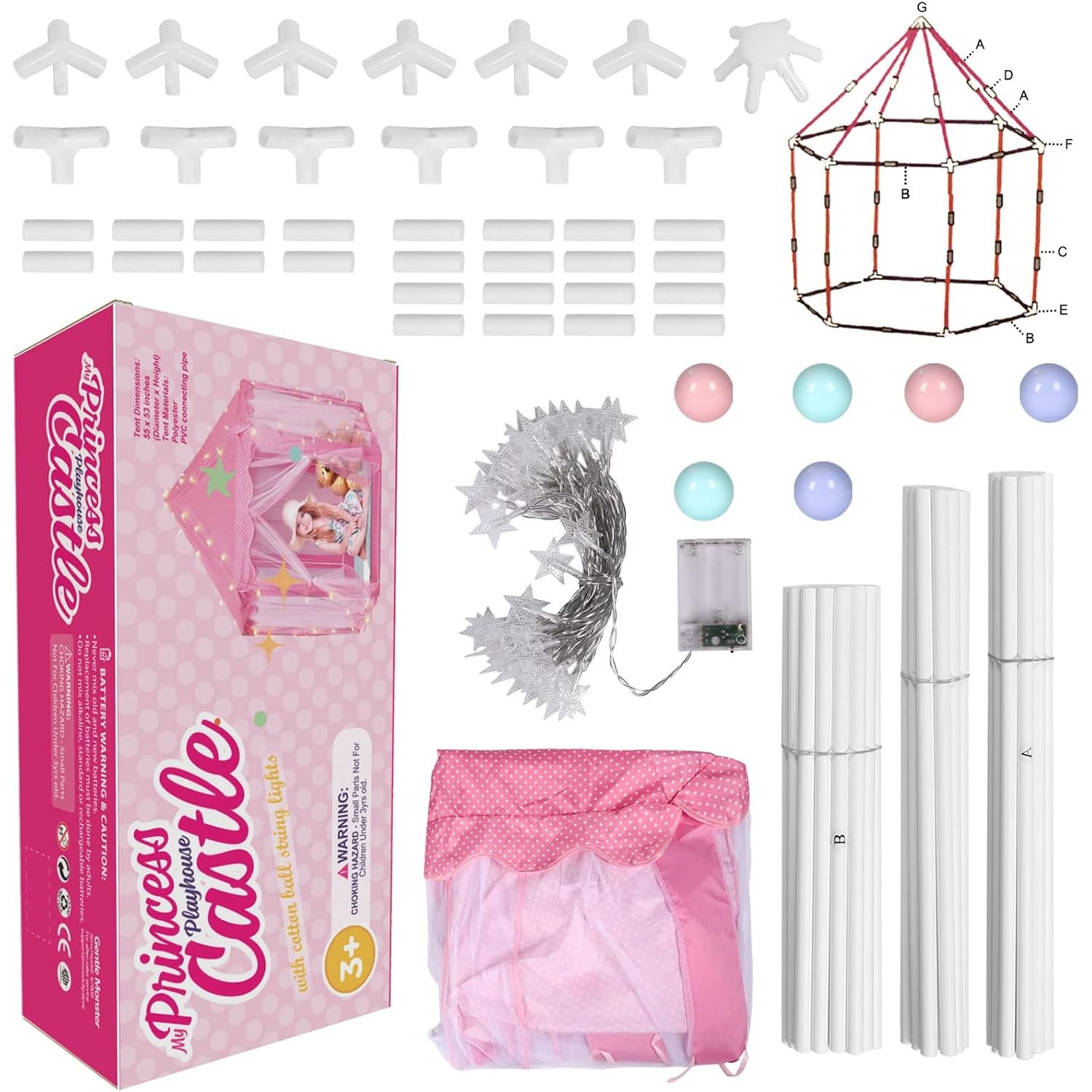
The lights run on 3 AA batteries. That matters more than it sounds. No trailing cable means you can put the tent in the middle of a room instead of being tethered to a socket, and there is nothing for a running child to catch a foot on.
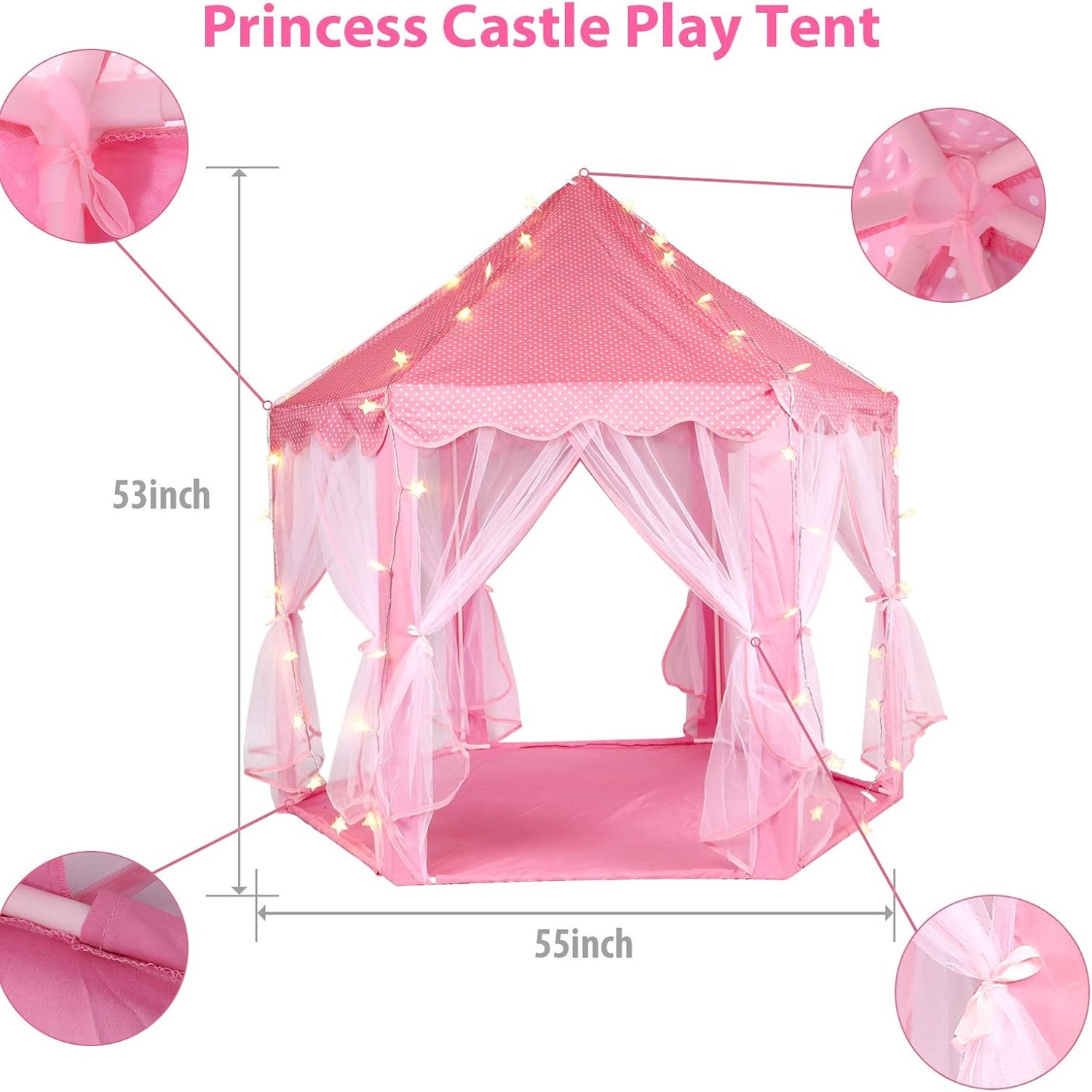
The second thing is the size. At about 139 cm square and 134 cm tall, this sits at the larger end of children's play tents. Headroom is the detail people underestimate. A tent a child has to crouch in gets abandoned after ten minutes. One they can sit up straight in, cross their legs and spread out a pile of books in gets used for the rest of the year.
Who it suits
This is aimed at children in the imaginative play years, roughly preschool through early primary. That is the stretch when a pink castle with a lace doorway reliably becomes a throne room, a shop, a hospital for teddies, and then a castle again by teatime.
It suits two children playing together better than most tents its price. There is room for a pair without constant elbowing, which makes it useful for siblings and for playdates.
It also suits households short on floor space, oddly enough. Because it is light at 1.55 kg and folds down, it does not have to be a permanent fixture. Plenty of families put it up on a Saturday morning and tuck it behind a door on Sunday night.
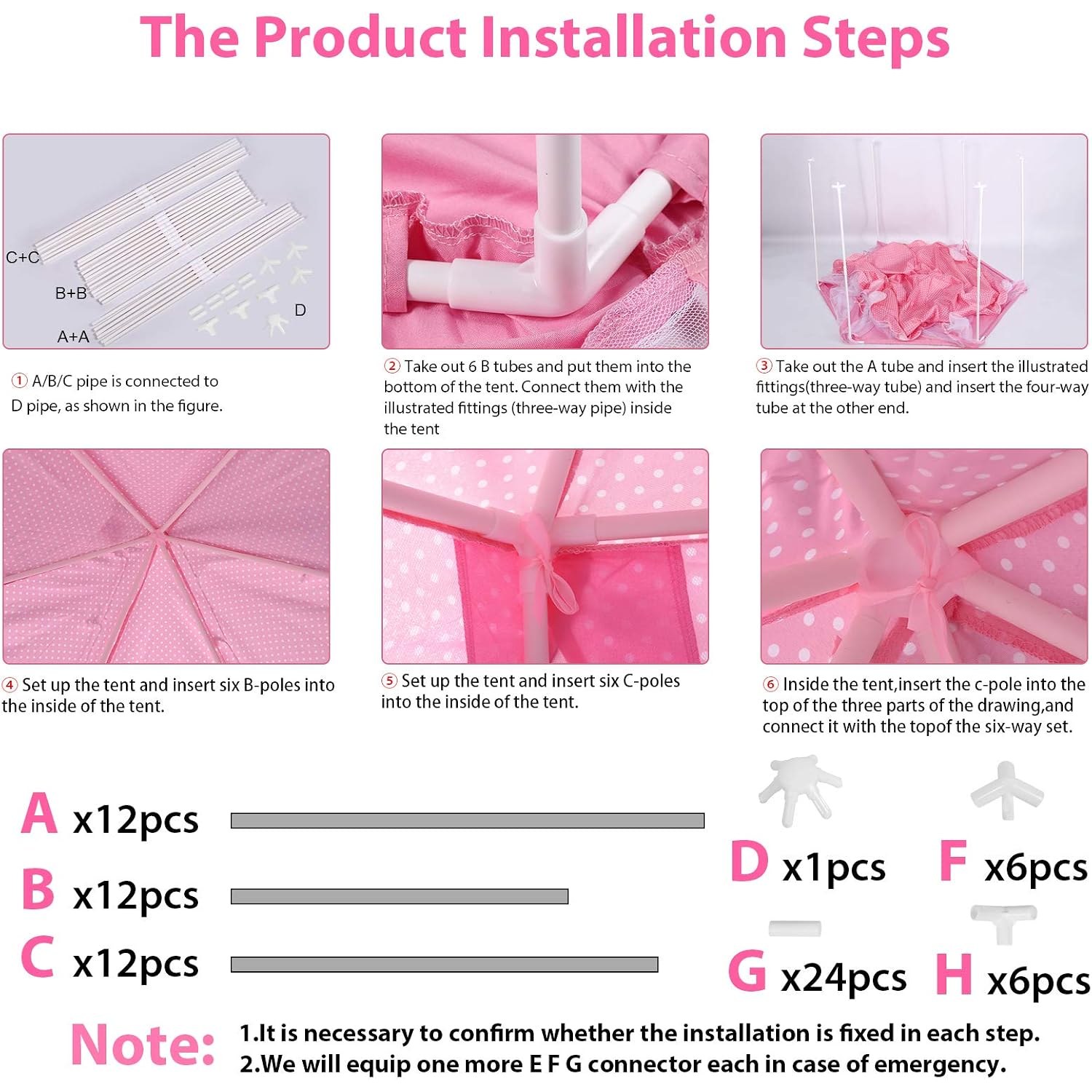
If you are shopping for the best birthday gift for a 4 year old girl and you want something that does not need assembly over two hours with a tiny hex key, this is a reasonable answer. It arrives as one item in one pack.
How to choose between play tents
A few things actually matter when you compare options, and most of them are not on the front of the box.
Floor size against your actual room. Get a tape measure out before you order anything. You need a clear square of roughly 1.4 m by 1.4 m for this one. If the corner you had in mind is 1.2 m across, it will not work, and no amount of optimism fixes that.
Height. Anything under about a metre is really only for young children. This one's 134 cm gives room to grow into.
Ventilation. Mesh windows are not a luxury. A sealed fabric box gets warm and stuffy fast with a child inside, particularly in summer. Side mesh panels keep air moving and, just as usefully, let you glance over from across the room without having to crawl to the door and interrupt whatever elaborate game is underway.
Weight and packability. Under 2 kg means one adult can move it assembled. That sounds minor until you are carrying it out to the lawn for the third time in a week.
Whether it needs batteries. Lights that need AA cells are more flexible than mains-powered ones, but you do need to keep a few spare batteries in the drawer. Rechargeables pay for themselves quickly if the lights get used most evenings.
Indoors, outdoors, and the line between
This is a play tent, not a camping tent. That distinction is worth holding onto.
Indoors it is straightforward. Bedroom corner, playroom centrepiece, living room den on a wet afternoon. It works as the best indoor play tent kind of purchase precisely because it is self-contained and quick to move.
Outdoors it works nicely on a dry day. A lawn, a patio, a shaded spot at a park. What it is not built for is weather. Bring it in before rain, do not leave it out overnight, and dry it fully if it does get damp before you fold it away. Damp fabric stored folded is how play tents end up smelling musty and getting binned a season early.
Direct, all-day sun is the other thing to watch. Prolonged exposure fades most printed fabrics eventually. Setting up in partial shade keeps the colour looking fresh.
Care that takes two minutes
The whole maintenance routine is short. Wipe spills with a damp cloth and a little mild soap, then let the fabric air dry before folding. Skip bleach and strong solvents, which can lift printed detail.
Take the batteries out of the light string before any wet cleaning, and take them out again if the tent is going into storage for a few months. Leaking cells are the most common way a perfectly good light string dies.
Store it flat or on its side, somewhere dry and out of direct sun. Keep the plastic frame poles from being bent under heavy boxes. That is genuinely it.
Getting more out of it
A few additions make a surprising difference. A rug or folded quilt on the floor turns it from a tent into a nook. A couple of cushions and a small stack of books make it the best playroom reading nook in the house for about the cost of nothing.
Play balls turn it into a ball pit, though keep the quantity sensible so there is still room to move. Some families rotate what goes inside, soft toys one week, a toy kitchen set the next, which keeps interest up long after the novelty of the tent itself has settled.
If your child likes the lights, letting them be the one who switches them on tends to extend how long they stay in there. Small bits of ownership matter at that age.
The short version
This is a large, light, pink castle play tent with battery-powered LED star lights, measuring about 139.7 cm square and 134.62 cm tall, weighing 1.55 kg. Mesh side windows handle airflow and let you keep an eye on things. It needs 3 AA batteries for the lights and a clear 1.4 m square of floor.
It suits children in the imaginative play years, works well for two at once, and folds away when you need the room back. Keep it dry, wipe it when it gets grubby, pull the batteries before storage, and it will see out a good few years of castles, shops and bedtime stories.